


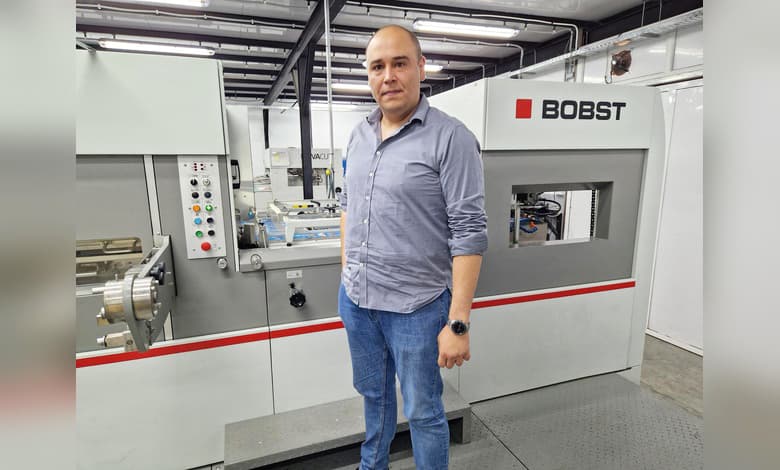
SALPAC Emballage, one of North Africa’s established packaging manufacturers, has strengthened its production capacity through the installation of a new BOBST NOVACUT 106 E 3.0 die-cutting machine at its Béjaïa facility in Algeria, a move that reflects broader efforts by African manufacturers to modernise industrial operations, improve competitiveness and respond to evolving demand from consumer goods, food and pharmaceutical sectors.
The investment forms part of a €2.5 million (US$2.9 million) equipment modernisation programme launched by the company in 2025. According to SALPAC, the new system has already delivered measurable operational improvements, including productivity gains of between 20% and 30%, a 25% reduction in make-ready time, and a decline in machine stoppages and material waste. The machine was installed with technical support and operator training provided by Swiss packaging technology company BOBST.
 The upgrade comes at a time when packaging manufacturers across Africa are facing increasing pressure to improve production efficiency while maintaining product quality and controlling costs. Demand for folding cartons and packaging materials continues to grow alongside expanding food processing, pharmaceutical manufacturing and fast-moving consumer goods industries across the continent. For producers operating in highly competitive markets, production efficiency has become a critical factor in maintaining profitability and meeting customer expectations.
SALPAC supplies folding cartons to customers across food and beverage, pharmaceutical and consumer goods sectors in North Africa. According to the company, the decision to install the new die-cutter was driven by the need to manage higher production volumes, reduce operational downtime and improve consistency in finished products. Early operating data indicates that machine stoppages have fallen by approximately 15%, while improved cutting precision has reduced material waste by around 10%.
The investment also highlights the role of technology upgrades in supporting industrial development strategies across Africa. Manufacturing remains a key pillar of economic diversification efforts in many African economies, particularly as governments seek to reduce reliance on commodity exports and strengthen domestic value addition. Packaging production occupies an important position within industrial value chains because it supports sectors ranging from agriculture and food processing to pharmaceuticals and retail distribution.
SALPAC’s relationship with BOBST dates back to 1968, reflecting a long-term pattern of technological upgrading. Over several decades, the company has incorporated new converting and finishing systems into its operations, including previous generations of die-cutting and folder-gluer equipment. The latest installation builds on that legacy while introducing enhanced automation features designed to accelerate production changeovers and improve operational flexibility.
From a broader economic perspective, investments in manufacturing technology can have implications beyond individual firms. Improved productivity contributes to greater industrial competitiveness, which may help African manufacturers retain market share against imported products while supporting employment and skills development. The packaging sector, in particular, plays a strategic role in enabling regional trade and industrial growth by providing essential inputs for consumer goods industries.
The investment also aligns with wider continental ambitions under the African Union’s Agenda 2063, which emphasises industrialisation, value addition and economic transformation as drivers of long-term development. As African economies continue to pursue industrial expansion, the adoption of advanced manufacturing technologies is increasingly viewed as a necessary component of improving productivity and strengthening integration into regional and global supply chains.
 SALPAC Chairman and Chief Executive Officer Khaled Akouche said the company’s longstanding partnership with BOBST had been an important contributor to its growth and development. He noted that the installation of the NOVACUT 106 E would further improve converting efficiency while strengthening product quality standards.
The development illustrates how targeted industrial investments are becoming increasingly important for manufacturers seeking to compete in a rapidly changing economic environment. While the immediate benefits are reflected in production efficiency and cost management, the broader significance lies in the contribution such investments can make toward building more resilient and competitive manufacturing sectors across Africa.


