


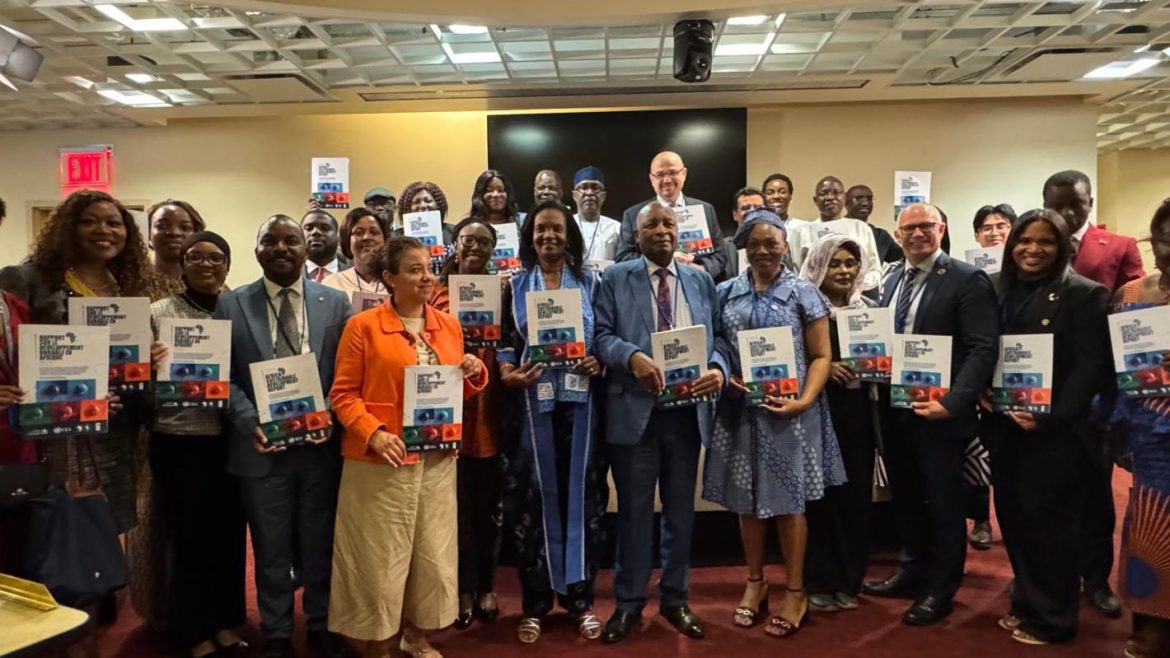
As African countries confront mounting pressure to meet the United Nations Sustainable Development Goals (SDGs) by 2030, development researchers are increasingly arguing that technology, data analytics and artificial intelligence must move from the margins of policy discussions to the centre of development planning if the continent is to accelerate progress on poverty reduction, food security, climate resilience and institutional reform.
The call comes as governments across Africa face the dual challenge of sustaining economic growth while addressing persistent development deficits. More than a decade after the adoption of the SDGs by United Nations member states in 2015, concerns remain over whether many developing economies possess the institutional capacity, financing resources and implementation mechanisms necessary to achieve the ambitious targets within the remaining timeframe.
 Among those advocating for a technology-driven approach is development researcher and emerging technology specialist Anya Anya Adebayo, whose work focuses on governance, public policy, climate security and the application of digital systems to development challenges. According to Adebayo, Africa’s development trajectory will increasingly depend on how effectively governments and institutions integrate technological innovation into policymaking and service delivery.
The Sustainable Development Goals provide a useful roadmap, but achieving them will require more than good intentions,” he said. “It will require innovation, data-driven planning, institutional commitment and the strategic deployment of technology.”
The argument reflects a broader shift in global development thinking. While early SDG implementation efforts focused heavily on policy frameworks and financing commitments, attention has increasingly turned towards the role of digital infrastructure, artificial intelligence, predictive analytics and data systems in improving development outcomes. Governments, multilateral institutions and development agencies are investing more heavily in digital public infrastructure as a means of improving efficiency, transparency and responsiveness.
For Africa, the implications are particularly significant. The continent remains home to some of the world’s fastest-growing populations and youngest workforces, yet it also carries a disproportionate share of global poverty, food insecurity and climate vulnerability. According to the United Nations, Sub-Saharan Africa continues to account for the majority of people living in extreme poverty globally, while climate-related shocks are placing growing pressure on agricultural systems, infrastructure and public finances.
Adebayo identifies poverty reduction as one of the areas where technology could significantly improve policy effectiveness. Digital identification systems, social protection databases and advanced analytics are increasingly enabling governments to identify vulnerable populations more accurately and target interventions with greater precision. Such capabilities have become particularly relevant as countries seek to manage limited fiscal resources while expanding social support programmes.
Food security presents another area where digital tools are becoming increasingly important. Agriculture remains the largest source of employment across much of Africa, yet productivity growth has often lagged behind population expansion. Climate variability, land degradation and inefficient resource allocation continue to affect agricultural output across many regions.
According to development experts, technologies such as satellite monitoring, predictive weather modelling and precision agriculture systems offer opportunities to improve productivity while strengthening resilience against environmental shocks. These innovations are becoming increasingly important as governments seek to achieve food security targets under both the SDGs and the African Union’s Agenda 2063 framework.
Healthcare systems are also undergoing a gradual digital transformation. Across several African countries, digital health platforms, electronic medical records and disease surveillance systems have demonstrated their value in strengthening health service delivery and emergency preparedness. The experience of the COVID-19 pandemic highlighted the importance of reliable health data and real-time monitoring systems in responding to public health crises.
Climate action remains another critical development priority. According to the Intergovernmental Panel on Climate Change (IPCC), Africa contributes a relatively small share of global greenhouse gas emissions but faces some of the most severe consequences of climate change. Rising temperatures, changing rainfall patterns, prolonged droughts and extreme weather events continue to affect agricultural production, water security and economic stability across the continent.
Adebayo argues that climate resilience should no longer be viewed solely through an environmental lens. Instead, it should be understood as a broader economic and governance issue with implications for migration, public health, security and long-term development planning.
“Climate change is no longer simply an environmental issue,” he said. “It affects economic productivity, public health, security, migration and long-term development.”
The conversation also extends to governance and institutional development. Sustainable development outcomes often depend less on policy design than on implementation capacity. Weak institutions limited administrative capability and governance challenges continue to undermine progress in several countries despite the existence of well-developed policy frameworks.
According to Adebayo, stronger institutions supported by modern digital systems could improve public sector performance, strengthen accountability and enhance citizen trust. These objectives align closely with Sustainable Development Goal 16, which focuses on peace, justice and strong institutions.
Nigeria illustrates many of the opportunities and constraints facing African economies. The country’s expanding digital ecosystem, youthful population and growing technology sector have attracted significant international investment. At the same time, infrastructure deficits, governance challenges and environmental pressures continue to affect development outcomes. Similar dynamics are visible across several African economies seeking to balance rapid urbanisation, economic growth and social development.
Artificial intelligence is increasingly emerging as a potential tool within this broader transformation. Although adoption remains at an early stage across much of Africa, AI applications are already being deployed globally to support healthcare diagnostics, agricultural forecasting, financial services and public administration. The ability of machine learning systems to process large datasets and generate actionable insights is attracting growing interest among policymakers and development practitioners.
However, analysts caution that technological adoption alone will not guarantee development success. Significant investments in education, digital literacy, research institutions and innovation ecosystems will be required if African countries are to fully leverage emerging technologies. Building local technological capacity is increasingly viewed as essential to avoiding excessive dependence on imported solutions while ensuring innovations are adapted to local development contexts.
The challenge is particularly relevant as the 2030 deadline for the SDGs approaches. Recent United Nations assessments indicate that many SDG targets remain off track globally, with developing economies facing the greatest implementation gaps. Financing constraints, debt burdens, climate impacts and geopolitical uncertainties continue to complicate progress.
Yet Africa’s growing digital economy offers opportunities to accelerate implementation in ways that were not available when the SDGs were first adopted. Expanding internet connectivity, mobile technology penetration and digital entrepreneurship are creating new pathways for service delivery, economic participation and institutional reform.
 For policymakers, the question is increasingly not whether technology should play a role in sustainable development, but how effectively it can be integrated into broader economic and social transformation strategies. As governments seek to improve resilience, strengthen public institutions and expand economic opportunities, digital innovation is emerging as a critical component of Africa’s long-term development agenda.
With fewer than five years remaining before the SDG deadline, the intersection of technology, governance and sustainable development may ultimately shape the continent’s ability to translate policy ambitions into measurable improvements in livelihoods, economic resilience and environmental sustainability.


