


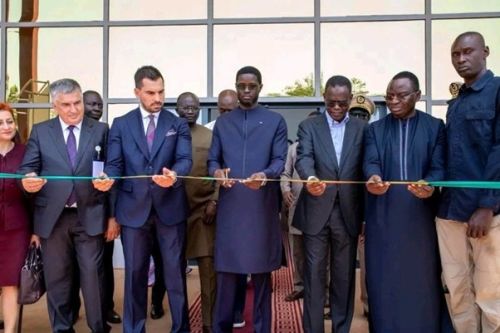
Senegal has inaugurated a new $10.45 million textile manufacturing facility in the Diamniadio industrial zone, marking a significant step in the country’s efforts to expand domestic manufacturing capacity, create industrial jobs and transform its cotton sector from a raw commodity export industry into a value-added production chain.The factory, developed by Turkish investment group AVCI Global Industrie, was officially inaugurated by President Bassirou Diomaye Faye on June 20 as part of Senegal’s broader industrialisation strategy. The facility, which represents an investment of 6 billion CFA francs ($10.45 million), has the capacity to produce approximately 1,200 garments per day and is expected to create nearly 200 direct jobs.
The investment highlights Senegal’s growing focus on manufacturing as a pathway to economic diversification. For decades, many African cotton-producing countries have exported raw cotton while importing finished textile products, limiting domestic value creation, employment opportunities and industrial development. The Diamniadio facility represents an attempt to reverse that trend by strengthening local processing capacity.According to Senegal’s state broadcaster RTS, the factory produces clothing for men and women and was developed following a partnership agreement signed in February 2025 between the Ministry of Industry and Commerce, the Agency for the Development and Promotion of Industrial Sites (APROSI), and AVCI Global Industrie.
The agreement reflects government efforts to attract private sector investment into industrial zones and develop manufacturing ecosystems capable of supporting domestic production and regional exports. Senegal’s textile ambitions are closely linked to the future of its cotton sector. Although the country produces cotton, much of the raw fibre is exported due to limited domestic processing capacity. This means a significant share of the economic value generated from cotton production is captured outside the country through textile manufacturing and garment production.
The latest projections from the United States Department of Agriculture (USDA) indicate that Senegal is expected to produce approximately 55,000 bales of cotton fibre, equivalent to nearly 12,500 metric tonnes, during the 2026/27 season. However, local processors are projected to transform only about 3.6% of that output domestically, highlighting the scale of the country’s industrialisation challenge.The AVCI Global Industrie investment addresses part of this gap by creating additional capacity within Senegal’s textile value chain. Moving from raw cotton exports toward domestic spinning, processing and garment manufacturing could increase industrial revenues, create skilled employment opportunities and strengthen linkages between agriculture and manufacturing.

For African economies, value addition remains a central development challenge. Many countries across the continent continue to export agricultural commodities in raw form while importing processed goods at higher prices. This dynamic contributes to trade imbalances and limits opportunities for industrial employment.The textile sector has historically played an important role in industrial development in countries such as Bangladesh, Vietnam and Turkey, where manufacturing expansion created large employment opportunities and strengthened export competitiveness. African policymakers have increasingly sought to replicate similar models by building industrial parks, improving infrastructure and attracting foreign direct investment.
Diamniadio has become a key part of Senegal’s industrial development strategy. Located near Dakar, the industrial zone was established to support economic decentralisation, attract investment and provide modern infrastructure for manufacturing businesses. The development aligns with Senegal’s long-term economic transformation agenda, including the “Senegal 2050” national vision, which identifies industrialisation as a driver of economic growth, employment creation and economic diversification. Beyond domestic consumption, AVCI Global Industrie’s facility is expected to target regional markets in West Africa. The Economic Community of West African States (ECOWAS) represents a significant consumer market with more than 400 million people, creating opportunities for Senegalese manufacturers to expand exports beyond national borders. However, the competitiveness of the textile industry will depend on more than factory capacity. Sustainable growth will require reliable energy supply, efficient logistics networks, skilled labour, access to finance and stronger integration across the cotton-to-clothing value chain.
Senegal currently imports significant volumes of finished textile products, reflecting the gap between domestic production capacity and consumer demand. Data from Senegal’s National Agency for Statistics and Demography (ANSD) shows that the country imported clothing and clothing accessories worth nearly 19.45 billion CFA francs ($34 million) in 2024. At the same time, export earnings from the textile sector remain relatively limited. ANSD data indicates Senegal generated approximately 1.62 billion CFA francs ($2.83 million) from clothing and clothing accessory exports in 2024, demonstrating the significant opportunity for expanding manufacturing output and improving trade performance.
https://www.aecweek-registration.com/2026/
The success of the Diamniadio textile factory will therefore depend on whether it becomes part of a broader industrial ecosystem rather than operating as an isolated manufacturing facility. Stronger links between cotton farmers, processors, designers, logistics providers and regional markets will determine whether Senegal can capture a larger share of the textile value chain. The project also reflects a wider trend of increasing Turkish investment across Africa. Turkish companies have expanded their presence in sectors including manufacturing, construction, energy, transport and trade, with governments across the continent seeking foreign investment to accelerate industrial development.
For Senegal, the partnership with AVCI Global Industrie demonstrates the importance of attracting international capital while building domestic industrial capabilities. Foreign investment can provide technology, expertise and market access, but long-term economic impact will depend on local skills development, supplier participation and the creation of sustainable industrial networks. As Africa pursues greater economic integration through initiatives such as the African Continental Free Trade Area (AfCFTA), expanding manufacturing capacity will be critical to increasing intra-African trade and reducing dependence on imported finished products.
The Diamniadio textile facility represents a small but strategic step in that direction. Its long-term significance will be measured not only by garments produced or jobs created, but by whether it contributes to building a more integrated textile industry capable of supporting Senegal’s industrial ambitions and strengthening West Africa’s position in global manufacturing markets.


