


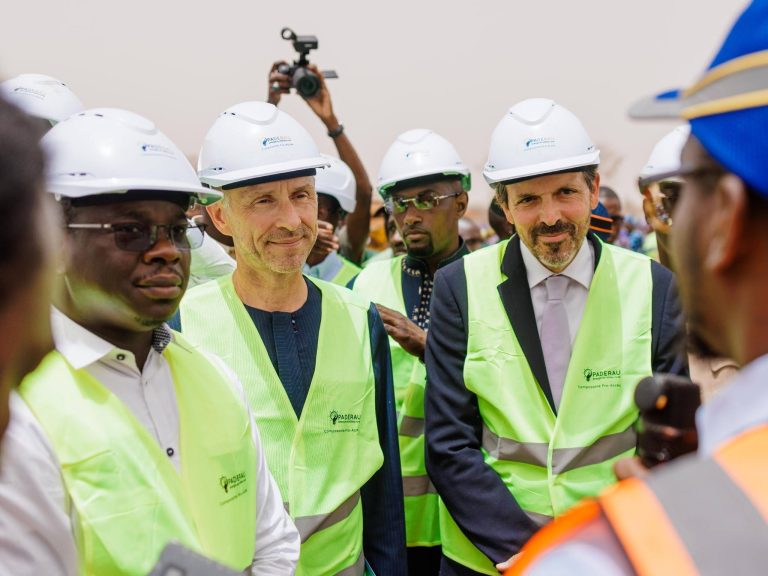
The European Union is strengthening its development partnership with Senegal through a series of initiatives that combine renewable energy investment with entrepreneurship support, reflecting a broader shift towards using clean energy as a catalyst for rural economic transformation rather than simply expanding electricity access. By linking electrification with enterprise development, the partnership seeks to stimulate job creation, improve agricultural productivity and strengthen local value chains while advancing Senegal’s transition to a low-carbon economy.
The initiative centres on a strategic collaboration between Senegal’s General Delegation for Rapid Entrepreneurship for Women and Youth (DER/FJ) and the Senegalese Rural Electrification Agency (ASER). According to the partners, the programme will integrate rural electrification with targeted financial support, technical assistance and business development services to help enterprises that depend on reliable electricity expand their operations. The approach reflects growing recognition among development institutions that access to electricity alone is insufficient to unlock sustainable economic growth unless accompanied by productive investments that generate income and employment.
Priority sectors identified under the programme include agriculture, agro-processing, aquaculture, food preservation, cold storage and digital services. These sectors have been selected because of their potential to create jobs while increasing the economic value generated from improved electricity access. Reliable power is expected to enable farmers and rural entrepreneurs to reduce post-harvest losses, improve food processing capacity, expand irrigation and adopt digital technologies that improve market access and business efficiency.
The programme places particular emphasis on women and young entrepreneurs, who continue to face significant barriers to accessing finance, technical skills and productive infrastructure across much of rural Africa. Beyond providing financing opportunities, beneficiaries will receive technical and managerial training aimed at strengthening business performance and improving long-term commercial sustainability. According to the institutions involved, coordinated planning and data sharing between DER/FJ and ASER will also help identify communities where investments in electricity infrastructure are most likely to generate broader socio-economic benefits.
The initiative complements the European Union’s wider Global Gateway strategy, which seeks to mobilise sustainable infrastructure investment across partner countries, as well as the Just Energy Transition Partnership established with Senegal. These frameworks are designed to support Senegal’s ambition to achieve universal electricity access while increasing the share of renewable energy within its national electricity mix.
According to the European Union, investments under these programmes extend beyond renewable energy generation to include improvements in electricity transmission and distribution infrastructure, governance reforms and expanded access to electricity in underserved rural regions. The objective is to build an energy system capable of supporting industrial development, agricultural transformation and private sector growth while reducing dependence on fossil fuels.
Senegal has emerged as one of West Africa’s leading renewable energy markets in recent years. The country has invested significantly in utility-scale solar and wind projects while pursuing policies aimed at diversifying its energy mix and reducing electricity costs. According to the International Renewable Energy Agency (IRENA), renewable energy capacity across Senegal has expanded steadily over the past decade, supported by public-private partnerships and international development finance.
Despite this progress, rural electrification continues to present significant development challenges. While national electricity access has improved considerably, disparities remain between urban and rural communities, where limited infrastructure continues to constrain agricultural productivity, enterprise development and access to essential services. According to the World Bank, expanding electricity access remains one of the country’s key priorities for achieving inclusive economic growth and reducing regional inequalities.
Development experts increasingly argue that productive uses of electricity should become central to electrification strategies across Africa. Rather than measuring success solely through household connections, policymakers are placing greater emphasis on how electricity contributes to economic activity, employment creation and improved livelihoods. This approach recognises that reliable electricity can strengthen entire value chains by supporting mechanised agriculture, agro-processing industries, cold storage facilities, digital enterprises and rural manufacturing.
The partnership between DER/FJ and ASER reflects this evolving development model by integrating infrastructure investment with enterprise financing and capacity building. According to the participating institutions, improved coordination between energy agencies and entrepreneurship programmes is expected to maximise the economic returns from electrification investments while ensuring that rural communities derive long-term benefits from expanded access to modern energy services.
The initiative also aligns with Senegal’s broader national development agenda, which prioritises green industrialisation, private sector development and youth employment. As climate change continues to place increasing pressure on agricultural production across the Sahel, investments that combine renewable energy with climate-resilient economic activities are becoming increasingly important for strengthening rural resilience and food security.
For Africa, Senegal’s approach illustrates how the continent’s energy transition is increasingly being shaped by integrated development strategies rather than infrastructure investments alone. As governments seek to expand renewable energy while creating employment opportunities for rapidly growing populations, linking electricity access with entrepreneurship, productive investment and local value addition may offer a more sustainable pathway towards inclusive economic growth.
The European Union’s continued engagement also reflects a broader trend in international development finance, where climate investments are increasingly expected to generate measurable economic and social outcomes alongside emissions reductions. If successfully implemented, the partnership could provide a practical model for other African countries seeking to ensure that renewable energy investments translate into stronger rural economies, greater financial inclusion and more resilient communities.


