


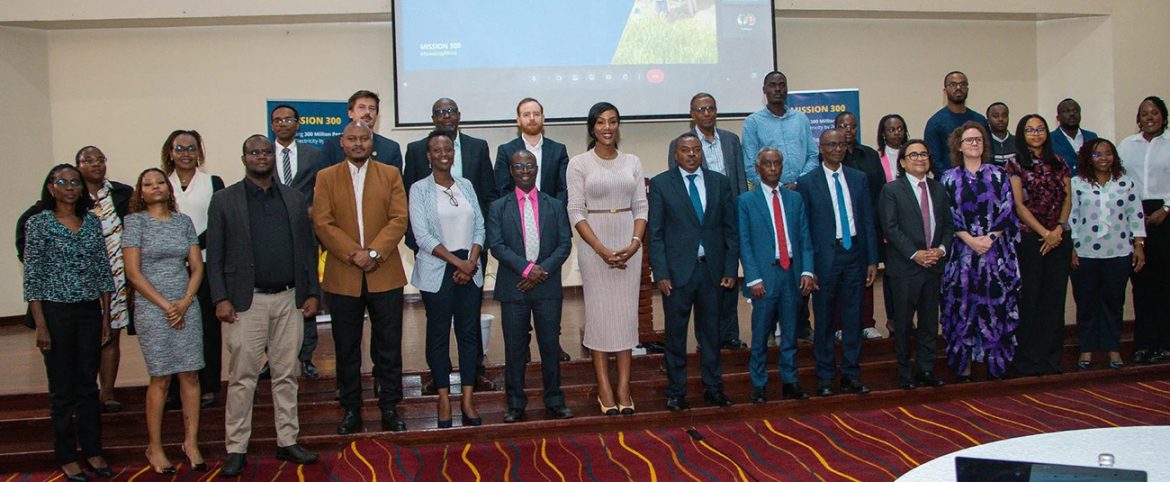
Kenya has intensified efforts to achieve universal access to electricity and clean cooking solutions by strengthening the implementation of its Mission 300 National Energy Compact, signalling a renewed focus on translating ambitious energy commitments into measurable development outcomes. During a two-day implementation support workshop held on 8–9 July 2026, the Government of Kenya, working alongside the African Development Bank Group (AfDB) and Sustainable Energy for All (SEforALL), brought together senior government officials, development partners, regulators and technical experts to develop a coordinated roadmap aimed at accelerating delivery of the country’s energy access targets by 2030.
The workshop comes at a critical stage in Kenya’s energy transition. While the country has emerged as one of Africa’s leading renewable energy producers and boasts one of the continent’s highest electricity access rates, significant challenges remain in connecting underserved communities, expanding transmission infrastructure, mobilising private investment and delivering universal access to clean cooking solutions. The discussions focused on strengthening institutional coordination, improving accountability mechanisms and ensuring that reforms outlined in Kenya’s National Energy Compact are implemented efficiently across government agencies.
Mission 300 is among Africa’s largest energy access initiatives. Jointly spearheaded by the African Development Bank Group and the World Bank Group, with strategic support from the Rockefeller Foundation, Sustainable Energy for All and the Global Energy Alliance for People and Planet (GEAPP), the initiative seeks to connect an additional 300 million Africans to electricity by 2030. Rather than adopting a uniform continental approach, participating countries have developed National Energy Compacts tailored to their respective energy systems, investment priorities and policy environments.
Kenya’s compact sets some of the continent’s most ambitious targets. According to the National Energy Compact, the country plans to increase electricity access from approximately 75 per cent to universal coverage by the end of the decade. It also aims to achieve universal access to clean cooking technologies, nearly double installed renewable electricity generation capacity from approximately 2,627 megawatts to 5,952 megawatts, construct an additional 8,000 kilometres of electricity transmission infrastructure and attract significantly higher levels of private capital into the energy sector.
These objectives extend beyond expanding electricity supply. According to the Government of Kenya, improving access to affordable, reliable and sustainable energy is expected to strengthen industrial productivity, enhance healthcare and education services, stimulate digital transformation, improve agricultural value chains and support inclusive economic growth. Participants at the implementation workshop acknowledged that policy commitments alone will not deliver these outcomes. Instead, effective execution, institutional coordination and continuous monitoring will determine whether the compact achieves its intended impact.
Discussions therefore centred on strengthening the role of Compact Delivery and Monitoring Units, specialised national coordination platforms established to oversee implementation, monitor progress against agreed milestones, identify bottlenecks and improve accountability across implementing institutions. According to the African Development Bank Group, strengthening implementation capacity has become one of the most important determinants of success under Mission 300.
Wale Shonibare, Director for Energy Financial Solutions, Policy and Regulation at the African Development Bank Group, noted that translating ambitious electrification commitments into practical improvements requires strong institutional coordination, effective planning and sustained collaboration among public and private stakeholders. His remarks reflect a broader shift in African infrastructure development, where increasing attention is being given not only to financing projects but also to improving governance systems that ensure infrastructure investments deliver long-term socioeconomic benefits.
Read also:Absa Bank Kenya Expands Solar Energy Programme as Branch Pilot Cuts Electricity Use by Up to 51%
Sustainable Energy for All reaffirmed its role as a strategic implementation partner supporting participating governments through technical assistance, knowledge sharing, stakeholder coordination and development of monitoring frameworks capable of tracking implementation progress. The organisation noted that countries with stronger institutional coordination are generally better positioned to accelerate reforms, improve investment readiness and attract both development finance and commercial capital.
For Kenya, strengthening implementation capacity also supports broader efforts to improve the investment environment for energy infrastructure. According to the International Energy Agency (IEA), sub-Saharan Africa will require annual energy investment to increase substantially if the continent is to achieve universal electricity access while supporting economic development and climate commitments. Public resources alone will be insufficient, making private investment increasingly important in financing renewable generation, transmission infrastructure, mini-grids, battery storage and clean cooking technologies.
Kenya has already established itself as one of Africa’s renewable energy leaders. According to the Energy and Petroleum Regulatory Authority (EPRA), renewable sources including geothermal, hydropower, wind and solar—account for more than 80 per cent of the country’s electricity generation, giving Kenya one of the cleanest electricity systems on the continent.
However, despite this progress, energy access disparities remain pronounced, particularly in remote rural counties where extending grid infrastructure remains financially challenging. Expanding off-grid renewable energy systems, mini-grids and distributed solar technologies is therefore expected to complement conventional grid expansion as Kenya works towards universal access.
Clean cooking also represents a major pillar of the National Energy Compact.
According to the World Health Organization (WHO), reliance on traditional biomass fuels such as firewood and charcoal remains a significant contributor to indoor air pollution across Africa, resulting in substantial public health impacts while accelerating deforestation and greenhouse gas emissions.
Kenya’s strategy aims to accelerate adoption of cleaner cooking technologies by expanding access to liquefied petroleum gas (LPG), electric cooking solutions, bioethanol and other modern energy alternatives capable of reducing dependence on traditional biomass. Beyond household welfare, expanding clean cooking technologies is expected to generate wider economic and environmental benefits by improving health outcomes, reducing pressure on forests and creating new opportunities for private investment across clean energy value chains.
Mission 300 also aligns closely with continental development priorities.
According to the African Development Bank Group, nearly 600 million Africans continue to live without access to electricity, making energy poverty one of the continent’s most significant barriers to industrialisation, education, healthcare delivery and digital economic growth. Addressing this deficit is increasingly viewed not only as a social development priority but also as an economic imperative capable of improving productivity, attracting investment and strengthening Africa’s global competitiveness.
Kenya’s implementation workshop reflects the growing recognition that successful energy transitions require more than infrastructure financing. They depend equally on effective institutions, sound governance, coordinated implementation and long-term policy consistency capable of maintaining investor confidence. The collaborative model underpinning Mission 300 bringing together governments, multilateral development banks, philanthropic institutions, technical agencies and private investors illustrates how complex development challenges increasingly require integrated partnerships that combine financial resources with technical expertise and institutional support.
For Kenya, the implementation roadmap developed during the workshop represents an important step towards converting ambitious policy commitments into practical infrastructure investments capable of expanding electricity access, accelerating renewable energy deployment and strengthening clean cooking adoption.
As Africa advances towards its broader energy transition objectives, the effectiveness of implementation mechanisms such as Kenya’s National Energy Compact may increasingly determine whether the continent can close its electricity access gap while building resilient, low-carbon energy systems that support long-term economic transformation and sustainable development.


