


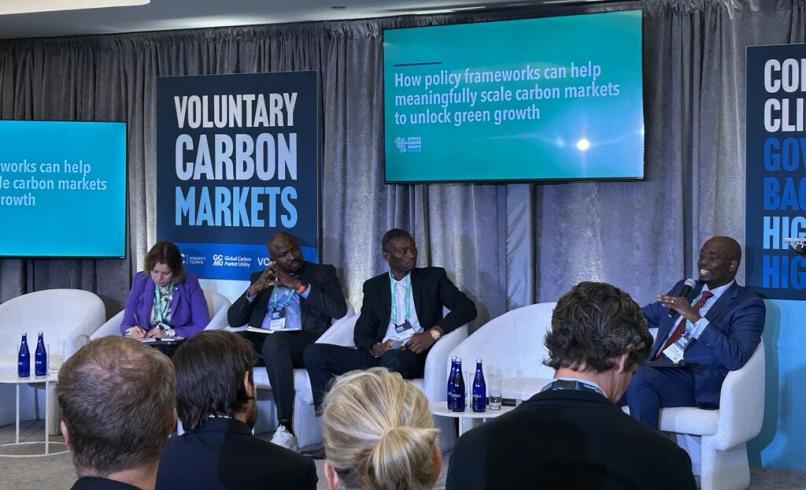
The European Bank for Reconstruction and Development (EBRD) and Sustainable Energy for All (SEforALL) have signed a new partnership agreement aimed at accelerating clean energy deployment, climate resilience and sustainable development across Africa and other emerging economies, as governments face mounting pressure to expand energy access while advancing climate and economic transition goals.
The Memorandum of Understanding (MoU), signed in London on 22 June 2026 during London Climate Action Week, establishes a framework for collaboration between the two organisations from 2026 to 2028. The partnership will focus on expanding decentralised renewable energy systems, sustainable cooling infrastructure, climate resilience initiatives, green finance mechanisms and carbon market development, while supporting policy reform and technical capacity-building in participating countries.
 The agreement arrives at a critical moment for many African economies, where energy deficits continue to constrain industrialisation, economic productivity and social development. According to the International Energy Agency (IIEA), hundreds of millions of people across Sub-Saharan Africa still lack access to reliable electricity, while rapidly growing populations are increasing demand for power, cooling services and modern energy infrastructure. At the same time, governments are under pressure to pursue low-carbon development pathways that align with global climate commitments and national development priorities.
Under the new partnership, the organisations will explore opportunities to support initiatives including Mission 300, the Universal Energy Facility and the Nigeria Distributed Renewable Energy Fund. Collaboration is expected to focus on expanding mini-grid deployment, strengthening agricultural cold-chain infrastructure, improving access to cooling services and helping local financial institutions increase lending for clean energy technologies and climate-related investments.
The partnership combines two distinct but complementary capabilities. SEforALL has developed extensive experience supporting governments in energy transition planning, sustainable cooling strategies, energy efficiency programmes and universal energy access initiatives across more than 115 countries. The organisation has also played a significant role in mobilising investment for clean energy and development projects in emerging markets.
The EBRD, meanwhile, brings substantial expertise in mobilising private-sector capital, strengthening financial markets and supporting large-scale infrastructure investments. Through its Green Economy Transition (GET) 2030 Strategy, the institution aims to mobilise at least €150 billion in cumulative green financing by the end of the decade, targeting sectors considered essential to economic decarbonisation and climate resilience.
The partnership reflects a broader shift in global climate and development finance discussions, where attention is increasingly moving from target-setting towards implementation. While international climate agreements and national energy transition plans have established ambitious goals, financing gaps remain substantial, particularly across developing economies where infrastructure needs are significant and fiscal resources are often constrained.
For African countries, the challenge extends beyond electricity access alone. Reliable energy systems are increasingly recognised as foundational to industrial development, agricultural productivity, healthcare delivery, education outcomes and digital transformation. Cooling infrastructure, for example, has become a growing development priority as rising temperatures and urbanisation place additional pressure on food systems, healthcare services and economic productivity. Expanding access to cold-chain networks can reduce post-harvest losses, improve food security and support agricultural exports, while strengthening resilience to climate-related disruptions.
The emphasis on decentralised renewable energy also reflects evolving investment trends across the continent. Mini-grids and distributed energy systems are increasingly viewed as cost-effective solutions for expanding electricity access in remote and underserved communities where extending national grids remains economically challenging. According to development finance institutions, decentralised systems are expected to play a significant role in achieving universal energy access targets across Africa over the coming decades.
The partnership may also contribute to efforts to strengthen domestic financial ecosystems capable of supporting climate and energy investments. Access to affordable finance remains one of the most significant barriers to scaling renewable energy deployment across many African markets. Supporting local financial institutions in developing green finance products could help unlock additional private-sector participation while reducing dependence on external funding sources.
The agreement also underscores the growing importance of blended finance approaches that combine public, private and development capital to address investment gaps. As governments face competing fiscal demands and climate-related financing needs continue to rise, partnerships capable of mobilising larger volumes of investment are becoming increasingly important for advancing development priorities.
 For Africa, where energy demand is expected to increase significantly over the coming decades, the success of such collaborations will be measured not only by investment volumes but also by their ability to improve energy reliability, strengthen economic resilience and support inclusive growth. As countries pursue industrialisation and climate adaptation simultaneously, access to affordable and sustainable energy is increasingly viewed as a prerequisite for achieving broader development objectives.
The partnership between EBRD and SEforALL therefore represents more than a financing arrangement. It reflects an emerging recognition that accelerating sustainable development will require coordinated efforts that combine policy expertise, investment mobilisation and implementation capacity. Whether such collaborations can deliver the scale required to meet Africa’s energy and climate ambitions will remain a key question as countries seek to balance economic growth, energy security and environmental sustainability in an increasingly complex global landscape.


