


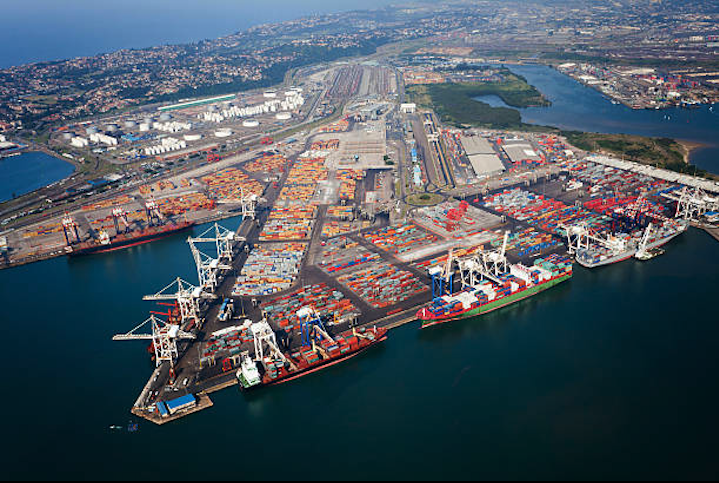
South Africa’s Transnet National Ports Authority (TNPA) has finalized 11 long-term terminal operator agreements at Island View, the country’s largest fuel storage and distribution hub, securing continued operations at a strategic energy facility while reigniting debate over infrastructure access, economic transformation and the role of private operators in critical national assets. The agreements, which run for 25 years, cover companies operating fuel and chemical storage facilities at the Port of Durban’s Island View precinct, a hub that handles approximately 75% of South Africa’s fuel imports. The move is intended to protect national fuel security by ensuring that critical storage infrastructure remains operational and available to support the country’s energy supply chain.
The agreements conclude a process initiated in September 2025 after Transport Minister Barbara Creecy directed TNPA to renew existing leases at the facility using emergency provisions under the National Ports Act. The minister justified the intervention on national security grounds, citing concerns around the continuity of fuel supply and the strategic importance of Island View to South Africa’s economy. The directive established a deadline of March 31, 2026, requiring TNPA to secure new operating arrangements with terminal users. The agreements were finalized approximately three months after that deadline, although the value of investments linked to the 25-year contracts has not been disclosed.
The beneficiaries include the ten companies listed in the ministerial directive: Bidvest Tank Terminal, H&R South Africa, Chemoleo, UNICO TEC, Astron Energy, Vopak Terminal Durban, Engen, TotalEnergies, SAPREF and Sasol. Global commodities trader Vitol was also identified among the signatories. Under the agreements, operators will be required to maintain their facilities, continue operations and transfer ownership of the infrastructure to the state when the 25-year period concludes. The structure reflects a model in which private-sector expertise and investment support public ownership of strategic infrastructure over the long term.

For South Africa, the importance of Island View extends beyond fuel storage. The facility serves as a critical gateway for imported petroleum products, including petrol, diesel and aviation fuels, linking global energy markets with domestic consumption centres. Any disruption at the hub could have implications for transport, manufacturing, agriculture and other sectors heavily dependent on reliable fuel availability. The agreements come as South Africa continues to navigate significant energy challenges. While the country remains heavily dependent on coal for electricity generation, policymakers are seeking to diversify the energy mix through investments in natural gas infrastructure, renewable energy and improved energy security systems.
The government’s broader energy strategy includes strengthening fuel supply chains while preparing for longer-term changes in the energy sector. Recent developments include new investments in fuel storage capacity and plans to expand gas infrastructure as part of efforts to improve energy resilience. In April, global energy trader Vitol announced a $130 million investment in fuel storage infrastructure at Island View, highlighting continued private-sector interest in South Africa’s downstream energy market. TNPA has also signed a separate 25-year agreement with Ukwanda LNG to develop a liquefied natural gas regasification terminal at the Port of Ngqura in the Eastern Cape.
These developments reflect a broader trend across African energy markets, where governments are increasingly focusing on infrastructure reliability, supply diversification and private-sector participation to address energy security challenges. However, the Island View agreements have also triggered legal and policy debates over economic inclusion and market access. Capricorn Petrochemicals, a Black-owned company, has challenged the ministerial directive in court, arguing that the process benefits established operators while limiting opportunities for new entrants. The case highlights tensions between maintaining operational continuity at critical infrastructure assets and advancing South Africa’s transformation agenda.
The dispute reflects wider challenges linked to Black Economic Empowerment (BEE) policies, which were introduced after apartheid to address historical inequalities in ownership, participation and access to economic opportunities. In parliamentary discussions in November 2025, several Black-owned operators argued that major energy companies’ control over strategic infrastructure creates barriers for emerging businesses seeking entry into the fuel market. They raised concerns that infrastructure access remains concentrated among established industry players. The government has responded by creating a mechanism that could allow additional companies to access storage capacity at Island View. Speaking at an industry conference in June, Minister Creecy confirmed that new capacity would be made available to potential entrants, according to industry reports.
https://www.aecweek-registration.com/2026/
The challenge for policymakers is balancing two competing objectives: protecting national energy security while ensuring that strategic infrastructure supports broader economic participation. For African economies, the issue has wider relevance. Ports, logistics systems and energy infrastructure are increasingly viewed as strategic economic assets that influence competitiveness, investment flows and industrial development. As countries across the continent seek to expand manufacturing capacity and reduce vulnerability to supply disruptions, access to reliable infrastructure has become a central policy priority. South Africa’s experience at Island View illustrates the complexity of managing infrastructure that sits at the intersection of commercial investment, public ownership and national security. Long-term agreements can provide certainty for operators and investors, but questions around competition, inclusion and access remain central to the future of energy markets.
As South Africa moves deeper into its energy transition, the country’s ability to modernize infrastructure while ensuring equitable participation will shape not only the future of its fuel sector but also its broader economic transformation agenda.


