


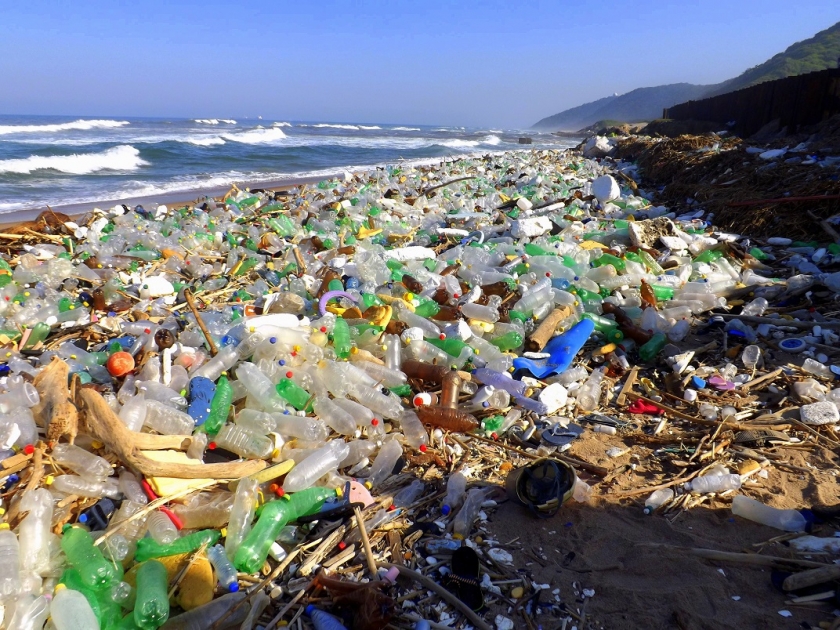
South Africa is calling for a fundamental shift in how governments, businesses and communities protect marine ecosystems, arguing that safeguarding the country’s oceans requires tackling pollution and environmental degradation from inland rivers and catchments long before they reach the coastline. The appeal comes as global attention focuses on World Oceans Day, with this year’s theme, “Reimagine: Beyond the world we know, a new relationship with our ocean,” highlighting the need for more integrated approaches to ocean governance.
The call reflects growing recognition that ocean sustainability cannot be addressed solely through coastal conservation policies. According to South African environmental authorities, the country’s more than 3,000 kilometres of coastline underpin an ocean economy that supports trade, tourism, fisheries, biodiversity conservation and food security, while also contributing significantly to climate regulation and economic resilience.
 Central to the country’s approach is the “Source-to-sea” framework, which recognises that the health of marine ecosystems depends on decisions made throughout river catchments, urban centres, industrial zones and agricultural landscapes. Pollution generated hundreds of kilometres inland ultimately flows through rivers and estuaries before entering coastal waters, making inland environmental management a critical component of ocean protection.
According to environmental experts, this integrated perspective has become increasingly important as climate change intensifies pressure on freshwater systems, coastal ecosystems and marine biodiversity. More frequent flooding, prolonged droughts and changing rainfall patterns are accelerating the transport of pollutants while placing additional strain on already vulnerable ecosystems.
Plastic pollution has emerged as one of the most significant challenges confronting South Africa’s marine environment. While waste collection and recycling remain important policy priorities, scientists increasingly describe plastic pollution as a broader environmental, economic and public health issue rather than simply a waste management challenge.
Read also: https://www.sanews.gov.za/south-africa/reimaging-our-relationship-ocean-source-sea
Microplastics and other plastic contaminants are now being detected throughout river systems, estuaries and coastal environments, raising concerns about impacts on fisheries, marine species, tourism and human health. Researchers note that plastic pollution also threatens ecosystem services that support livelihoods and economic activity across multiple sectors.
The issue carries considerable economic implications for Africa’s growing blue economy. Healthy marine ecosystems support commercial fisheries, aquaculture, maritime transport, offshore energy development and coastal tourism, sectors that collectively contribute billions of dollars annually to African economies while employing millions of people across the continent.
According to environmental researchers, declining marine ecosystem health risks increasing operational costs for industries dependent on ocean resources while reducing the resilience of coastal communities facing mounting climate-related pressures. This has elevated ocean conservation from a purely environmental concern to a broader economic and development priority.
South Africa has increasingly positioned scientific research and evidence-based policymaking at the centre of its marine governance agenda. Recent studies examining the movement of microplastics through freshwater systems have reinforced the need for coordinated action involving national and local government, research institutions, private sector actors and civil society organisations.
Such collaboration is becoming increasingly important as countries negotiate a legally binding global treaty on plastic pollution. International efforts recognise that marine pollution transcends national borders, with waste discharged into one watershed capable of affecting ecosystems thousands of kilometres away through interconnected river basins and ocean currents.
The country’s approach also aligns with broader continental priorities under the African Union’s Agenda 2063, which emphasises sustainable natural resource management, environmental resilience and the development of Africa’s blue economy as a driver of inclusive economic growth.
Beyond environmental protection, policymakers increasingly view marine conservation as an investment in future employment and industrial competitiveness. Expanding opportunities in recycling, environmental restoration, marine science, ocean technology, sustainable fisheries and maritime industries are expected to create new employment pathways, particularly for young Africans entering the labour market.
The emphasis on youth is particularly significant as South Africa commemorates Youth Month alongside World Oceans Day. Strengthening environmental skills, supporting innovation and expanding participation in sustainable ocean industries are increasingly viewed as essential components of long-term economic transformation.
The broader challenge, however, extends beyond policy implementation. Experts argue that achieving meaningful progress will require changing how societies perceive their relationship with natural ecosystems. Rather than treating rivers, oceans and terrestrial environments as separate systems, integrated environmental governance recognises their interdependence and the cumulative impacts of human activity across entire landscapes.
 For Africa, where rapid urbanisation, population growth and climate change continue to reshape environmental risks, the Source-to-Sea approach offers a practical governance framework that links freshwater management, pollution control, biodiversity conservation and economic development. As governments seek to expand the blue economy while meeting climate commitments, protecting marine ecosystems will increasingly depend on decisions taken far beyond the coastline.
Ultimately, South Africa’s message reflects a broader continental reality: the future of Africa’s oceans will depend not only on marine conservation efforts, but on how effectively countries manage the interconnected environmental systems that sustain both ecosystems and economic prosperity. The health of the continent’s blue economy, climate resilience and coastal communities will be shaped by choices made across entire river basins, demonstrating that sustainable development truly begins upstream.


