


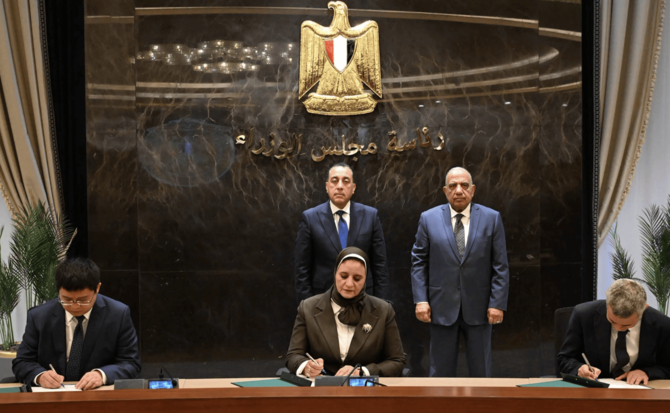
Egypt has signed a strategic agreement with Chinese manufacturer SANY Renewable Energy to establish a wind turbine manufacturing facility that will supply a planned 2-gigawatt (GW) wind power project in the Gulf of Suez while positioning the country as a regional production and export hub for renewable energy equipment. The agreement reflects Cairo’s broader strategy of combining clean energy deployment with industrial development, strengthening domestic manufacturing capabilities as it accelerates its transition towards a more diversified and lower-carbon electricity system.
The agreement, announced by the Egyptian government on June 24, was signed by SANY Renewable Energy, the Egyptian Electricity Transmission Company (EETC), and the New and Renewable Energy Authority (NREA). While financial details and the project’s implementation schedule were not disclosed, the partnership represents another significant milestone in Egypt’s efforts to localise renewable energy supply chains while attracting foreign direct investment into strategic manufacturing sectors.
According to Minister of Electricity and Renewable Energy Mahmoud Esmat, the proposed manufacturing facility is expected to achieve an annual production capacity of 2 GW within two years after the final agreements are signed. The associated wind farm, located in the northern Gulf of Suez—one of Africa’s strongest onshore wind corridors is expected to be connected to Egypt’s national electricity grid within approximately 23 months following the completion of contractual arrangements. The project extends beyond electricity generation. By manufacturing wind turbines and associated equipment domestically, Egypt aims to increase the proportion of locally produced components used in renewable energy projects while creating new industrial capacity capable of serving export markets across Africa, the Middle East and Southern Europe.

The initiative reflects a growing recognition among African governments that the clean energy transition presents not only an opportunity to decarbonise electricity systems but also to strengthen domestic industries, develop technical skills and capture greater value from rapidly expanding global renewable energy supply chains. According to the Egyptian government, locally manufactured equipment will initially support national renewable energy projects before surplus production is directed towards regional markets. This approach aligns with Egypt’s industrial development agenda, which increasingly links infrastructure investment with manufacturing competitiveness and export diversification.
The partnership also illustrates China’s expanding role in Africa’s energy transition. Chinese companies have become major investors across the continent’s renewable energy sector, financing and constructing solar parks, wind farms, electricity transmission networks and battery manufacturing facilities while increasingly establishing local production capacity rather than solely exporting equipment. Earlier this month, Egypt announced plans to deepen cooperation with China Energy Engineering Corporation to manufacture renewable energy components locally. Together, these agreements signal Cairo’s intention to establish an integrated renewable energy manufacturing ecosystem capable of supporting long-term energy security while reducing dependence on imported technology.
Egypt has set one of the continent’s most ambitious renewable energy targets, aiming for renewable sources to account for 45% of its electricity generation mix by 2028. Achieving that objective will require substantial investments across wind, solar, transmission infrastructure and energy storage systems as electricity demand continues to rise alongside population growth, industrial expansion and urbanisation. The Gulf of Suez remains central to these ambitions. The region consistently records some of the highest wind speeds in Africa, making it one of the continent’s most attractive destinations for large-scale wind energy development. Existing projects in the area have already demonstrated favourable operating conditions, encouraging both international investors and multilateral development institutions to support additional capacity.
Alongside renewable generation, Egypt is also prioritising investments in energy storage infrastructure to improve grid reliability and manage the intermittency associated with solar and wind power. The government has announced plans to develop battery energy storage systems with a combined capacity of 14,320 megawatt-hours by 2028, creating greater flexibility within the national electricity network as renewable generation expands. For Africa, Egypt’s latest agreement provides an example of how renewable energy investments can be integrated into broader industrial policy. Rather than focusing exclusively on installing renewable generation capacity, several countries are increasingly exploring opportunities to localise manufacturing, develop supply chains and create employment in sectors linked to the global energy transition.
Countries including South Africa, Morocco, Kenya and Namibia have similarly introduced policies aimed at attracting manufacturers of renewable energy equipment, battery technologies and green hydrogen infrastructure. The objective is to position African economies as participants in global clean technology value chains rather than remaining solely end-users of imported equipment. However, expanding domestic manufacturing also presents challenges. Competitive production depends on reliable electricity supply, efficient logistics, skilled labour, supportive industrial policies and sustained market demand. Manufacturers must also compete with established global producers that benefit from economies of scale and integrated supply networks.
Nevertheless, Egypt’s geographic position provides important strategic advantages. Located at the intersection of African, European and Middle Eastern markets, the country has access to major shipping routes through the Suez Canal while maintaining trade relationships that could support exports of renewable energy equipment to neighbouring regions. The agreement with SANY also reflects a broader evolution in China’s engagement with Africa. Increasingly, Chinese companies are shifting from infrastructure construction alone towards industrial partnerships that include technology transfer, local manufacturing and workforce development. Such arrangements have the potential to strengthen domestic industrial capabilities while supporting national energy transition objectives.
https://www.aecweek-registration.com/2026/
As governments across Africa seek to balance economic growth with climate commitments, projects that combine renewable energy deployment with manufacturing investment are likely to become increasingly important. They offer opportunities not only to expand access to clean electricity but also to diversify economies, strengthen industrial competitiveness and increase resilience against global supply chain disruptions.
Egypt’s latest partnership therefore represents more than another renewable energy investment. It signals an evolving approach to energy transition policy—one that places equal emphasis on electricity generation, industrial development and regional trade. Whether this strategy succeeds will depend on implementation, continued investor confidence and the country’s ability to build a competitive manufacturing ecosystem capable of serving both domestic and international markets. For Africa, the project illustrates how renewable energy can increasingly serve as a catalyst for broader economic transformation rather than simply an environmental objective.


