


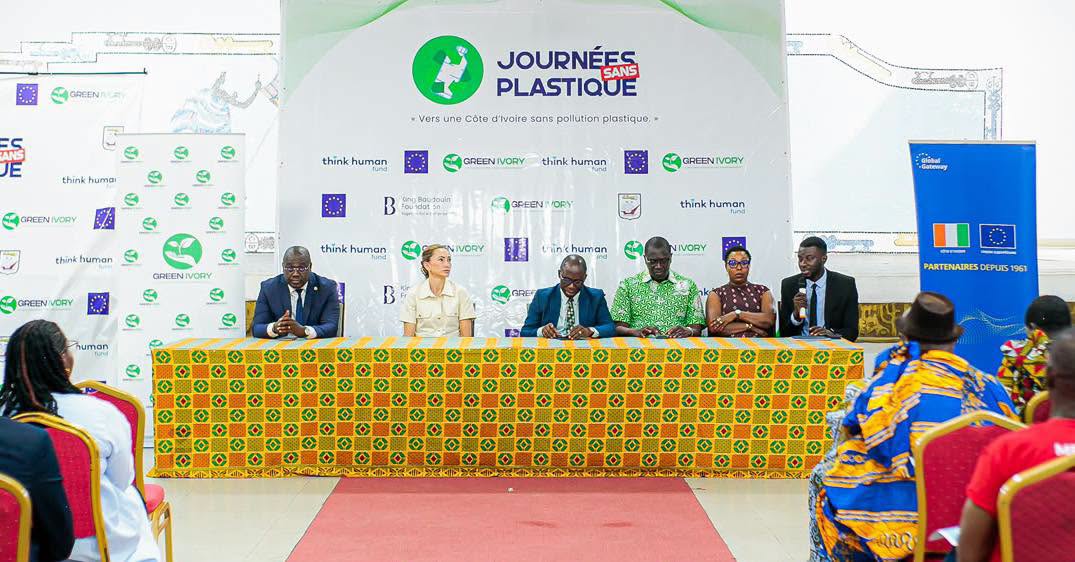
The European Union has launched the second phase of its Plastic-Free Days programme in Côte d’Ivoire, reinforcing efforts to tackle plastic pollution, strengthen waste management systems and promote a circular economy as part of the country’s broader environmental transition. The initiative, officially unveiled in Abidjan on 1 July 2026, is being implemented by Green Ivory in partnership with national authorities and development partners.
The programme aims to accelerate behavioural change, improve waste collection and recycling infrastructure, and mobilise communities to reduce plastic waste entering urban environments, rivers and coastal ecosystems. Building on the achievements of its first phase, the expanded initiative reflects growing international recognition that plastic pollution has become both an environmental and economic challenge requiring coordinated action across governments, businesses and civil society.
Plastic waste has emerged as one of the most significant environmental pressures facing Côte d’Ivoire, particularly in rapidly expanding urban centres where population growth has outpaced waste management infrastructure. In cities such as Abidjan, inadequate waste collection and disposal systems have contributed to blocked drainage channels, increased flood risks, marine pollution and biodiversity loss, while creating public health concerns linked to unmanaged waste.
According to the United Nations Environment Programme, the world generates more than 400 million tonnes of plastic waste annually, with only a small proportion being effectively recycled. Much of the remaining waste is disposed of in landfills, burned, or leaks into rivers and oceans, where it threatens ecosystems, fisheries and livelihoods. Africa, where urbanisation is among the fastest globally, faces mounting pressure to improve waste management while supporting sustainable economic growth.
Against this backdrop, the European Union’s renewed support seeks to strengthen locally driven solutions that address both environmental protection and economic opportunity. The second phase of Plastic-Free Days places greater emphasis on environmental education, citizen participation and the development of circular economy practices capable of transforming waste into economic value. Planned activities include nationwide awareness campaigns, community clean-up exercises, school outreach programmes, improved waste segregation systems, expanded recycling initiatives and advocacy encouraging reduced consumption of single-use plastics.
Rather than focusing exclusively on waste collection, the programme seeks to foster lasting behavioural change among households, businesses and public institutions by encouraging more responsible production, consumption and disposal practices. Programme implementer Green Ivory views the initiative as a long-term platform for environmental transformation rather than a series of isolated clean-up campaigns. Through partnerships with municipalities, schools, civil society organisations and private sector actors, the organisation aims to build a stronger culture of environmental stewardship while supporting the growth of recycling enterprises and green employment opportunities.
The emphasis on community ownership reflects an increasingly important principle within environmental governance: sustainable waste management depends not only on infrastructure investment but also on public participation, institutional coordination and effective policy implementation. The European Union has highlighted that reducing plastic pollution contributes simultaneously to biodiversity conservation, climate resilience, public health and sustainable economic development.
Improved waste management also supports climate objectives. According to UNEP, better collection, recycling and circular economy systems reduce greenhouse gas emissions associated with plastic production, uncontrolled waste disposal and open burning while lowering demand for virgin fossil fuel-based plastics. For Côte d’Ivoire, strengthening plastic waste management forms part of broader national efforts to improve environmental governance and protect natural resources that underpin economic development.
The country possesses extensive coastal ecosystems, forests and agricultural landscapes that support tourism, fisheries and export industries. However, increasing volumes of unmanaged plastic waste threaten marine biodiversity, freshwater resources and ecosystem services that many communities depend upon for livelihoods. The programme therefore aligns closely with Côte d’Ivoire’s wider environmental priorities, including strengthening waste management infrastructure, reducing pollution entering rivers and coastal waters, promoting sustainable consumption and enhancing resilience to climate-related environmental risks.
Beyond environmental protection, the initiative also reflects growing recognition of the economic potential associated with circular economy development across Africa. The African Development Bank and other development institutions have identified circular economy industries including recycling, waste recovery and resource efficiency—as emerging sources of employment, entrepreneurship and industrial innovation capable of supporting more sustainable economic growth. For many African cities, investment in recycling infrastructure presents opportunities to formalise waste value chains, improve working conditions for informal waste collectors and create new markets for recycled materials.
The Plastic-Free Days programme therefore seeks not only to reduce pollution but also to strengthen economic opportunities linked to sustainable waste management. International cooperation continues to play an important role in supporting these transitions. The European Union has increasingly expanded its environmental partnerships across Africa through programmes supporting climate adaptation, biodiversity conservation, sustainable urban development and circular economy initiatives. These partnerships combine financial resources, technical expertise and policy cooperation aimed at strengthening national capacity to address complex environmental challenges.
In Côte d’Ivoire, the Plastic-Free Days programme forms part of this broader cooperation framework, reinforcing collaboration between international partners, national institutions and local communities. The initiative also supports regional and continental policy objectives. Under African Union Agenda 2063, member states have committed to pursuing environmentally sustainable development, strengthening natural resource management and building resilient economies capable of supporting inclusive growth.
Similarly, global negotiations on a legally binding international treaty to end plastic pollution continue under the auspices of the United Nations, reflecting growing international consensus that coordinated action is required to address plastic waste throughout its lifecycle. For West Africa, where rapid urbanisation continues to place increasing pressure on municipal services, programmes such as Plastic-Free Days demonstrate the value of integrated approaches combining policy reform, community engagement, private sector participation and investment in environmental infrastructure.
https://www.aecweek-registration.com/2026/
While challenges remain regarding financing, institutional capacity and public awareness, the initiative illustrates how collaborative partnerships can help accelerate practical solutions tailored to local circumstances. As African economies continue to pursue greener development pathways, effective plastic waste management is increasingly recognised not only as an environmental necessity but also as an opportunity to strengthen urban resilience, protect natural capital and support more inclusive economic growth.
The expansion of the Plastic-Free Days programme therefore represents more than a continuation of environmental awareness activities. It reflects a broader shift towards embedding circular economy principles, environmental stewardship and community participation within national development strategies, reinforcing the growing role of sustainability as a driver of long-term economic resilience across Africa.


