


The European Bank for Reconstruction and Development (EBRD) and the European Union (EU) have expanded a €70 million guarantee programme aimed at accelerating green investment across sub-Saharan Africa, targeting sectors critical to the region’s energy transition, industrial transformation and sustainable economic development. The initiative represents the EBRD’s first operation in the region supported through an EU guarantee mechanism and reflects growing efforts to mobilise private capital for projects considered too risky under traditional financing models.
Announced on 7 July 2026, the expansion of the EFSD+ High-Barrier (Hi-Bar) guarantee programme will focus on investments in renewable energy, carbon-intensive industries seeking decarbonisation pathways and critical minerals value chains. The facility is designed to reduce investment risks and encourage financial institutions and private investors to participate in projects that contribute to Africa’s low-carbon transition. For sub-Saharan Africa, where infrastructure financing gaps remain significant, the move highlights the increasing importance of blended finance mechanisms that combine public guarantees with private capital. While the region possesses some of the world’s largest renewable energy resources and critical mineral reserves, investment continues to be constrained by perceived risks, limited project preparation capacity and challenges in accessing affordable capital.
According to Mark Bowman, Vice President for Policy and Partnerships at the EBRD, supporting climate investments in energy and carbon-intensive sectors is essential to building economies that are more resilient and capable of transitioning towards lower-carbon growth models. The Hi-Bar guarantee mechanism was initially launched in March 2024 with EU guarantees of up to €168 million. Its expansion into sub-Saharan Africa aims to support emerging climate technologies and investment areas that often struggle to attract commercial financing due to high upfront costs, uncertain returns or limited market track records. Unlike traditional lending programmes, guarantee facilities provide a form of risk-sharing that can help unlock financing by improving the confidence of commercial lenders and investors. For African economies, this approach has become increasingly important as governments seek to attract private capital for renewable energy projects, industrial decarbonisation and infrastructure development.
The expanded programme will focus on three areas where investment needs are particularly significant: energy systems, carbon-intensive industries and critical minerals supply chains. Energy remains one of Africa’s most urgent development priorities. Millions of people across sub-Saharan Africa continue to lack reliable electricity access, while businesses face challenges linked to high energy costs and unstable supply. Expanding renewable energy generation, strengthening grids and improving energy efficiency require significant investment beyond the capacity of public budgets alone. The programme’s focus on carbon-intensive industries also reflects the growing recognition that Africa’s industrial development must address both economic growth and emissions reduction. Sectors such as manufacturing, mining and processing require capital to adopt cleaner technologies while remaining competitive in global markets increasingly shaped by climate policies.
Critical minerals represent another strategic area. Africa holds significant deposits of minerals essential for clean energy technologies, including batteries, electric vehicles and renewable energy infrastructure. However, much of the value generated from these resources has historically been captured outside the continent due to limited processing and manufacturing capacity. Supporting sustainable critical minerals value chains could therefore create opportunities for industrial development, job creation and greater participation in the global clean energy economy. However, achieving this will require investment in responsible mining practices, local processing infrastructure and governance systems that ensure economic benefits are broadly shared.
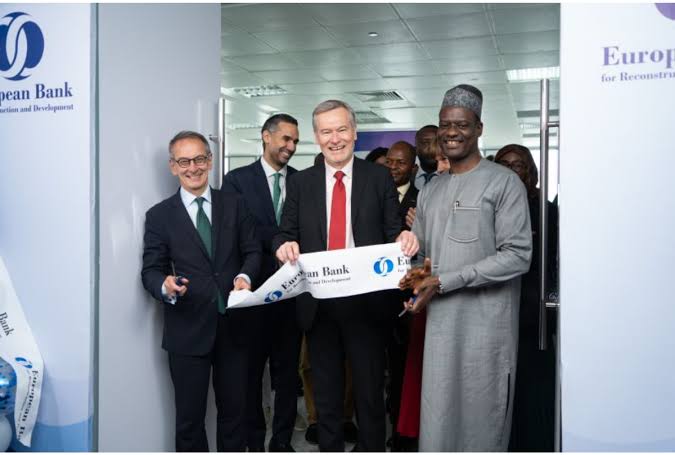
The expansion of the guarantee programme comes as the EBRD increases its engagement in sub-Saharan Africa. On 6 July 2026, the bank announced the opening of a new office in Lagos, Nigeria, aimed at supporting businesses, strengthening competitiveness and promoting economic resilience. Nigeria and Senegal became EBRD shareholders and countries of operation in 2025, marking a significant geographical expansion for the institution, which has historically focused on Europe, Central Asia, the Middle East and North Africa. The bank’s growing presence in Africa reflects increasing international attention on the continent’s investment potential and the need for new financing models to support sustainable growth. However, expanding operations also brings challenges, particularly in translating financial commitments into a pipeline of viable projects capable of attracting investment.
A day after announcing its Nigeria office, the EBRD confirmed that President Odile Renaud-Basso would make her first official visit to Senegal, where the institution plans to establish an office in Dakar and sign its first private-sector investment agreements. For countries across sub-Saharan Africa, the challenge is not only securing financing but ensuring that projects are sufficiently prepared, commercially viable and aligned with long-term development priorities. Many climate and infrastructure projects face delays because of limited feasibility studies, regulatory uncertainty, weak institutional capacity and difficulties in managing financial risks. Guarantee programmes such as EFSD+ Hi-Bar seek to address some of these barriers by making projects more attractive to investors. However, their effectiveness will depend on whether they can generate a strong pipeline of bankable opportunities and reach sectors where financing constraints are most severe.
https://www.aecweek-registration.com/2026/
The expansion also comes amid a broader shift in global climate finance. Developing countries have repeatedly highlighted the need for greater access to affordable financing to support climate adaptation, mitigation and sustainable development. For Africa, where climate vulnerability intersects with development needs, the availability of appropriate financing instruments remains central to achieving energy access, industrial growth and economic resilience. The EBRD-EU partnership signals a growing recognition that public finance alone cannot meet Africa’s investment needs. Mobilising private capital through risk-sharing mechanisms will be essential to closing infrastructure and climate finance gaps.
As the EBRD begins implementing its expanded operations in sub-Saharan Africa, the focus will increasingly shift from financial commitments to measurable outcomes: the number of projects supported, the amount of private capital mobilised and the extent to which investments contribute to stronger energy systems, sustainable industries and inclusive economic growth. For Africa’s green transition, the success of initiatives like the EFSD+ Hi-Bar facility will depend on whether they can convert guarantees into real investments that strengthen local economies while supporting global climate objectives.


