


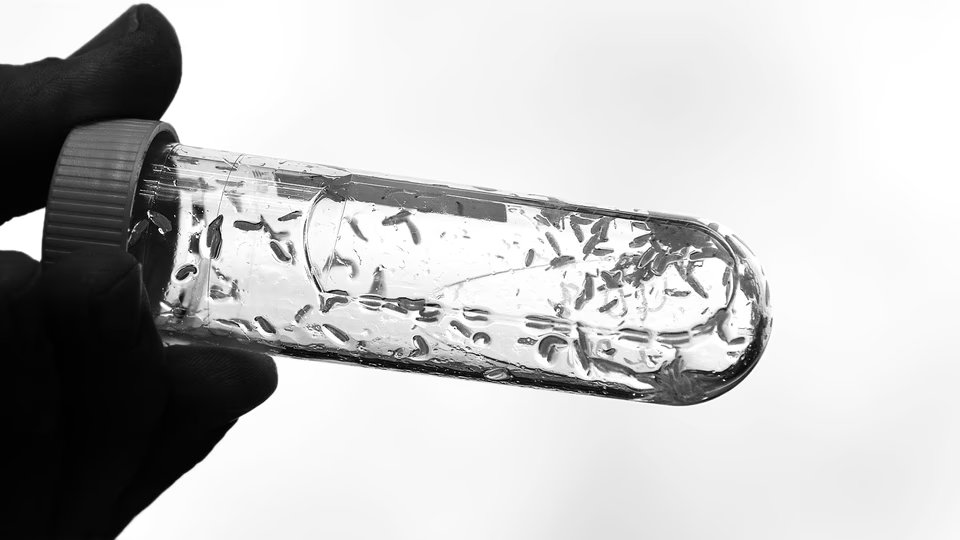
Medicinal maggot therapy, once regarded as an unconventional treatment, is emerging as a scientifically validated solution to one of Africa’s growing public health challenges: chronic wounds complicated by rising antimicrobial resistance. Researchers from Kenya’s KALRO Biotechnology Research Institute say the controlled medical use of sterile fly larvae could help reduce amputations, lower healthcare costs and ease pressure on overstretched health systems, particularly as diabetes cases continue to rise across the continent.
The renewed interest in medicinal maggot therapy (MDT), also known as larval therapy, comes as Africa faces a mounting burden of chronic wounds linked to non-communicable diseases. According to health estimates, around 24 million people across the continent are living with diabetes, with between 13% and 19% expected to develop diabetic foot ulcers during their lifetime. These wounds are slow to heal, highly vulnerable to infection and remain one of the leading causes of lower-limb amputation. Medical evidence indicates that nearly 85% of diabetes-related amputations are preceded by a foot ulcer, making timely intervention essential for improving patient outcomes and reducing disability.
 The challenge has become more complex as antimicrobial resistance (AMR) reduces the effectiveness of conventional antibiotic treatment. Chronic wound management has traditionally relied on repeated antibiotic use, surgical debridement and disposable wound-care materials. However, the increasing prevalence of drug-resistant bacteria is making infections harder and more expensive to treat while contributing to longer hospital stays and greater pressure on already constrained healthcare systems.
According to Paul Ngari, Head of the Pharmacology and Microbiology Programme at the KALRO Biotechnology Research Institute, these trends are forcing healthcare providers to reconsider traditional approaches to wound management. He argues that conventional treatment not only contributes to antimicrobial resistance through extensive antibiotic use but also creates significant environmental waste because of its dependence on single-use synthetic dressings and medical supplies.
Medicinal maggot therapy offers an alternative by using sterile larvae of the green bottle fly (Lucilia sericata) to remove dead tissue from chronic wounds. The larvae are applied within specially designed dressings that prevent escape while allowing them to feed selectively on necrotic tissue. During this process, the larvae release enzymes that break down dead tissue and produce antimicrobial compounds capable of suppressing difficult-to-treat pathogens, including Methicillin-resistant Staphylococcus aureus (MRSA) and Pseudomonas species. Their movement also stimulates blood circulation and tissue regeneration, supporting faster wound healing while preserving healthy tissue.
The therapy’s significance extends beyond clinical effectiveness. By reducing dependence on antibiotics, surgery and synthetic wound-care materials, MDT generates substantially less medical waste and lowers the environmental footprint associated with chronic wound treatment. Researchers argue that this aligns closely with the One Health framework, which recognises the interdependence of human, animal and environmental health, while also supporting broader efforts to improve healthcare sustainability.
Read also: https://news.scienceafrica.co.ke/the-yuck-therapy-that-could-transform-chronic-wound-care-in-africa/
Evidence from several African countries suggests that MDT is producing encouraging clinical outcomes. According to Regina Karanja, a scientist at the KALRO Biotechnology Research Institute, pilot programmes have demonstrated higher healing rates, improved infection control, lower antibiotic consumption and fewer amputations compared with conventional wound care. Studies conducted in Egypt have reported reductions in bacterial load of up to 70%, while clinical programmes in Nigeria, South Africa, Kenya and Tanzania have documented improved recovery rates among patients with chronic wounds that had previously responded poorly to standard treatment.
The economic implications are equally significant. Faster wound healing shortens hospital stays, reduces the need for repeated surgical interventions and allows patients, many of whom are of working age, to return to productive employment sooner. According to KALRO researchers, Kenya has demonstrated potential cost savings of approximately 50% compared with conventional wound management, suggesting that wider adoption could reduce long-term healthcare expenditure while limiting productivity losses for households and national economies.
Despite these advantages, medicinal maggot therapy remains largely confined to pilot programmes across much of Africa. Researchers identify several barriers to wider adoption, including limited facilities capable of producing medical-grade larvae, inadequate cold-chain logistics, the absence of comprehensive regulatory frameworks governing living medical products and limited clinical training among healthcare professionals. Public perception also remains a challenge, with cultural attitudes towards maggots continuing to influence patient acceptance despite growing scientific evidence supporting their medical use.
The discussion increasingly extends beyond healthcare into climate resilience. Researchers argue that climate change is likely to increase the prevalence and severity of chronic wounds by exacerbating diabetes-related complications through higher temperatures, food insecurity, flooding, displacement and declining public health resilience. At the same time, resource-efficient treatments capable of reducing antibiotic consumption and lowering healthcare emissions may become increasingly valuable as countries seek to strengthen climate-resilient health systems.
 According to Ngari, medicinal maggot therapy should therefore be integrated into national antimicrobial stewardship programmes, non-communicable disease strategies and climate adaptation planning. He argues that governments should consider recognising MDT within national clinical guidelines while exploring climate finance mechanisms that support the adoption of lower-carbon healthcare interventions.
For Africa, the implications extend beyond introducing an alternative wound treatment. The continent faces a dual challenge of managing rapidly growing non-communicable diseases while adapting healthcare systems to rising climate risks and increasing antimicrobial resistance. Innovations that simultaneously improve patient outcomes, reduce treatment costs and strengthen environmental sustainability may offer a practical pathway towards more resilient healthcare systems. As policymakers search for scalable solutions under increasing fiscal constraints, medicinal maggot therapy illustrates how locally supported scientific innovation could help address multiple development priorities through a single evidence-based intervention.


