


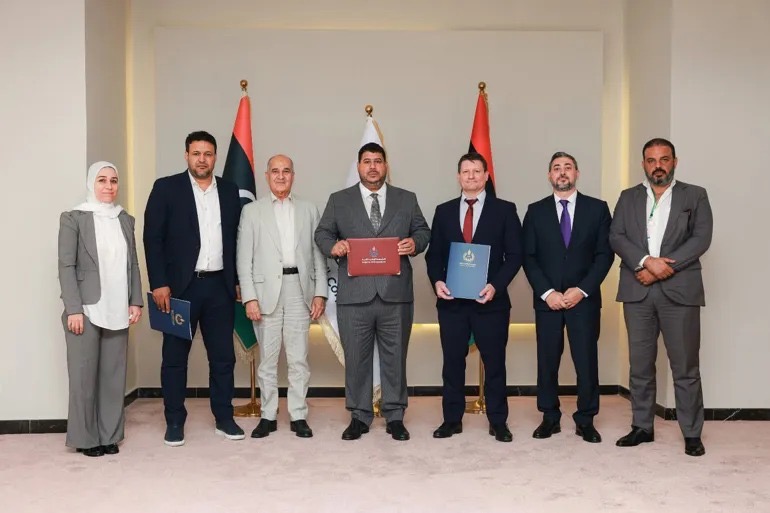
Libya’s National Oil Corporation (NOC) has signed an exploration and production-sharing agreement with Qatar-based UCC Holding for Block 47 in the Ghadamès Basin, marking another major Gulf investment entry into Libya’s hydrocarbons sector as the country seeks to expand production, strengthen domestic energy supply and attract foreign capital. The agreement, signed on July 9, 2026, includes participation from the Libyan Investment Authority (LIA) and aims to increase output from the North Hamada field from an estimated 33,000 barrels per day to approximately 80,000 barrels per day through new exploration and development activities.
The deal represents part of Libya’s broader effort to rebuild its oil sector after years of political instability, infrastructure constraints and declining international investment. Oil remains central to Libya’s economy, accounting for the majority of government revenues and foreign exchange earnings. According to the U.S. Energy Information Administration, Libya holds some of Africa’s largest proven crude oil reserves, making the stability and expansion of its energy sector significant not only for domestic fiscal recovery but also for regional and global energy markets. Under the agreement, UCC Holding will fully finance the project, although the company and Libyan authorities have not disclosed the total investment value or the timeframe required to achieve the targeted production increase. Before development begins, the company must complete technical studies and secure regulatory approval for its proposed development plans.

The partnership also includes plans to utilise associated natural gas generated during oil production to support power generation. This component aligns with Libya’s efforts to address recurring electricity shortages, which have affected households, businesses and industrial activity across the country. Expanding domestic gas utilisation could reduce pressure on imported energy sources and improve reliability within Libya’s electricity system. For Libya, the agreement reflects a renewed attempt to position the energy sector as a foundation for economic recovery. The country’s oil production has shown signs of improvement, with the NOC reporting output of around 1.5 million barrels per day in recent months, the highest level recorded in more than a decade. However, maintaining production growth will depend on addressing infrastructure challenges, improving operational efficiency and creating a more predictable investment environment.
UCC Holding’s entry into upstream energy also represents a strategic expansion of Gulf commercial involvement in Libya. The company, a subsidiary of Qatar’s Power International Holding, has previously operated in Libya through infrastructure projects, including the rehabilitation of Tripoli International Airport. The oil agreement extends its role from construction and infrastructure development into exploration and production activities. The investment comes amid growing interest from Gulf energy companies in Libya’s hydrocarbons sector. In June, Oman’s OQ Exploration and Production signed an agreement with Libyan authorities covering oil and gas exploration opportunities. During the same period, Libya also announced agreements involving international energy companies including Eni, QatarEnergy and Repsol.
According to industry analysts, Libya’s geographical position has increased its strategic relevance within Mediterranean energy markets. Disruptions affecting traditional Gulf export routes have heightened attention on alternative supply corridors, particularly those connected to the Mediterranean. Libya’s crude exports, which primarily move through Mediterranean ports, provide access to European and international markets. The renewed investor interest highlights the continuing importance of Africa’s energy resources within global energy security discussions. While many African countries are pursuing renewable energy expansion and diversification strategies, hydrocarbons remain a critical source of public revenue and infrastructure financing in several economies, particularly in North Africa.
For Libya, the challenge will be balancing increased oil production with longer-term economic diversification and climate-related commitments. Global energy markets are undergoing structural changes as countries increase investment in renewable power, energy efficiency and low-carbon technologies. Oil-producing African countries are increasingly focused on using existing natural resources to strengthen domestic economies while preparing for changing global demand patterns. The involvement of the Libyan Investment Authority in the agreement also highlights the role of sovereign wealth institutions in managing natural resource assets. Effective governance, transparent revenue management and strategic investment of energy income will be important factors in determining whether increased production translates into broader economic benefits.
https://www.aecweek-registration.com/2026/
The agreement between NOC and UCC Holding therefore represents more than an upstream oil investment. It reflects Libya’s attempt to reconnect with international capital markets, rebuild critical infrastructure and leverage its geographic position in an evolving global energy landscape. The success of the project will depend on execution capacity, regulatory stability and the ability to convert energy revenues into sustainable economic development.


