


Nigeria’s federal government and the Niger Delta Development Commission (NDDC) are preparing to establish a $500 million agribusiness investment fund aimed at accelerating large-scale commercial agriculture across the Niger Delta, as the country seeks to diversify an economy historically dependent on oil revenues. The initiative, which will be formally presented at the inaugural Niger Delta Agriculture Development and Investment Summit in Abuja on July 15, is designed to attract private capital, development finance and agribusiness investment into one of Nigeria’s most resource-rich but economically underdeveloped regions.
The proposed fund reflects a broader policy shift by Nigeria to expand agriculture’s role in economic growth, food security and employment creation. While the Niger Delta has long been associated with hydrocarbons and energy production, government officials argue that the region’s extensive land resources, water systems and agricultural potential provide opportunities for commercial farming, processing and value-chain development.
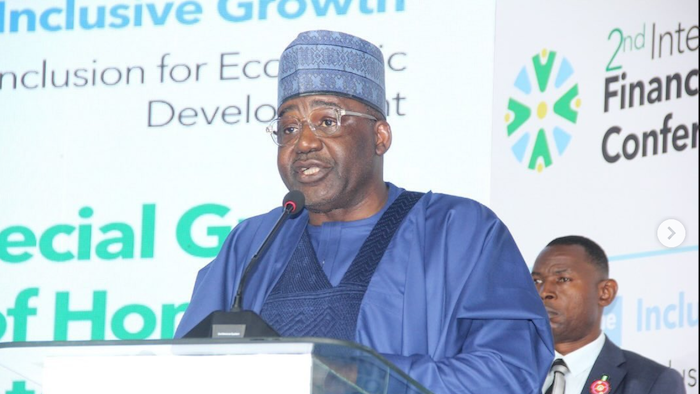
Speaking after briefing Vice President Kashim Shettima, Deputy Chief of Staff to the President Senator Ibrahim Hadejia said the summit represented part of President Bola Tinubu’s broader economic diversification agenda. The event, themed “Unlocking Investment for Sustainable Agricultural Transformation in the Niger Delta,” is expected to bring together approximately 500 participants, including international investors, development finance institutions, agribusiness companies, policymakers and development partners.

According to Hadejia, the objective is to move the region from potential to measurable economic output by creating stronger links between agricultural production, investment and markets. The approach reflects growing recognition across Africa that agricultural transformation requires more than increasing production; it depends on infrastructure, financing, processing capacity, logistics networks and reliable market access.
The Niger Delta comprises nine states and has historically been central to Nigeria’s oil economy. However, decades of environmental challenges, infrastructure gaps and limited economic diversification have constrained broader development outcomes. The proposed agricultural investment strategy seeks to reposition the region by developing commercial value chains capable of supporting local industries and improving participation in national and regional food markets.
NDDC Managing Director Dr. Samuel Ogbuku said the proposed $500 million fund would serve as a catalyst for commercial agriculture by shifting away from traditional government-supported interventions towards investment models designed to attract private sector participation.
Unlike previous agricultural conferences focused mainly on policy discussions, the upcoming summit is intended to function as an investment marketplace where investors, financiers and agribusiness operators can identify specific financing opportunities. According to Ogbuku, the focus will be on converting agricultural potential into commercially viable projects. The structure of the proposed fund is expected to combine equity investment with direct capital mobilisation rather than relying exclusively on conventional government lending. This approach reflects a wider trend across Africa, where governments and development institutions are increasingly seeking blended finance models to attract private investment into agriculture and food systems.
Agriculture remains one of Nigeria’s largest sources of employment, but productivity challenges, limited processing capacity and inadequate infrastructure continue to restrict the sector’s contribution to economic growth. Strengthening value chains has become a priority as Nigeria faces rising food demand from a rapidly growing population and pressure to reduce dependence on food imports. Ogbuku highlighted the importance of addressing the entire agricultural ecosystem, noting that production, processing, storage and market access must operate together. He cited previous challenges involving a commission-supported rice mill in Rivers State, where limited access to raw materials affected operational capacity.
The proposed investment programme will therefore focus not only on agricultural production but also on supporting infrastructure required for commercial agriculture. This includes storage facilities, processing centres, farmer aggregation systems and stronger connections between producers and buyers. A key component of the initiative will be the expansion of out-grower schemes, which connect smallholder farmers with commercial investors and guaranteed off-takers. Such models are increasingly used across Africa to reduce market uncertainty, improve farmer incomes and create predictable supply chains for processors.
The NDDC has also established the Niger Delta Chamber of Commerce to support business development in the region and has committed N5 billion to provide repayable financing for small and medium enterprises. The initiative is intended to strengthen local businesses participating in agricultural value chains. For development finance institutions and private investors, the Niger Delta presents both opportunities and challenges. The region’s agricultural potential is significant, but successful implementation will depend on governance structures, investment transparency, security conditions and the ability to create commercially sustainable projects.
The transition from an oil-dependent regional economy towards agriculture-driven diversification also reflects a broader African development challenge. Resource-rich regions across the continent are increasingly exploring how natural wealth can be complemented by investments in agriculture, manufacturing and local enterprise development. Climate considerations will also influence the long-term viability of agricultural investments. Nigeria’s farming systems face increasing pressure from changing rainfall patterns, flooding and land degradation. Building climate-smart agriculture practices into investment plans will be important for protecting productivity and reducing future risks.

If successfully implemented, the Niger Delta agribusiness fund could become a significant mechanism for mobilising private capital into Nigeria’s food economy. However, its impact will depend on whether investment reaches productive enterprises, strengthens local value chains and delivers sustainable economic opportunities beyond government-led programmes. The upcoming summit therefore represents a test of Nigeria’s ability to convert agricultural ambitions into investable projects. For the Niger Delta, the challenge is not only replacing dependence on oil but building an economic model where agriculture, infrastructure and private enterprise contribute to long-term regional resilience.


