


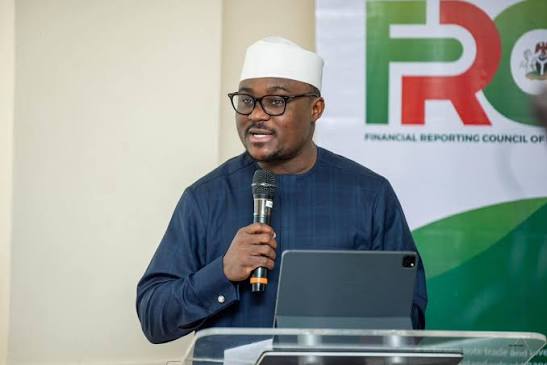
Nigeria’s capital markets regulator has warned that companies across Africa risk losing access to growing pools of international investment unless they strengthen Environmental, Social and Governance (ESG) disclosures, underscoring the increasing importance of sustainability reporting in global capital allocation and corporate competitiveness.
Speaking at the FITC Sustainability & ESG Conference 2026 in Lagos, Director-General of the Securities and Exchange Commission (SEC), Dr Emomotimi Agama, said ESG reporting has evolved beyond regulatory compliance into a strategic requirement for attracting long-term capital. According to Agama, international investors are increasingly directing funds toward businesses that demonstrate transparent governance, credible sustainability performance and effective risk management, leaving companies with weak disclosure frameworks at a competitive disadvantage.
Nigerian companies that fail to strengthen their Environmental, Social and Governance disclosures risk missing significant global capital flows as investors increasingly prioritise transparency, responsible governance and sustainable business practices,” Agama said.
His remarks come as African governments and financial regulators seek to mobilise significantly higher levels of private investment to finance climate adaptation, renewable energy, resilient infrastructure and broader sustainable development priorities. Despite contributing only a small share of global greenhouse gas emissions, Africa continues to face one of the world’s largest climate financing gaps, with development finance institutions estimating that hundreds of billions of dollars will be required over the coming decades to support the continent’s transition to climate-resilient growth.
Held under the theme Building a Sustainable Africa: Integrating Environmental Stewardship, Social Impact, and Strong Governance for a Prosperous Future, the conference brought together regulators, investors, financial institutions, policymakers and business leaders to examine how sustainability principles can strengthen economic resilience while improving Africa’s attractiveness to international capital.
Managing Director and Chief Executive Officer of FITC, Dr Chizor Malize, said sustainability has become a strategic driver of competitiveness rather than a voluntary corporate initiative. According to her, organisations that successfully integrate environmental stewardship, social investment and governance into business strategy will be better positioned to manage risk, attract investment and generate sustainable long-term value.
According to Malize, “Sustainability and ESG have evolved from corporate responsibility initiatives to strategic drivers of competitiveness, resilience and long-term value creation,” adding that Africa’s long-term economic trajectory will depend on leadership decisions made today.
The conference reflected a broader shift taking place across global financial markets, where institutional investors increasingly evaluate climate-related risks, governance standards and social performance alongside traditional financial metrics. International sustainability reporting frameworks are also becoming more closely aligned, creating stronger expectations for disclosure consistency across jurisdictions.
Opening the conference, Chairman of the Advisory Board of the FITC Sustainability & ESG Institute, Professor Fabian Ajogwu, said climate change should be viewed not only as an environmental challenge but also as a strategic economic issue affecting investment, productivity and institutional stability. According to Ajogwu, embedding sustainability into corporate strategy and national development planning is becoming essential for protecting Africa’s natural capital while strengthening long-term economic resilience.
The conference also highlighted the growing role of sustainable finance in supporting Africa’s energy transition. Representing the Deputy Governor of the Central Bank of Nigeria for Economic Policy, Philip Ikeazor, Mike Ononugbo said financial instruments such as green bonds, sustainability-linked loans and green equity can help channel investment into renewable energy, climate-resilient infrastructure and environmentally sustainable enterprises.
Read also: https://allafrica.com/stories/202607160146.html
According to Ononugbo, initiatives including the Africa Carbon Market Initiative and the Green Climate Fund could help narrow Africa’s climate financing deficit while strengthening the continent’s capacity to pursue low-carbon economic development.
The discussions come as African regulators continue strengthening sustainability disclosure requirements to improve market transparency and investor confidence. Across the continent, stock exchanges and financial regulators have gradually introduced ESG reporting guidelines, reflecting growing recognition that sustainability performance increasingly influences investment decisions and access to international finance.
The conference also examined governance, environmental stewardship and social investment as interconnected drivers of economic development. Participants argued that strengthening public institutions, expanding renewable energy investment, improving corporate accountability and investing in education, healthcare and digital inclusion are mutually reinforcing priorities for sustainable growth.
 Chairman of the MTN Foundation, Mosun Belo-Olusoga, said Africa’s future competitiveness would ultimately depend on the quality of its institutions, leadership and ability to create lasting value for communities rather than solely on its natural resource base. She called for stronger governance, accountability and innovation to position African economies for long-term prosperity.
For African businesses, the conference underscored that sustainability reporting is increasingly becoming an economic imperative rather than a reputational exercise. As global investors continue integrating ESG considerations into portfolio allocation and risk assessment, companies capable of producing transparent, credible and measurable sustainability disclosures are likely to improve their access to international capital, while those that fail to adapt may face rising financing costs and reduced investor interest. As governments pursue infrastructure expansion, energy transition and industrial development, stronger ESG frameworks are expected to play an increasingly important role in mobilising the private capital needed to support Africa’s long-term economic transformation.


