


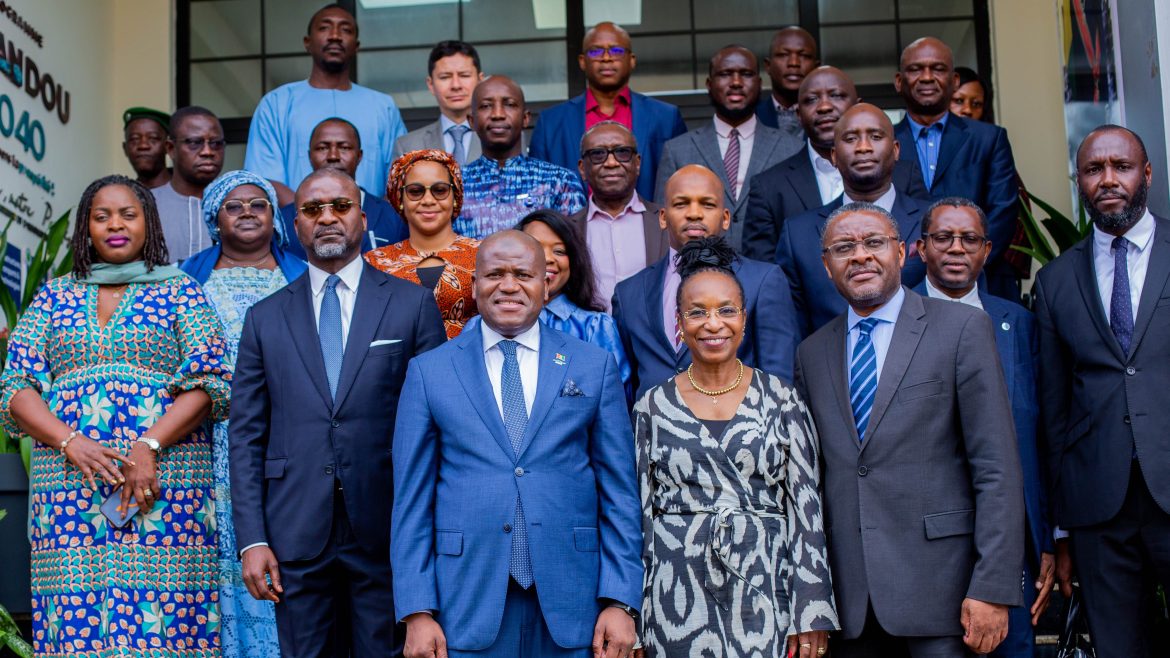
The Government of Guinea and the United Nations Industrial Development Organization (UNIDO) have officially launched the Programme for Country Partnership (PCP) 2026–2030, unveiling an ambitious framework aimed at accelerating sustainable industrialisation, diversifying the economy and strengthening long-term economic resilience. Announced during a high-level ceremony in Conakry on 30 June 2026, the initiative brings together government institutions, development finance partners, private sector actors and international organisations under a coordinated platform designed to mobilise investment, expand industrial value chains and create quality employment opportunities. The partnership reflects a growing recognition across Africa that industrialisation remains central to achieving inclusive economic growth while supporting climate resilience and sustainable development.
The launch comes as Guinea seeks to translate its abundant natural resource wealth into broader industrial development. Despite possessing some of the world’s largest reserves of bauxite, substantial iron ore deposits, gold resources and significant hydropower potential, much of the country’s economic activity has historically relied on exporting raw commodities with limited domestic processing. According to the World Bank and the African Development Bank, increasing value addition through local manufacturing and industrial processing remains one of the continent’s most significant opportunities for accelerating economic transformation, creating employment and strengthening resilience against global commodity price volatility.
UNIDO’s Programme for Country Partnership represents the organisation’s flagship model for promoting Inclusive and Sustainable Industrial Development (ISID). Unlike traditional development programmes that often operate independently across sectors, the PCP framework seeks to align public policy, private investment, technical assistance and development finance around nationally defined industrial priorities. The objective is to improve coordination among stakeholders while leveraging larger volumes of investment capable of supporting structural economic transformation.
For Guinea, the partnership provides a strategic framework through which industrial development can be integrated with broader national priorities, including economic diversification, climate resilience, enterprise development and job creation. By coordinating the efforts of government agencies, financial institutions, bilateral partners and the private sector, the programme aims to improve implementation efficiency while reducing duplication across development initiatives.
According to UNIDO, the PCP model has already been implemented in several developing economies, where coordinated partnerships have helped mobilise investment into manufacturing, agro-processing, renewable energy, infrastructure and industrial innovation. The approach recognises that industrial transformation requires more than capital investment alone; it also depends on effective institutions, supportive policies, access to technology, workforce development and stronger collaboration between public and private actors.
A defining feature of Guinea’s new partnership is its emphasis on economic diversification. For decades, Guinea’s economy has remained heavily dependent on mineral exports, leaving public revenues and economic growth exposed to fluctuations in international commodity markets. Expanding domestic manufacturing and processing industries could enable the country to capture greater value from its natural resources while reducing vulnerability to external shocks.
This strategy aligns closely with the African Union’s Agenda 2063, which identifies industrialisation, value addition and regional manufacturing as essential pillars of Africa’s long-term development agenda. It also supports the objectives of the African Continental Free Trade Area (AfCFTA), which seeks to strengthen intra-African trade by encouraging countries to produce and exchange higher-value manufactured goods rather than relying primarily on exports of raw materials.
The partnership places particular emphasis on strengthening competitive industrial value chains, recognising that sustainable industrial development depends on improving productivity across multiple sectors rather than focusing solely on large-scale manufacturing. Investments are expected to support enterprise development, industrial innovation and the expansion of processing industries capable of supplying both domestic and regional markets.
Green industrialisation has emerged as another central pillar of the Programme for Country Partnership. As governments across Africa pursue economic growth alongside climate commitments, increasing attention is being directed toward industrial models that improve resource efficiency while reducing environmental impacts.
The Guinea programme promotes cleaner production technologies, sustainable manufacturing practices and more efficient use of natural resources. According to UNIDO, integrating environmental sustainability into industrial policy can enhance competitiveness by lowering production costs, improving energy efficiency and increasing access to international markets where environmental standards are becoming increasingly important. For African exporters, sustainable industrial production is no longer simply an environmental consideration. International markets are introducing stricter sustainability requirements through supply chain regulations, carbon reporting obligations and environmental due diligence frameworks. Countries capable of demonstrating responsible production practices may therefore strengthen their position within evolving global value chains while attracting greater volumes of sustainable investment.
Employment creation remains one of the programme’s most significant development objectives. Guinea has a rapidly growing young population entering the labour market each year, creating increasing pressure to generate productive employment opportunities beyond the extractive industries. The PCP seeks to address this challenge by strengthening industrial ecosystems that encourage entrepreneurship, enterprise growth and skills development. Particular emphasis is placed on expanding opportunities for women and young people, recognising that inclusive industrialisation contributes not only to economic growth but also to broader social development and poverty reduction.
According to the International Labour Organization (ILO), expanding manufacturing and value-added industries typically generates stronger employment multipliers than reliance on primary commodity exports. Industrial development also creates demand for supporting services including logistics, engineering, finance, maintenance and digital technologies, contributing to wider economic diversification. The partnership further reflects an evolving approach to development finance across Africa. Rather than relying exclusively on public expenditure, the Programme for Country Partnership seeks to mobilise investment through coordinated collaboration between governments, multilateral development banks, bilateral partners, commercial investors and international financial institutions.
This blended financing approach has become increasingly important as African governments balance ambitious infrastructure and industrial development goals with fiscal constraints. Coordinated investment platforms allow development partners to pool financial resources, technical expertise and policy support around nationally owned priorities while reducing implementation risks.
The launch of Guinea’s PCP also reinforces broader continental efforts to strengthen industrial competitiveness. According to the African Development Bank, Africa’s manufacturing sector currently accounts for a relatively small share of global industrial output despite the continent possessing abundant natural resources, expanding consumer markets and one of the world’s fastest-growing labour forces. Accelerating industrialisation remains essential for achieving sustained economic growth, increasing export diversification and improving productivity across African economies.
The programme is expected to contribute to several United Nations Sustainable Development Goals (SDGs), including those relating to decent work, industry and innovation, responsible consumption and production, climate action and partnerships for sustainable development. By integrating environmental sustainability with industrial expansion, Guinea seeks to demonstrate that economic growth and climate resilience can reinforce rather than compete with one another.
For Guinea, the launch of the Programme for Country Partnership represents more than the introduction of another development initiative. It signals a strategic shift towards coordinated industrial policy that places equal emphasis on investment mobilisation, institutional collaboration, innovation and sustainable production. If effectively implemented over the next five years, the partnership could strengthen Guinea’s productive capacity, expand manufacturing opportunities and improve the country’s position within regional and global value chains.
More broadly, the initiative reflects an emerging trend across Africa where industrialisation is increasingly viewed not only as a pathway to economic growth, but also as a foundation for resilience, competitiveness and sustainable development. As governments seek to reduce dependence on commodity exports while responding to changing global market dynamics, integrated partnerships such as UNIDO’s Programme for Country Partnership may provide an increasingly important model for achieving long-term structural transformation.


