


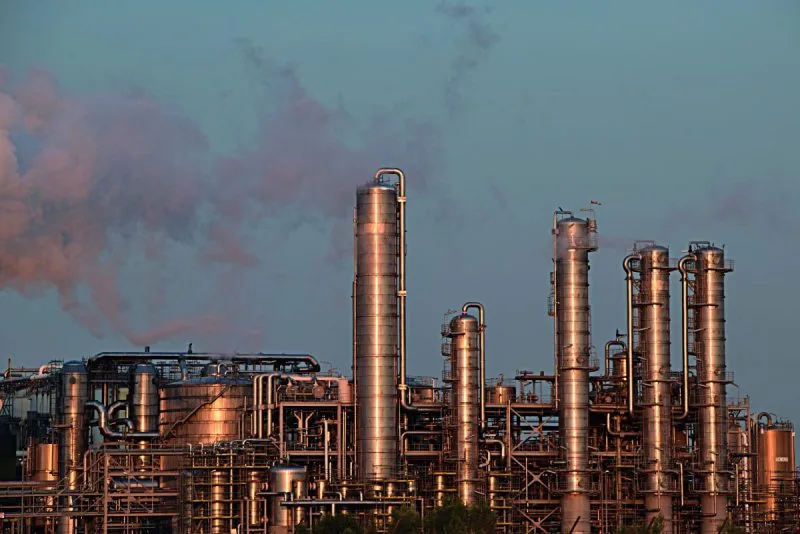
Kenya’s plan to develop the proposed 700,000-barrel-per-day Dangote Lamu refinery has entered a more uncertain phase after Greenpeace Africa signalled it is considering legal action over the project’s environmental approval process, raising questions about regulatory compliance, public participation and investor certainty. While the environmental organisation has not filed a court case, its concerns over the timing of government approvals and the completion of the Environmental and Social Impact Assessment (ESIA) have introduced fresh scrutiny to one of East Africa’s largest planned energy infrastructure investments. The dispute underscores the increasingly central role that environmental governance and stakeholder engagement play in determining the viability of major industrial projects across Africa.
The refinery forms part of Kenya’s broader industrialisation strategy and its ambition to position itself as a regional energy hub. Government officials argue that expanding domestic refining capacity would reduce dependence on imported petroleum products, strengthen energy security and support industrial growth across East Africa. According to the Kenyan government, the facility is expected to produce up to 700,000 barrels of refined petroleum products per day, supplying not only the domestic market but also neighbouring economies including Uganda, Tanzania and South Sudan. Officials contend that recent disruptions to global shipping routes, including tensions affecting the Strait of Hormuz, have reinforced the strategic importance of developing regional refining capacity capable of reducing exposure to external supply shocks.
Greenpeace Africa, however, argues that projects of this scale must comply fully with Kenya’s environmental legislation and constitutional provisions on public participation before implementation proceeds. The organisation maintains that commitments to the refinery were announced before the environmental assessment process had concluded and before communities surrounding the proposed development site had sufficient opportunity to participate in decision-making. According to Greenpeace Africa, greater transparency is also required regarding the economic case presented for the refinery, particularly government estimates that the project could generate approximately 60,000 jobs. The organisation has requested further clarification on how many of those positions would be temporary construction roles, permanent operational employment or indirect opportunities created through associated industries.
The disagreement reflects a broader shift in how large-scale infrastructure investments are evaluated across Africa. Environmental and social governance considerations have increasingly become investment risks alongside financial and engineering assessments. International lenders, institutional investors and export credit agencies now place greater emphasis on regulatory compliance, environmental safeguards and community engagement when financing major industrial developments. Delays associated with legal disputes or permitting processes can significantly affect project costs, financing schedules and long-term commercial viability.
Read also: https://econews.co.ke/2026/08/04/dangote-lamu-refinery-greenpeace-legal-challenge/
According to the Kenyan government, preparatory work for the refinery is already underway. Soil investigations, engineering studies and preliminary design activities have commenced while financing arrangements are expected to combine internally generated capital, bond issuances, proceeds from a future public listing and Kenya’s planned seed investment of approximately US$165 million. Officials have also indicated that discussions continue with regional governments interested in participating in the project, reflecting its intended role within East Africa’s wider energy infrastructure network.
The location of the proposed refinery gives the project additional strategic importance. Lamu sits at the centre of the Lamu Port-South Sudan-Ethiopia Transport (LAPSSET) Corridor, one of Africa’s largest regional infrastructure initiatives designed to strengthen trade connectivity between East African economies. Integrating refining capacity into the corridor could enhance regional fuel distribution while supporting industrial development linked to port infrastructure, logistics and manufacturing. For policymakers, the refinery represents an opportunity to increase value addition within the petroleum supply chain rather than relying predominantly on imported refined products.
Yet Lamu’s development history continues to influence public debate. Previous legal challenges surrounding the LAPSSET port project established important precedents regarding environmental governance and community consultation. Kenyan courts found that aspects of the earlier development process failed to satisfy statutory requirements for public participation and contributed to environmental impacts affecting local fishing communities. Subsequent compensation awarded to thousands of fishermen reinforced the importance of incorporating environmental and social safeguards into large infrastructure projects from the earliest planning stages.
That experience has heightened expectations among local communities regarding consultation and transparency. Residents acknowledge the potential economic opportunities associated with refinery construction, including employment, improved infrastructure and expanded commercial activity. At the same time, fishing communities, tourism operators and civil society organisations continue to seek greater clarity regarding possible impacts on marine ecosystems, coastal livelihoods and long-term environmental sustainability. Their concerns reflect the reality that coastal economies often depend on balancing industrial development with the preservation of natural assets that support fisheries, tourism and ecosystem services.
 The refinery debate also illustrates the broader policy challenge confronting many African governments pursuing industrial expansion while strengthening environmental governance. As countries seek to capture greater value from energy and mineral resources, regulators increasingly face the task of ensuring that investment approval processes remain credible, transparent and consistent with national environmental legislation. Strong governance frameworks reduce legal uncertainty, improve investor confidence and help minimise future project disruptions arising from unresolved social or environmental concerns.
The next significant milestone will be the publication and review of the completed Environmental and Social Impact Assessment. Its findings, together with the extent of public consultation that follows, are expected to shape regulatory decisions and determine whether the refinery advances according to current timelines or encounters prolonged legal and administrative review. For Kenya and the wider East African region, the outcome will represent more than a decision on a single refinery. It will serve as a test of how major industrial investments can reconcile energy security, economic transformation and regional integration with the increasingly important demands of environmental accountability and sustainable development.


