


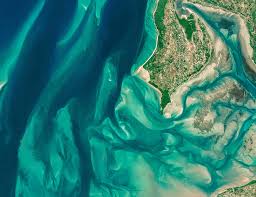
African governments and maritime industry leaders are being urged to place Environmental, Social and Governance (ESG) principles at the centre of Blue Economy development as the continent seeks to attract international investment into ports, shipping, fisheries and coastal infrastructure. The call was made during a high-level international webinar held ahead of the Strategic Green Maritime and Blue Economy Executive Management Training Workshop scheduled to take place in Accra, Ghana, from 14 to 16 October, where policymakers, regulators, investors and development practitioners examined how stronger governance and investment-ready projects can unlock Africa’s maritime potential.
Speaking during the webinar, Blue Economy specialist Dr. Felicia Chinwe Mogo argued that Africa’s comparative advantage lies not only in the scale of its marine resources but increasingly in its ability to structure commercially viable projects that meet international sustainability and governance expectations. According to Mogo, global investors are placing greater emphasis on ESG performance when evaluating infrastructure and development opportunities, making transparent governance, environmental stewardship and measurable social outcomes essential requirements rather than optional considerations.
The discussion reflects a broader shift occurring across global capital markets, where sustainability-linked investment criteria are increasingly influencing access to long-term financing. Infrastructure investors, multilateral lenders and development finance institutions are placing greater scrutiny on governance quality, environmental risk management and social safeguards as part of project appraisal processes. For African maritime economies seeking to mobilise capital, aligning with these standards is becoming an important factor in improving investor confidence and reducing financing risks.
Africa possesses approximately 30,000 kilometres of coastline, extensive inland waterways and some of the world’s richest marine ecosystems. The Blue Economy encompasses economic activities linked to oceans, seas, lakes and coastal resources, including shipping, fisheries, aquaculture, offshore renewable energy, tourism and marine biotechnology. Despite these advantages, many African countries continue to capture only a small share of the economic value generated by maritime industries because of infrastructure deficits, fragmented regulatory systems and limited investment in value-added sectors.
According to Mogo, ESG integration offers an opportunity to strengthen project quality across maritime industries while improving access to international finance. Investments in ports, logistics, fisheries, coastal tourism and marine infrastructure increasingly require robust governance systems, environmental compliance and community engagement to satisfy both commercial lenders and development finance institutions. She noted that countries unable to demonstrate these standards risk falling behind as competition for sustainable investment intensifies.
The webinar also emphasised the importance of moving beyond isolated infrastructure projects towards integrated Blue Economy strategies capable of generating multiple sources of economic value. Participants argued that linking port development with fisheries, logistics, manufacturing, tourism and coastal enterprise development would improve economic resilience while expanding employment opportunities across maritime value chains.
Read also: https://realnewsmagazine.net/esg-key-to-africas-maritime-competitiveness-expert-says/
Examples from countries such as Seychelles and Indonesia featured prominently during the discussions. According to Mogo, both countries have successfully mobilised innovative financing instruments, including Blue Bonds, by combining strategic planning, institutional coordination and credible governance frameworks. Their experiences demonstrate how environmental conservation and economic development can be pursued simultaneously through carefully structured financing mechanisms that reward sustainable resource management.
For Africa, however, replicating these approaches will require significant improvements in project preparation and institutional capacity. Many potentially viable maritime investments struggle to reach financial close because of weak feasibility studies, fragmented governance arrangements or limited technical capacity during project development. Strengthening these areas is expected to become increasingly important as governments seek to diversify financing sources beyond conventional public expenditure.
Professor Chidi Magnus Onuoha, a United Nations-accredited expert on climate change and green economics, described the Blue Economy as one of Africa’s most significant opportunities for economic transformation. He argued that sustainably managed marine resources can support industrialisation, expand employment and stimulate inclusive growth while contributing to climate resilience and environmental protection. His remarks reinforce growing recognition that ocean-based industries could become increasingly important components of Africa’s long-term economic diversification strategies.
The webinar formed part of a broader knowledge series designed to prepare stakeholders for the Executive Management Training Workshop on “Navigating the Future of Maritime Sustainability for African Development.” An earlier session led by maritime policy expert Dakuku Peterside explored Green Maritime as a strategic business imperative capable of strengthening commercial competitiveness rather than simply responding to regulatory compliance. The latest discussions shifted attention towards translating policy ambitions into investment-ready projects through stronger governance, ESG integration and strategic partnerships.
One practical outcome of the discussions was the proposal to dedicate part of the October workshop to project development clinics where governments, businesses and entrepreneurs will receive technical guidance on structuring bankable maritime investments. Organisers indicated that participants will work alongside international specialists to improve project preparation, strengthen ESG compliance, identify financing options and develop implementation frameworks capable of attracting institutional investors.
According to workshop convener Sam Nwosu, the initiative is intended to move discussions beyond policy dialogue towards practical implementation. By combining technical expertise, project preparation support and investor engagement, organisers hope to strengthen Africa’s pipeline of commercially viable Blue Economy projects capable of generating measurable economic and environmental outcomes.
 The discussions arrive as several African governments seek to position maritime industries as drivers of economic diversification under the African Continental Free Trade Area (AfCFTA) and broader regional integration initiatives. Efficient ports, sustainable fisheries and modern logistics networks are expected to play increasingly important roles in supporting intra-African trade while improving food security, industrial competitiveness and export performance.
For Africa, the challenge extends beyond protecting marine ecosystems to building governance systems capable of converting ocean resources into sustainable economic assets. Strengthening ESG standards across maritime industries could improve investment readiness, reduce financing costs and support more resilient infrastructure development. As international capital increasingly favours sustainable investments, Africa’s ability to integrate environmental stewardship, institutional accountability and inclusive economic planning may determine how effectively its Blue Economy contributes to long-term development and global competitiveness.


