


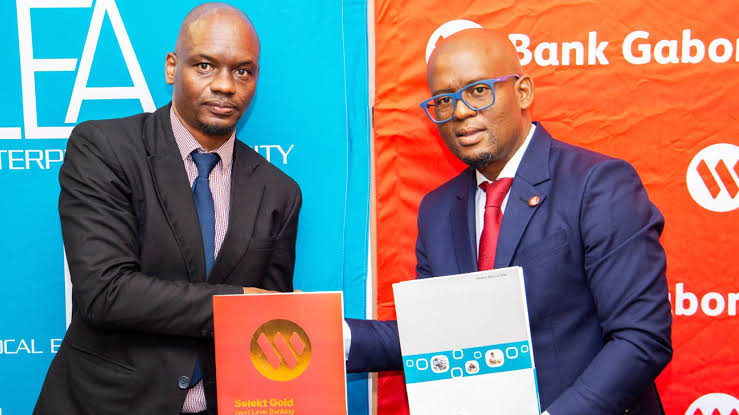
Bank Gaborone and Botswana’s Local Enterprise Authority (LEA) have signed a three-year strategic partnership aimed at strengthening the country’s small, medium and micro enterprise (SMME) sector by improving access to finance, business development services and market opportunities. Formalised through a Memorandum of Understanding (MoU) in Gaborone, the agreement brings together financial services and enterprise development expertise to address one of Botswana’s most persistent economic challenges: enabling promising businesses to secure the capital and institutional support needed to grow, create jobs and contribute to long-term economic diversification.
The partnership reflects a broader shift across Africa towards integrated enterprise development models that combine financial inclusion with business capacity building. Rather than treating access to finance and entrepreneurial development as separate interventions, the collaboration seeks to prepare businesses for investment while ensuring financial institutions are better positioned to serve growing enterprises with products tailored to their needs.
Under the agreement, LEA will provide entrepreneurs with business advisory services, mentorship, incubation programmes, technical training and enterprise development support designed to strengthen business management and operational capacity. Bank Gaborone will complement these services through customised banking solutions, financial literacy programmes, business financing and advisory support aimed at improving the bankability of small businesses.
The two institutions will jointly organise business clinics, entrepreneurship workshops, investment forums, roadshows, exhibitions and networking events intended to connect entrepreneurs with financiers, investors and new market opportunities. These initiatives are expected to improve financial management, strengthen corporate governance among small enterprises and enhance the competitiveness of Botswana’s emerging business sector. Speaking during the signing ceremony, Tsaone Raboloko, Acting Managing Director of Bank Gaborone, said the partnership demonstrates the bank’s commitment to supporting inclusive economic growth through greater participation of entrepreneurs in Botswana’s economy.
He noted that small businesses remain essential drivers of innovation, employment creation and economic diversification, adding that expanding access to appropriate financial products would enable more enterprises to transition from informal or early-stage operations into sustainable commercial businesses capable of creating long-term economic value. Onkabetse Moatlhodi, Acting Chief Executive Officer of the Local Enterprise Authority, described the collaboration as a timely intervention that strengthens Botswana’s enterprise development ecosystem. He said LEA’s role extends beyond business registration by equipping entrepreneurs with practical skills, technical knowledge and institutional support that improve business resilience and long-term sustainability.
According to Moatlhodi, linking enterprise development services with financial institutions creates a more effective pathway for businesses seeking to access commercial financing while strengthening their capacity to compete in increasingly dynamic domestic and regional markets. Access to finance continues to represent one of the greatest obstacles facing small businesses across Africa. According to the International Finance Corporation (IFC), African micro, small and medium-sized enterprises face a financing gap estimated at more than US$330 billion, with many viable businesses unable to secure formal credit because of limited collateral, insufficient financial records or weak business management systems.
The African Development Bank (AfDB) similarly identifies access to finance as one of the principal constraints limiting private-sector growth across the continent. While small businesses account for the overwhelming majority of African enterprises and generate significant employment, many continue to operate below their productive potential because they lack long-term financing, technical support and access to formal markets. Botswana’s economy has historically relied heavily on diamond mining, making economic diversification a long-standing national policy objective. According to the World Bank, strengthening the SMME sector remains central to the country’s efforts to broaden its economic base, stimulate innovation and reduce dependence on mineral exports. Expanding competitive local enterprises is also viewed as essential for creating employment opportunities, particularly for young people and women entering the labour market.
The partnership between Bank Gaborone and LEA therefore extends beyond conventional banking. By integrating enterprise development with financial inclusion, the initiative seeks to improve the quality of businesses entering the formal financial system while increasing lenders’ confidence in financing entrepreneurial ventures. Financial literacy programmes, improved record keeping and stronger business planning are expected to enhance creditworthiness, enabling more enterprises to access affordable financing for expansion. From a sustainability perspective, strengthening small businesses contributes directly to inclusive economic development. Competitive SMMEs create employment, increase household incomes, stimulate domestic production and strengthen local value chains that improve economic resilience. Stronger local enterprises also contribute to tax revenues, innovation and community development, reinforcing the foundations of sustainable national growth.
The collaboration also aligns with the African Union’s Agenda 2063, which recognises entrepreneurship, industrialisation and private-sector development as critical drivers of Africa’s long-term prosperity. Across the continent, governments and financial institutions are increasingly adopting partnership models that combine financing, skills development and market access to address structural barriers limiting enterprise growth. Development finance institutions have similarly intensified support for entrepreneurship as part of broader efforts to accelerate inclusive economic transformation. According to the United Nations Development Programme (UNDP), resilient small businesses play a vital role in achieving multiple Sustainable Development Goals, including poverty reduction, decent work, gender equality and sustainable industrialisation.
For Botswana, the Bank Gaborone–LEA partnership represents a practical step towards creating a more supportive business ecosystem capable of nurturing enterprises from start-up through commercial expansion. While the success of the initiative will ultimately depend on implementation and uptake by entrepreneurs, it reflects growing recognition that sustainable economic development requires more than access to capital alone. Businesses also need knowledge, mentorship, institutional support and market opportunities to thrive. As African economies continue pursuing economic diversification amid shifting global markets, partnerships that connect enterprise development institutions with financial service providers are increasingly emerging as important instruments for strengthening competitiveness, expanding financial inclusion and building resilient private sectors capable of supporting long-term, inclusive and sustainable growth.


