


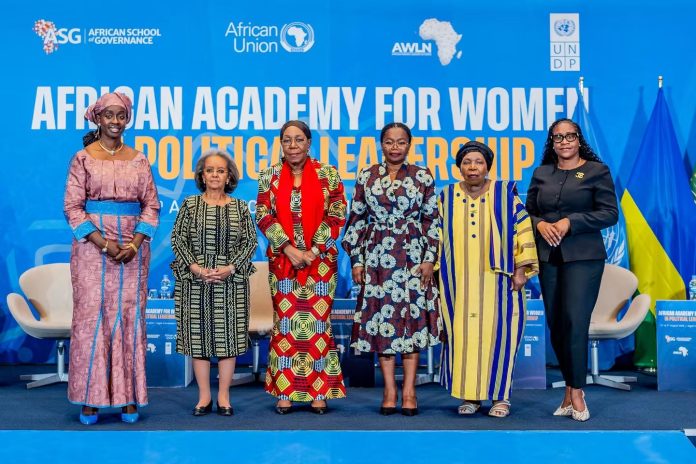
Women across Africa are playing an increasingly influential role in shaping the continent’s environmental future, leading initiatives that range from climate adaptation and biodiversity conservation to sustainable agriculture, renewable energy and environmental governance. Their growing contribution reflects a broader shift in Africa’s development agenda, where environmental sustainability is becoming closely linked to economic resilience, social inclusion and long-term investment planning. As governments, businesses and development institutions accelerate efforts to respond to climate change, female leadership is emerging as a critical factor in delivering practical and locally grounded solutions.
Across the continent, women continue to occupy frontline positions in managing natural resources and responding to environmental change. They are heavily involved in agriculture, water management, forestry and informal environmental enterprises that support household livelihoods and local economies. According to the United Nations, women produce a substantial proportion of Africa’s food while also bearing primary responsibility for securing water, fuel and other natural resources in many rural communities. This direct relationship with the environment places women at the centre of both climate vulnerability and climate resilience, making their participation essential in designing effective environmental policies.
Recognition of women’s environmental leadership has expanded alongside growing evidence that inclusive governance improves sustainability outcomes. International institutions increasingly acknowledge that climate adaptation, biodiversity conservation and ecosystem restoration programmes achieve stronger and more durable results when women participate in planning, implementation and decision-making. Their involvement often strengthens community ownership of projects, improves resource management and increases the long-term viability of environmental investments.
Africa has produced internationally recognised environmental leaders whose work continues to influence policy and conservation across the continent. The late Nobel Peace Prize laureate Wangari Maathai demonstrated how environmental restoration, democratic governance and community development could reinforce one another through Kenya’s Green Belt Movement, which has facilitated the planting of millions of trees while promoting women’s economic empowerment. Her legacy continues to shape contemporary discussions on nature-based solutions and community-led climate action throughout Africa.
A new generation of women is extending that legacy across multiple sectors. Female scientists are contributing to climate research and biodiversity monitoring, entrepreneurs are developing circular economy businesses and renewable energy solutions, while policymakers are helping integrate environmental considerations into national development strategies. Their leadership increasingly reflects the evolution of sustainability from a conservation-focused agenda towards one that encompasses finance, infrastructure, industrial policy and economic transformation.
Read also: https://africanminingmarket.com/celebrating-women-who-shape-africas-environmental-future/26535/
This shift comes as African countries seek to implement commitments under the Paris Agreement, the Kunming-Montreal Global Biodiversity Framework and the African Union’s Agenda 2063. Meeting these objectives will require substantial investment in renewable energy, climate-resilient infrastructure, sustainable food systems and ecosystem restoration. According to international development finance institutions, mobilising this investment will depend not only on financial resources but also on strengthening governance, institutional capacity and inclusive leadership.
Women are also becoming increasingly visible in environmental finance and corporate sustainability. More African financial institutions, regulators and listed companies are appointing women to senior leadership positions overseeing Environmental, Social and Governance (ESG) strategies, climate risk management and sustainability reporting. Their growing presence reflects broader recognition that environmental governance is becoming an integral component of economic competitiveness, investor confidence and responsible corporate management rather than a standalone environmental concern.
The economic significance of women’s environmental leadership is particularly evident in agriculture, which remains one of Africa’s largest employers and a major contributor to national economies. Climate-smart farming practices, soil restoration, agroforestry and water conservation initiatives frequently rely on women’s participation to achieve scale. Improvements in agricultural resilience contribute directly to food security, export performance and rural incomes while reducing vulnerability to increasingly frequent droughts, floods and extreme weather events.
Beyond rural communities, women are helping shape urban sustainability agendas through waste management enterprises, green construction, renewable energy deployment and sustainable transport initiatives. These activities contribute to job creation, resource efficiency and improved public health while supporting cities facing rapid population growth and mounting environmental pressures. As urbanisation accelerates across Africa, inclusive approaches to environmental planning are becoming increasingly important for maintaining economic productivity and quality of life.
Despite this progress, structural barriers continue to limit the full participation of women in environmental decision-making. Limited access to finance, land ownership, education, technology and leadership opportunities remains a challenge in many countries. Addressing these constraints is increasingly viewed not simply as a social objective but as an economic necessity. According to development economists, expanding women’s participation in environmental governance can improve policy effectiveness, strengthen institutional accountability and increase the return on climate and sustainability investments.
Development partners have also increased support for women-led environmental initiatives through climate finance facilities, conservation programmes and entrepreneurship funds. These investments recognise that empowering women to participate fully in environmental management can generate wider economic benefits by strengthening household resilience, expanding green employment opportunities and supporting local enterprise development.
 As Africa positions itself within the global transition towards low-carbon and climate-resilient economies, women’s leadership is becoming central to the continent’s ability to navigate increasingly complex environmental and economic challenges. Their contributions extend beyond conservation to encompass governance, innovation, finance and industrial development, reinforcing the understanding that sustainability is fundamentally linked to economic transformation.
Celebrating the women shaping Africa’s environmental future therefore reflects more than individual achievement. It highlights an evolving development model in which inclusive leadership, environmental stewardship and economic resilience reinforce one another. As climate risks continue to reshape investment priorities and public policy across the continent, ensuring that women remain at the centre of environmental governance is likely to strengthen Africa’s capacity to deliver sustainable, equitable and long-term economic growth.


