


The European Commission (EU) and the Organisation for Economic Co-operation and Development (OECD) have outlined plans for a €10 million regional programme to strengthen transparency, mineral data systems and supply chain due diligence across Africa, as governments face growing pressure to demonstrate that rising demand for critical minerals translates into public revenue, responsible investment and local economic benefits. The five-year initiative will be implemented by the Extractive Industries Transparency Initiative (EITI) and the OECD, according to an announcement published by the EITI on 21 October following its 2026 Global Conference in Brussels.
The programme comes as minerals used in electric vehicles, battery storage, renewable energy infrastructure and digital technologies become increasingly important to global industrial policy. African countries hold significant deposits of minerals including cobalt, copper, lithium, manganese and graphite, but the economic returns from extraction depend on more than production volumes. The terms of mining agreements, the collection of taxes and royalties, the transparency of ownership structures and the capacity to process minerals locally all influence how much value remains in producing countries.

The proposed initiative is intended to strengthen the information and oversight systems that governments and companies use to assess mineral supply chains. According to the EITI, its objectives include improving mineral data systems, due diligence and the conditions for responsible trade and investment. The announcement did not specify how the €10 million would be allocated between countries or individual activities, leaving the programme’s practical reach dependent on its eventual design and implementation.
For African governments, better mineral data can support decisions on licensing, taxation, production and exports while helping regulators identify discrepancies in reported activity. Where public institutions cannot reliably reconcile production figures, export declarations and company payments, governments may struggle to establish whether they are receiving the revenues due from mineral extraction. Weak disclosure can also make it harder for communities to understand the economic value of nearby mining operations or scrutinise how public income is used.
The issue is particularly relevant as countries seek to capture more value from the energy transition. The expansion of clean energy technologies is increasing demand for minerals, creating opportunities for investment, employment and industrial development. However, extraction can also expose communities to land disputes, water pollution, environmental degradation and the loss of livelihoods when regulatory oversight is weak. Stronger supply-chain information will not resolve these problems on its own, but it can help authorities, investors and buyers identify governance risks and demand more accountable practices.
The EITI and OECD already provide complementary frameworks for addressing these challenges. The EITI promotes public disclosure of information across the extractive value chain, including licences, contracts, beneficial ownership and government revenues. The OECD’s due diligence guidance provides a framework for companies to identify, prevent and address risks associated with mineral sourcing. Linking the two approaches can help buyers examine not only the origin of minerals but also the governance conditions under which they are extracted and traded.
African countries have been pursuing different reforms to strengthen resource governance. At the EITI Leadership Forum, Zambia committed to publishing company-level data on local content in mining, with plans for a consolidated disclosure mechanism by 2027. Gabon pledged to advance the systematic disclosure of extractive-sector information by centralising data across government institutions, while Nigeria committed to improving revenue reconciliation, independent audits and public disclosure of petroleum revenues. Although these measures differ in scope, they illustrate the importance of reliable information in linking resource extraction to public accountability and domestic economic benefits.
The challenge extends beyond reporting. Transparency only improves outcomes when disclosed information can be checked, understood and used by institutions with the authority and capacity to act. Mining regulators, tax authorities, customs agencies, environmental bodies and anti-corruption institutions need to coordinate their work, while civil society and affected communities require meaningful access to information. Without these systems, improved reporting risks becoming a compliance exercise rather than a tool for better public revenue management or environmental oversight.
Supply chain requirements also have implications for African producers seeking access to international markets. Manufacturers, refiners and investors face increasing expectations to demonstrate responsible sourcing and identify environmental, social and governance risks in their operations. Companies that cannot provide credible information on mineral origin, ownership and governance may face higher due diligence costs or difficulty meeting buyers’ requirements. For African producers, effective disclosure systems could help demonstrate compliance and strengthen investor confidence, provided that smaller operators are not excluded by requirements they lack the resources or technical capacity to meet.
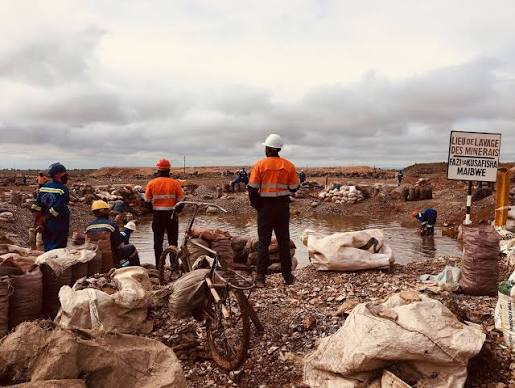
Artisanal and small-scale mining presents a further challenge. In several African countries, these operations provide livelihoods but may operate through informal trading networks with limited traceability and oversight. Weak monitoring can make it harder to prevent illicit trade, verify mineral origin and ensure that workers and communities benefit from production. More reliable data and due diligence could help governments distinguish legitimate activity from illegal extraction and trading, although formalisation will also require workable licensing systems, access to markets and enforcement that does not simply displace miners into less visible channels.
The regional programme is part of a broader effort to make resource governance more central to the transition towards lower-carbon economies. Africa’s role in mineral supply chains will depend not only on its geological resources but also on the institutions that regulate extraction, collect revenues and manage environmental and social impacts. Better transparency can help establish the conditions for responsible investment, but it cannot substitute for environmental enforcement, fair contracts, public financial management or policies that support local processing and skills development.

The programme’s significance will ultimately depend on whether its funding produces stronger national systems and measurable improvements in how mineral supply chains are governed. For African countries, the priority is to ensure that greater scrutiny of mineral sourcing translates into stronger public institutions, more reliable revenues and economic opportunities for producing communities, rather than adding reporting obligations without improving the distribution of benefits from the continent’s mineral wealth.


