


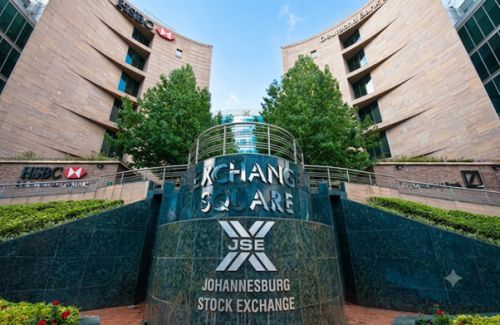
Dangote Petroleum Refinery and Petrochemicals is preparing to launch an estimated US$5 billion initial public offering (IPO) on the Nigerian Exchange (NGX) in October 2026 before pursuing a secondary listing on the Johannesburg Stock Exchange (JSE), in a transaction that could become the largest stock market listing in African history. The Johannesburg Stock Exchange confirmed on 5 August that discussions with the Dangote Group are underway regarding a future secondary listing, while several African stock exchanges continue exploring a broader pan-African listing framework that would expand investor access to one of the continent’s most strategically significant industrial assets.
The planned offering represents a landmark moment not only for Nigeria’s capital markets but also for Africa’s broader financial integration agenda. According to Reuters, Dangote Petroleum Refinery has already filed its listing application with Nigeria’s Securities and Exchange Commission (SEC), with a prospectus expected as early as September, subject to regulatory approval. The IPO is expected to raise approximately US$5 billion, equivalent to more than four percent of the Nigerian Exchange’s market capitalisation, which stood at roughly US$116 billion in early August.
The refinery’s proposed market debut follows a US$2.5 billion private placement completed in July, in which investors acquired a six percent equity stake, valuing the business at approximately US$40 billion. The valuation underscores growing investor confidence in Africa’s largest refinery and reflects increasing international interest in strategically important industrial infrastructure capable of reshaping regional energy markets.
Located in Nigeria’s Lagos State, the Dangote Petroleum Refinery began commercial operations in 2024 after years of construction and an estimated investment of approximately US$20 billion. The facility currently processes 650,000 barrels of crude oil per day, making it the largest single-train refinery in the world. According to Dangote Group, long-term plans envisage expanding refining capacity to 1.4 million barrels per day, positioning the facility among the world’s largest integrated refining complexes.
The refinery has already begun transforming Nigeria’s downstream petroleum sector by reducing dependence on imported refined fuels, improving domestic fuel availability and supporting regional exports. According to the African Export-Import Bank (Afreximbank), Africa imports a significant proportion of its refined petroleum products despite being one of the world’s largest crude oil-producing regions. Expanding regional refining capacity is therefore regarded as a strategic priority for strengthening energy security, improving trade balances and supporting industrialisation across the continent.
The IPO also carries broader implications for Africa’s capital markets. Beyond its primary listing in Lagos, discussions involving multiple African exchanges signal growing momentum towards deeper regional financial integration. Earlier this year, the Nigerian Exchange Group (NGX Group) convened senior executives from the Johannesburg Stock Exchange, Nairobi Securities Exchange, Ghana Stock Exchange, Ethiopian Securities Exchange and the Bourse Régionale des Valeurs Mobilières (BRVM) under the auspices of the African Securities Exchanges Association (ASEA) to explore mechanisms for a coordinated pan-African listing.
According to Frank Mwiti, Chief Executive Officer of the Nairobi Securities Exchange, the objective is to establish a framework that enables investors across multiple African markets to participate in major continental listings while improving liquidity and strengthening cross-border capital flows. Rather than traditional dual listings, discussions have focused on developing financial instruments such as depositary receipts or exchange-traded securities backed by shares listed on the Nigerian Exchange. Such structures would enable investors in other African markets to gain exposure to the refinery without transferring the underlying shares between exchanges, reducing operational complexity while expanding investment opportunities.
Kenya alone is estimated to have the potential to mobilise up to US$500 million for the offering, driven largely by domestic pension funds seeking exposure to long-term infrastructure and industrial assets. Institutional investors across Africa have increasingly expressed interest in high-quality regional investment opportunities capable of delivering stable long-term returns while supporting economic development.
The Nigerian National Petroleum Company (NNPC) currently holds slightly more than seven percent of the refinery, reflecting continued public-sector participation in one of Nigeria’s most strategically important energy assets. Proceeds from the IPO are expected to support future expansion projects, including increasing refining capacity and strengthening associated petrochemical operations. The transaction also illustrates the growing maturity of African capital markets. According to the African Development Bank, deeper domestic capital markets are essential for financing the continent’s infrastructure deficit, reducing dependence on external borrowing and mobilising long-term domestic savings into productive investments. Large-scale listings such as Dangote’s provide opportunities for pension funds, insurance companies and retail investors to participate directly in industrial development while expanding the depth and liquidity of African stock exchanges.
From a sustainability perspective, increased refining capacity could have significant economic implications for Africa’s energy transition. While refining remains linked to fossil fuel production, greater domestic processing reduces reliance on imported petroleum products, lowers transportation costs and strengthens regional value addition. At the same time, many African governments continue pursuing balanced energy strategies that combine industrial development with investments in renewable energy, cleaner fuels and climate resilience.
The proposed listing also aligns with the objectives of the African Continental Free Trade Area (AfCFTA), which seeks to strengthen regional trade, industrialisation and financial integration. More interconnected capital markets can facilitate cross-border investment, improve access to financing for African companies and create larger pools of domestic capital capable of supporting the continent’s long-term economic transformation.
Nevertheless, several important uncertainties remain. Nigeria’s Securities and Exchange Commission has yet to approve the final structure of the offering, while the final valuation, share allocation and timetable remain subject to regulatory review and market conditions. Investors will also closely monitor the publication of the prospectus, expected later this year, for greater clarity regarding financial performance, governance arrangements and future expansion plans.
If completed as planned, the Dangote Petroleum Refinery IPO would represent far more than a record-breaking capital markets transaction. It would signal growing investor confidence in African industrial assets, reinforce Nigeria’s position as one of the continent’s leading financial centres and demonstrate the increasing ability of African exchanges to collaborate in financing large-scale strategic infrastructure. More broadly, the transaction highlights the evolution of Africa’s capital markets from nationally focused exchanges towards a more integrated financial ecosystem capable of mobilising regional investment for transformative economic development.


