


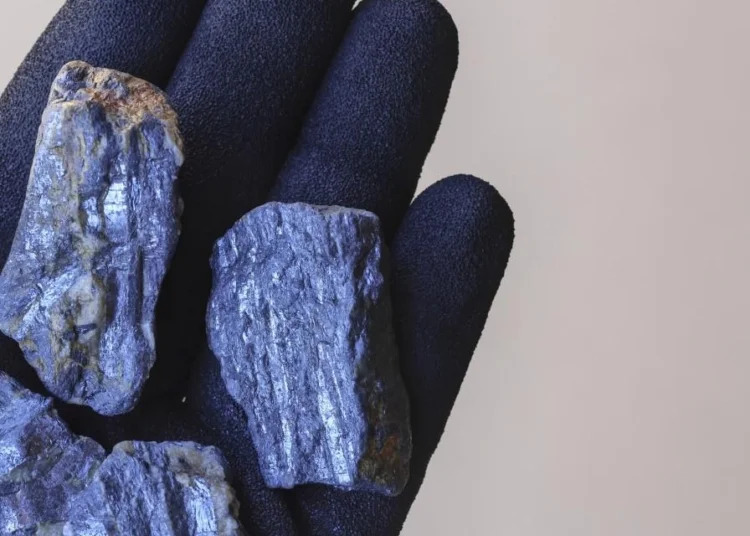
Africa’s critical-minerals endowment is placing the continent at the centre of the global energy transition, but Southern African leaders are facing a more consequential question than how much the region can extract: whether it can capture a larger share of the value created from those resources. As the Southern African Development Community (SADC) convenes its 46th Ordinary Summit in Durban on August 17, 2026, under a theme centred on resilient, sustainable and inclusive industrialisation, critical minerals transformation has moved closer to the centre of the region’s economic strategy.
The stakes are rising as demand for minerals used in electric vehicles, batteries, renewable-energy systems and electricity networks continues to increase. The International Energy Agency’s 2026 outlook says demand for critical minerals remains strong across energy-transition scenarios, with lithium demand projected to more than triple by 2040 while demand for nickel, graphite and rare earth elements also grows substantially. Copper is expected to record the largest absolute increase in demand, driven partly by expanding electricity networks and emerging energy technologies.
Africa is particularly important to these supply chains. The African Development Bank estimates that the continent holds about 30% of global reserves of key critical minerals, including cobalt, lithium, graphite, rare earth elements, platinum group metals, copper, manganese and nickel. The concentration of these resources gives African countries significant potential leverage as governments and manufacturers seek to diversify global mineral supply chains.
SADC sits at the centre of this opportunity. The Democratic Republic of Congo is a major global source of cobalt, Zambia is a major copper producer, Zimbabwe has become increasingly important to lithium supply, while South Africa possesses substantial reserves of platinum group metals, manganese and other minerals required by energy-transition industries. The region therefore has many of the raw materials needed for technologies that are expected to underpin the global shift towards lower-carbon energy.

Yet mineral abundance has historically produced limited structural transformation in many African economies. Exporting unprocessed or minimally processed minerals can generate foreign exchange and fiscal revenue, but it leaves countries exposed to commodity-price cycles while limiting the development of domestic manufacturing, technology and skilled employment.
That concern is particularly relevant for SADC because the region is seeking to link mineral development with industrialisation. The 2026 SADC Summit theme explicitly connects critical-minerals transformation with infrastructure, agriculture, industrialisation and a more inclusive regional economy. The preceding SADC Industrialisation Week also focused on regional value chains in critical-minerals beneficiation and infrastructure in energy, transport, logistics, water and ICT.
The policy challenge is therefore moving from extraction to beneficiation and manufacturing. That could include mineral refining, battery-material production, component manufacturing, recycling and technologies linked to electric mobility and renewable energy. Such activities require more capital and technical capacity than mining alone, but they also have the potential to generate wider industrial linkages.
The Democratic Republic of Congo offers one example of what this could mean. A BloombergNEF study commissioned by the UN Economic Commission for Africa and other development partners found that a 10,000-tonne lithium-ion battery cathode precursor plant in the DRC could cost about $39 million to build, compared with significantly higher costs for comparable facilities in the United States, China and Poland. The study also found that production in the DRC could generate lower emissions than some existing supply-chain configurations because of the country’s proximity to cobalt resources and availability of relatively low-carbon electricity.
The figures do not by themselves establish that a regional battery industry will emerge. Financing, infrastructure, technical skills, reliable electricity, market access and policy certainty remain critical constraints. But the study illustrates the economic logic behind greater local processing: Africa can potentially compete not only because it has the minerals, but because proximity to resources and renewable electricity can support competitive lower-emissions production.
The opportunity is becoming more significant as the global mineral market becomes increasingly exposed to supply-chain concentration. The IEA’s latest analysis shows that energy technologies remain the principal driver of future demand growth for many critical minerals, while concentration in mining and refining remains a significant source of vulnerability. For cobalt, for example, the Democratic Republic of Congo’s position as the leading producer means policy developments in one African country can influence global supply conditions.
For SADC governments, this creates an incentive to negotiate from a position of greater regional coordination. Fragmented policies can encourage investors to treat countries separately rather than considering Southern Africa as an integrated industrial market. Harmonised standards, investment rules, local-content frameworks, customs procedures and skills policies could reduce some of the barriers to developing cross-border mineral value chains.
The Africa Continental Free Trade Area provides a wider framework for such integration, while the Africa Mining Vision and regional industrialisation strategies offer policy foundations for increasing local participation in mineral value chains. The challenge is translating these frameworks into coordinated national policies and commercially viable projects.
Energy will be particularly important. Mineral processing and manufacturing are electricity-intensive activities, and unreliable or expensive power can quickly undermine the competitiveness of local beneficiation. SADC’s considerable solar, hydro and other renewable-energy resources could therefore become an industrial advantage if electricity infrastructure expands alongside mineral-processing capacity.
This also creates an intersection between the energy transition and mineral industrialisation. Countries seeking to produce low-carbon minerals and battery materials will increasingly need to demonstrate not only the origin of their raw materials but also the emissions intensity of processing. Access to competitively priced renewable electricity could therefore become an investment and trade consideration rather than simply an environmental objective.
The financing challenge is equally significant. Mining projects can attract capital relatively easily when commodity prices and geological prospects are favourable, but processing plants, component manufacturing and new technologies often require patient capital and long development periods. Development finance institutions, export-credit agencies, commercial banks and institutional investors will therefore have roles to play in reducing project risks and financing infrastructure that individual companies may be unable to provide alone. Governance will determine how much of the resulting value remains in the region. Stronger geological data can improve governments’ negotiating position by providing a clearer understanding of the size and quality of mineral deposits. Transparent licensing, predictable fiscal regimes and credible environmental standards can also reduce uncertainty for investors while strengthening public oversight.
Community participation will be another test. Mining projects can create employment and local procurement opportunities, but they can also place pressure on land, water and ecosystems. The development of processing industries should therefore be accompanied by credible environmental management, local-content measures, skills development and mechanisms through which mining communities can share in economic benefits. For Africa, the stakes extend beyond the immediate revenues from minerals. The continent’s ability to capture more value from the energy-transition supply chain could influence the development of manufacturing capabilities, technical skills, research institutions and regional infrastructure for decades.
The African Development Bank has described the scale of the opportunity in similar terms, estimating Africa’s critical-mineral endowment at roughly $29.5 trillion in mine-site value and highlighting the need to use the resource base to support local value addition. The bank’s work on critical-minerals value chains is increasingly focused on beneficiation and industrial transformation rather than extraction alone. SADC’s challenge is to turn this opportunity into an integrated economic strategy. The region already has substantial mineral resources, established mining industries and access to important international markets. What remains less developed is the infrastructure and industrial architecture needed to connect those assets to higher-value manufacturing.
The 46th SADC Summit provides a political setting for that discussion. Its official theme places critical-minerals transformation alongside infrastructure and industrialisation, signalling that the region’s mineral strategy is increasingly being considered as part of a broader economic transformation agenda rather than as a stand-alone mining issue. The immediate test will be implementation. Agreements on regional value chains will need to translate into investment-ready projects, reliable electricity, cross-border infrastructure, skills programmes and policies that encourage processing without making investment commercially unviable.
For SADC, the energy transition presents a choice between remaining primarily a supplier of minerals to industries elsewhere and using those resources to build stronger domestic and regional production capabilities. The second path is more demanding, requiring coordination, infrastructure and long-term investment. But it also offers a route towards retaining more economic value, expanding industrial employment and developing capabilities that can outlast individual commodity cycles.
Africa’s mineral wealth has never been in doubt. The question now is whether the institutions, infrastructure and regional markets can convert that geological advantage into industrial competitiveness. For SADC, the critical-minerals boom is therefore not simply a mining opportunity. It is a test of whether the region can use the global energy transition to build a more integrated, diversified and resilient economic base.


