


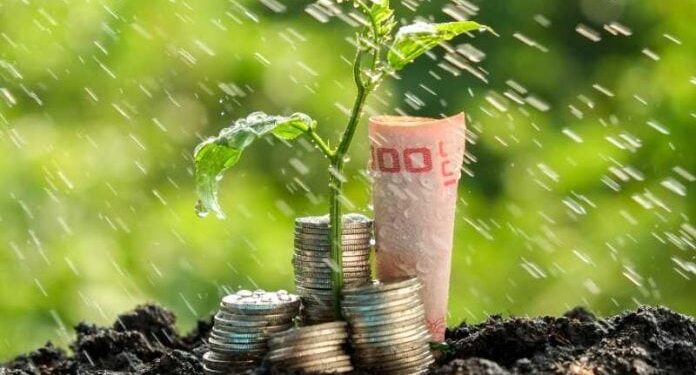
Nature is increasingly moving into the investment conversation as businesses and financial institutions recognise that water, biodiversity, forests, oceans and other ecosystem services underpin economic activity and can create both financial risks and investment opportunities. A Business Day podcast published on August 20, 2026, featuring Sanlam Investments, WWF South Africa and the Sanlam ESG Barometer, highlights this shift, as investors examine opportunities ranging from regenerative agriculture and water resilience to biodiversity conservation and ecosystem restoration.
The discussion reflects a broader change in sustainable finance. Climate risk has dominated corporate and investment analysis for much of the past decade, but nature-related risks are increasingly being treated as financially material. Business Day cited estimates that more than half of global GDP is moderately or highly dependent on nature and the services ecosystems provide, linking the health of natural systems directly to economic activity and investment value.
The Sanlam ESG Barometer podcast, hosted by Andile Khumalo, CEO of KhumaloCo and Co-Founder of the annual barometer, brought together Kristen Fourie, ESG and Impact Analyst at Sanlam Investments, and Pavs Pillay, Head of Business Development and Marketing at WWF South Africa. Their discussion focused on how investors and companies can move beyond conventional risk management towards identifying economic opportunities associated with nature-positive activity.
For Africa, the issue carries particular economic weight because natural capital is deeply embedded in production, trade and household livelihoods. Agriculture depends on functioning soils, rainfall patterns, pollination and water systems; manufacturing requires reliable water supplies; tourism depends on biodiversity and functioning ecosystems; while fisheries, forestry and coastal economies rely directly on marine and terrestrial resources.
The African Development Bank has increasingly argued that these assets should be treated as part of the continent’s economic wealth rather than as external environmental considerations. At its 2026 Annual Meetings, experts argued that failing to measure natural capital can result in an incomplete picture of African economies and constrain access to finance.
The Bank’s recent work puts the scale of the issue into sharper perspective. Its 2026 natural-capital assessment says that incorporating the value of carbon sequestration from African forests alone could have increased the continent’s measured GDP by $66.1 billion in 2022. The Bank has also estimated that renewable natural capital declined by 24% between 1992 and 2019, while non-renewable natural capital fell by 37%.
Those figures point to a financial question as much as an environmental one. If natural assets are depleted without being reflected adequately in economic accounts, balance sheets or investment decisions, governments and companies can underestimate future risks while failing to recognise opportunities to generate income from ecosystem services.
Water illustrates the connection. In South Africa and across much of Africa, water availability is critical to agriculture, mining, manufacturing, energy generation and urban development. A deterioration in water security can increase operating costs, disrupt production and require additional infrastructure investment. Conversely, investment in watershed rehabilitation, efficient water systems and ecosystem restoration can protect productive assets while potentially generating employment and reducing future economic losses.
Kenya provides another example of the financial implications. World Bank analysis has identified nature-related financial risks linked to sectors including agriculture and has highlighted nature-based solutions such as agroforestry and watershed rehabilitation as potential tools for strengthening supply-chain resilience. Such interventions can be particularly relevant to export-oriented agricultural industries such as coffee and tea, where changes in climate and ecosystem conditions can affect yields and incomes.
This is changing how financial institutions approach nature. UNEP Finance Initiative guidance published in January 2026 notes that biodiversity loss, water stress and soil degradation can create material financial risks affecting asset values, clients’ performance and the long-term stability of financial institutions. It argues that nature-related assessment should therefore form part of financial due diligence rather than being treated solely as a reputational or regulatory issue.
For African banks, pension funds and asset managers, that raises practical questions about how nature exposure is incorporated into lending and investment decisions. A bank financing an agricultural business, for example, may need to understand its exposure to water scarcity, soil degradation or ecosystem disruption. An infrastructure investor may need to assess whether a project depends on ecosystems that could deteriorate over its operating life.
The investment opportunity is also becoming more visible. The Business Day discussion identified regenerative agriculture, water resilience, biodiversity conservation, ecosystem restoration and nature-based solutions as areas where investment can potentially combine financial returns with wider economic benefits.
Nature-based investment, however, does not remove the fundamental challenges of African finance. Projects still require credible revenue models, appropriate risk allocation, reliable data and investors willing to accept the time horizons associated with ecosystem restoration. Many nature-related benefits also accrue indirectly or over long periods, making them harder to monetise than conventional infrastructure revenues.
This creates an important role for public finance and development institutions. The African Development Fund recently approved $4.23 million for a project aimed at integrating natural capital into decision-making across 13 African countries, including Kenya, Ghana, Côte d’Ivoire, the Democratic Republic of Congo, Rwanda, Tanzania, Zambia and Zimbabwe. The initiative is intended to strengthen policy, statistical and institutional systems while supporting biodiversity-financing tools and green investment.
The policy dimension is important because nature-related investment depends partly on information that markets have historically struggled to produce. Governments need systems capable of measuring natural assets and ecosystem services, while companies and financial institutions require sufficiently reliable data to assess exposure and opportunity.
The African Development Bank has consequently been pushing for natural capital to be incorporated more systematically into economic measurement. Its Natural Resources Management and Investment Action Plan calls for stronger natural-resource governance, local value addition and industrialisation while integrating biodiversity protection and climate resilience into development planning.
There is also a financing argument. Africa faces substantial constraints in mobilising capital for climate and development priorities, and the undervaluation of natural assets can reinforce that problem. The Bank has argued that properly accounting for natural capital could improve assessments of national wealth and potentially strengthen countries’ access to financing.
The emergence of nature as an investment consideration also brings risks around the quality of markets being developed around ecosystem services. Carbon credits, biodiversity credits and other mechanisms can generate new sources of finance, but their credibility depends on measurement, verification, transparency and clear ownership of environmental benefits. Weak standards could create financial and reputational risks rather than durable investment value.
For investors, the central issue is therefore not simply whether an asset can be labelled sustainable. It is whether the underlying business model is resilient to changes in the natural systems on which it depends and whether investment can contribute to maintaining or restoring those systems.
That distinction is particularly relevant in Africa, where natural resources often form the economic base for communities that have limited alternatives when ecosystems deteriorate. Poor water management, declining soil quality, deforestation or depleted fisheries can translate into lower household incomes, higher food prices, reduced export earnings and greater pressure on public budgets.
At the same time, well-designed investment in natural capital can have infrastructure and employment implications. The World Bank has noted that nature-based solutions such as wetlands restoration, urban green infrastructure and forest protection can reduce disaster risks while creating jobs during implementation and over the longer term.
The shift from viewing nature as an environmental concern to treating it as an economic asset is therefore becoming increasingly relevant to African financial markets. The Sanlam ESG Barometer’s focus on South Africa and Kenya provides a regional lens on a transition that is also being reflected in international financial standards and risk-management practices. The barometer, launched in 2023 and researched by Krutham, examines how listed companies in the two markets are changing their operations to improve long-term ESG outcomes.
 For African economies, the significance extends beyond the ESG agenda. The continent’s natural capital supports production, employment, public revenues and external trade, yet much of its value remains outside conventional financial accounting. As investors become more attentive to nature-related risks and opportunities, governments and companies face a practical task: improving the information, institutions and financial structures needed to translate natural wealth into productive investment without accelerating its depletion.
Nature’s growing place in investment decisions could consequently become less about corporate sustainability branding and more about the economics of protecting the assets on which African economies already depend. The question for financial markets is increasingly whether they can recognise that value before environmental deterioration turns it into a balance-sheet cost.


