


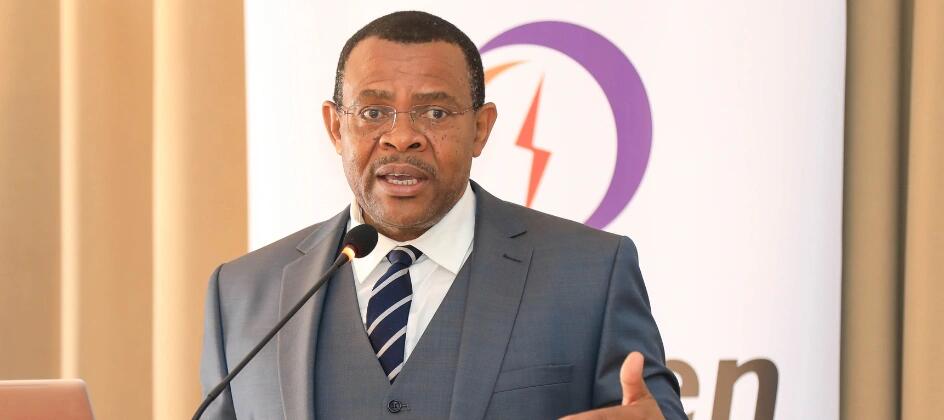
Kenya is planning to expand its electricity generation development pipeline to 5,500 megawatts (MW) from about 1,500 MW as the country prepares for higher power demand from industrialisation, with the programme expected to include about 2,000 MW of nuclear power, more than 700 MW of hydropower and additional geothermal capacity. The expansion, announced by Kenya Electricity Generating Company (KenGen), represents a major shift in the scale of Kenya’s power ambitions, but it also exposes a more immediate economic question: whether adding generation capacity will translate into lower and more competitive electricity prices for households and businesses.
KenGen Managing Director and Chief Executive Peter Njenga said in June that the company had recalibrated its long-term development pipeline in response to changing market conditions, emerging investment opportunities, growing domestic demand and rising regional demand for clean electricity. The revised target is nearly four times the 1,500 MW ambition contained in the company’s earlier 10-year strategy.
The scale of the programme reflects Kenya’s changing electricity market. Peak demand has reached about 2,550 MW, according to reporting on the expansion, while national electricity generation and imports increased 6.8% to 15,067.7 gigawatt-hours (GWh) in 2025, according to the Kenya National Bureau of Statistics. Electricity imports alone rose 12.3% to 1,721.1 GWh, supported partly by increased regional power exchange with Tanzania.
Kenya enters this expansion with an electricity system that is already among Africa’s cleaner power markets. Government data show that renewable sources accounted for 88.9% of domestic electricity production in 2025. Geothermal contributed 44.8%, hydropower 25.9%, wind 14.6% and solar 3.5%, while thermal generation accounted for 11.1%. Geothermal generation reached nearly 6,000 GWh during the year, reinforcing the technology’s role as the backbone of Kenya’s electricity system.

The government says geothermal will remain central to the next stage of development. Kenya reached 1,000 MW of geothermal generation capacity in 2026, according to the Ministry of Energy, making it Africa’s leading geothermal producer and placing it seventh globally. Principal Secretary for Energy Alex Wachira has said the country sees further opportunities in geothermal, hydro, solar and wind, alongside nuclear power and energy storage.
Nuclear power represents the most consequential new component of the strategy. Kenya has designated KenGen as the owner-operator of its first nuclear power plant in partnership with the Nuclear Power and Energy Agency, with the initial nuclear development expected to be approximately 2,000 MW. KenGen has been studying international nuclear markets, including Canada’s Ontario model, as it develops the institutional, regulatory and technical capabilities required for a national nuclear programme.
But the central economic issue is not simply whether Kenya can generate more electricity. It is whether the entire electricity value chain can deliver that power at a cost that supports industrial competitiveness. Kenya’s industrial electricity prices remain high compared with several competing African economies. Figures cited in recent reporting put industrial tariffs at roughly $0.18 to $0.23 per kilowatt-hour, while comparable rates in countries such as South Africa, Egypt, Morocco and Ethiopia have been substantially lower. For manufacturers operating on thin margins, electricity prices feed directly into production costs, investment decisions and the competitiveness of Kenyan goods in regional markets.
That means the economics of the 5,500 MW programme will depend heavily on what happens beyond the power plant. Kenya’s electricity pricing structure includes generation, transmission, distribution, retail costs, taxes and levies, as well as costs associated with power purchase agreements. The Energy and Petroleum Regulatory Authority’s electricity statistics show that these components are incorporated into the final consumer tariff, making the price paid by households and businesses a function of the whole system rather than the cost of generation alone.
Transmission and distribution losses are therefore critical. Industry and finance experts have raised concerns about losses in Kenya’s electricity network, while Kenya Power has been implementing programmes aimed at reducing technical and commercial losses. The utility reported that distribution efficiency improved from 76.35% to 77.97% in the first half of the 2025/26 financial year as electricity sales increased.
Every percentage point of efficiency gained in the network can have an economic value because it reduces the amount of electricity that must be generated or purchased to deliver a given quantity to consumers. For a country considering billions of dollars in new generation, improving the performance of existing infrastructure can therefore be as important as building new plants.
The structure of power purchase agreements adds another layer of complexity. Independent power producers account for a significant share of Kenya’s installed generation capacity, and contractual arrangements can create fixed financial obligations even when electricity demand does not fully absorb contracted output. The challenge for policymakers is to balance investor confidence, which depends on predictable contracts and revenue streams, with consumer affordability and the financial sustainability of the electricity sector.
The rapid growth of wind and solar is also changing the technical requirements of the grid. Kenya Power has warned that the increasing integration of variable renewable energy is affecting grid stability and reliability. Wind and solar output can fluctuate according to weather and time of day, requiring stronger transmission infrastructure, better forecasting, storage and more flexible system management.
This is particularly relevant as Kenya seeks to position itself as a regional clean-energy hub. A larger electricity system could support manufacturing, data centres, electric mobility, green industrial parks and other electricity-intensive activities. Kenya Power has already reported rapid growth in electricity consumption from electric mobility, with cumulative revenue from EV charging reaching KSh382 million by April 2026 and electricity sales to the sector increasing more than 100-fold from July 2023 levels.
The regional dimension is equally important. Kenya increased electricity imports in 2025 while simultaneously developing its domestic generation capacity, highlighting the growing role of cross-border electricity trade in balancing East Africa’s power systems. The Eastern Africa Power Pool is working towards deeper regional electricity trade, which could allow countries to share surplus generation, improve system reliability and make better use of diverse renewable resources.
For Kenya, however, the investment challenge will be substantial. Large power projects require long-term capital, while nuclear power carries particularly high upfront costs, long development periods and demanding regulatory requirements. Kenya’s broader climate and development financing needs are already considerable. FSD Kenya notes that the country’s 2022 Nationally Determined Contribution estimated financing needs of $40.2 billion by 2030, with 81% expected to come from international sources.
The financing structure of the power expansion will therefore have implications for public finances and electricity tariffs. Projects financed at high interest rates, exposed to foreign-exchange risk or supported by expensive contractual arrangements could place upward pressure on the eventual cost of electricity. Conversely, concessional finance, blended capital, efficient procurement and stronger project preparation could help reduce the cost of infrastructure investment.
Kenya’s experience with geothermal development illustrates the importance of project structure. The Geothermal Development Company was established to develop steam fields and reduce resource risks before private investors and power producers enter projects. Its model has helped Kenya build a globally recognised geothermal industry while creating opportunities for private-sector participation.
The government is also considering reforms to electricity-market arrangements, including greater competition and open access. Such changes could alter how large consumers procure electricity and potentially introduce greater competition across parts of the electricity supply chain. The Energy Ministry has also been directed to develop a framework for reviewing power supply agreements as policymakers seek to create room for more competitive tariffs.
The significance of the 5,500 MW plan therefore extends beyond Kenya’s generation statistics. For manufacturers, the question is whether electricity becomes sufficiently predictable and affordable to support long-term investment. For households, it is whether improvements in generation and network efficiency eventually reduce the burden of electricity bills. For investors, it is whether Kenya can maintain a regulatory and contractual environment capable of attracting capital without transferring excessive costs to consumers or the public balance sheet.
For Africa, the issue is broader still. Many economies on the continent face the same tension between expanding electricity access, supporting industrialisation and keeping power affordable. Kenya’s approach offers a test of whether a country can move from a relatively clean electricity mix to a larger, more sophisticated power system without allowing infrastructure inefficiencies, financing costs and contractual structures to undermine the economic value of additional generation.
The 5,500 MW ambition is consequently less a question of how many megawatts Kenya can build than how efficiently those megawatts can be financed, transmitted, distributed and consumed. If generation expansion is accompanied by grid modernisation, lower losses, competitive procurement, disciplined power contracts and deeper regional electricity trade, additional capacity could support Kenya’s industrialisation ambitions. If those system constraints remain unresolved, however, the country could add substantial generation without achieving the lower electricity costs that businesses and households ultimately need.
Kenya’s clean-energy transition has already demonstrated that renewable generation at scale is possible. The next test is whether the country can turn that advantage into an electricity system that is not only cleaner and larger, but also financially sustainable, reliable and competitive enough to support the next phase of African industrial growth.


