


Egypt is considering a large-scale battery energy storage programme with Huawei that could deliver up to 4,000 megawatt-hours (MWh) of storage capacity while establishing local manufacturing of battery energy storage systems, as Cairo accelerates investment in grid flexibility to accommodate more solar and wind power and reduce pressure on conventional electricity generation.
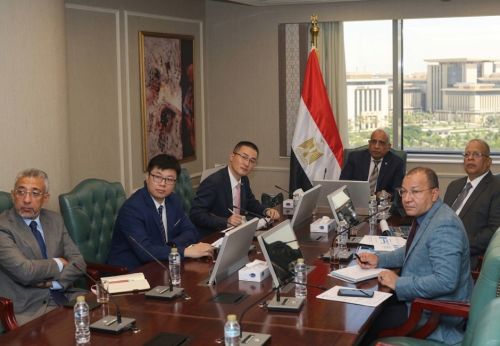
The proposed programme was discussed on Aug. 23 between Egyptian Electricity and Renewable Energy Minister Mahmoud Esmat and Benjamin Hou, chief executive officer of Huawei Egypt. The discussions covered the development of a local battery storage manufacturing facility and several standalone utility-scale storage plants at selected locations across Egypt’s national electricity network. The Egyptian electricity ministry said technical and economic studies, regulatory requirements and implementation conditions were being reviewed.
The proposed 4,000 MWh capacity would represent a substantial expansion of Egypt’s storage infrastructure, although the discussions do not yet amount to a confirmed investment or construction agreement. The ministry has been assessing potential sites and the framework required for the projects, while Huawei would bring its battery storage technology to the proposed facilities.

The significance of the proposal lies in the changing requirements of Egypt’s electricity system. Solar and wind generation can provide large volumes of relatively low-cost electricity, but their output varies according to weather conditions and time of day. As the share of variable renewable generation increases, the electricity system needs additional flexibility to balance supply and demand.
Battery energy storage systems can perform that function by absorbing electricity when generation exceeds immediate demand and releasing it when demand increases or renewable output falls. For solar power in particular, batteries can shift part of daytime generation into evening periods when electricity consumption remains high but solar production declines.
Egypt’s electricity authorities have increasingly identified storage as part of that transition. The ministry said battery storage projects are intended to strengthen grid stability and flexibility, improve electricity supply quality and increase the value obtained from renewable-energy projects. The government is also pursuing a transition towards a smarter electricity network, with digital systems and improved grid management forming part of the broader strategy.
The timing is important because Egypt is accelerating its renewable-energy build-out. In July, the government said it was working to increase renewable energy’s contribution to the electricity mix to 45% within the next two years. President Abdel Fattah El-Sisi had also reviewed plans to reach a 45% clean-energy share by 2028 and reduce dependence on fossil fuels.
That target increases the importance of storage. Building solar and wind capacity without sufficient transmission, balancing and storage infrastructure can create periods when renewable electricity cannot be fully absorbed by the grid. Batteries can help reduce that constraint by shifting electricity across time and providing services such as frequency regulation and peak-demand support.
Egypt has already begun testing this model at utility scale. In 2025, the International Finance Corporation supported the country’s first utility-scale battery energy storage system, a 300 MWh installation integrated with AMEA Power’s 500 MW Abydos Solar project in Aswan. The IFC provided a $72 million debt package for the storage component, with the system designed to shift solar generation from periods of lower demand into peak consumption periods.
The Abydos project provides an early indication of how storage can change the economics of renewable power in Egypt. Instead of treating solar electricity as available only during daylight hours, a battery allows some of that generation to be dispatched later. The result is a renewable asset that can provide greater flexibility to the electricity system.
Egypt is now moving beyond a single project. A second AMEA Power development, Abydos II, involves a 1,000 MW solar photovoltaic plant combined with 600 MWh of battery storage in Aswan. The project is backed by a $571.8 million debt package led by IFC and is expected to deliver more than 3 million MWh annually.
The combination of the proposed Huawei programme and projects such as Abydos indicates that battery storage is moving from an experimental component of individual renewable projects towards a potentially broader element of national grid planning.
For Egypt, the implications extend beyond renewable-energy targets. The country has experienced periods of tight electricity supply and has sought to reduce its dependence on natural gas and other conventional fuels. Storage could help reduce the need to operate some conventional generation during peak periods by making renewable electricity available when demand is higher.
That could have implications for fuel consumption and electricity-sector costs, although the economic outcome will depend on battery prices, utilisation rates, financing structures and the regulatory arrangements governing storage. Battery projects require substantial upfront capital, and their financial viability depends on how many services they are allowed to provide and how those services are compensated.
This financing challenge has already been visible in Egypt’s first utility-scale BESS project. IFC’s project documentation noted that the high upfront cost and relatively new use of battery storage in Egypt made blended finance important to the project’s financial structure. The Abydos I BESS received support from the Canada-IFC Blended Climate Finance Program, the Korea Green, Resilient, and Innovative Development Program and the Clean Technology Fund.
The Huawei proposal could therefore become an important test of whether storage can increasingly be financed and deployed without relying exclusively on concessional capital. Local manufacturing could potentially alter that equation over time by creating domestic supply capacity, although the extent of local content, investment requirements, technology transfer and manufacturing scale remains to be established.
The manufacturing component also matters from an industrial-policy perspective. Egypt has sought to attract investment into renewable energy, electrical equipment and related industries as part of a broader effort to increase domestic production and strengthen its position as an energy hub. A domestic BESS manufacturing capability could potentially create demand for engineering, assembly, electrical equipment, maintenance and technical services.
However, battery manufacturing is considerably more complex than assembling storage containers. It requires reliable supply chains for cells and other components, quality-control systems, safety standards, skilled technical labour and arrangements for battery lifecycle management. The commercial success of any Egyptian manufacturing facility would therefore depend partly on whether it can compete with established international production centres.
There is also an African dimension to the development. Egypt is one of several African markets where the rapid expansion of solar and wind generation is increasing demand for energy-storage solutions. Across the continent, renewable-energy developers are increasingly pairing batteries with solar projects, particularly where electricity grids are constrained or where peak demand does not coincide with renewable generation.
The challenge for many African countries is that storage remains capital-intensive even as solar technology becomes cheaper. Batteries can improve the reliability and economic value of renewable energy, but they also introduce another major infrastructure investment that must be financed and integrated into electricity-market structures.
Egypt’s experience could therefore provide lessons for other African countries considering large-scale BESS deployment. The country’s combination of strong solar resources, a large electricity market, industrial capacity and an increasingly sophisticated renewable-energy pipeline provides a relatively large platform for testing storage technologies and business models.
The potential 4,000 MWh programme would also need to be assessed against the physical requirements of Egypt’s grid. Storage locations matter because batteries positioned near generation centres may perform differently from systems located closer to major demand centres. Transmission constraints, grid congestion and the geographical distribution of renewable projects will influence where storage provides the greatest system value.
The Egyptian ministry’s decision to examine several locations across the national grid reflects that reality. Officials have been reviewing technical and economic studies for potential sites, suggesting that the programme is being considered as part of wider network planning rather than simply as a collection of independent battery projects.
The proposed programme also comes as Egypt seeks to develop its role in regional energy markets. Cairo has ambitions to expand electricity interconnections and position the country as a hub for renewable energy and green hydrogen, including potential exports towards European markets.
Greater grid flexibility would strengthen that strategy. Export-oriented renewable power systems require predictable electricity infrastructure capable of managing variations in generation and demand. Storage cannot solve every transmission or generation constraint, but it can provide one of the tools needed to make increasingly renewable-heavy electricity systems more responsive.
For Egypt’s public finances, however, the expansion will need to be balanced against the cost of modernising the electricity system. Storage can reduce fuel consumption and improve renewable utilisation, but large-scale deployment requires capital, appropriate tariffs and clear rules governing ownership, dispatch and revenue.
The Huawei discussions therefore represent more than a technology conversation. They point to an emerging question for Egypt’s energy sector: how quickly can battery storage move from a relatively new technology into a commercially integrated part of the national electricity market?
The answer will depend on the regulatory framework, financing conditions, local manufacturing economics and the ability of the electricity network to use storage effectively. The proposed 4,000 MWh programme remains under development rather than a confirmed construction pipeline, but its scale indicates the direction of Egypt’s electricity strategy.
For Africa, the development is significant because the continent’s renewable-energy transition is increasingly shifting from a question of generation capacity to one of system flexibility. Solar panels and wind turbines can add electricity supply, but reliable low-carbon power also requires transmission, storage, demand management and stronger electricity-market institutions.
Egypt’s experience shows why those investments increasingly need to be developed together. As renewable capacity expands, the ability to store electricity and deliver it when the grid needs it becomes an increasingly important economic asset. If the Huawei discussions progress into financed projects and local manufacturing, Egypt could emerge as an important regional market for battery storage while providing a practical case study of how African electricity systems can manage the transition towards higher shares of renewable power.


