


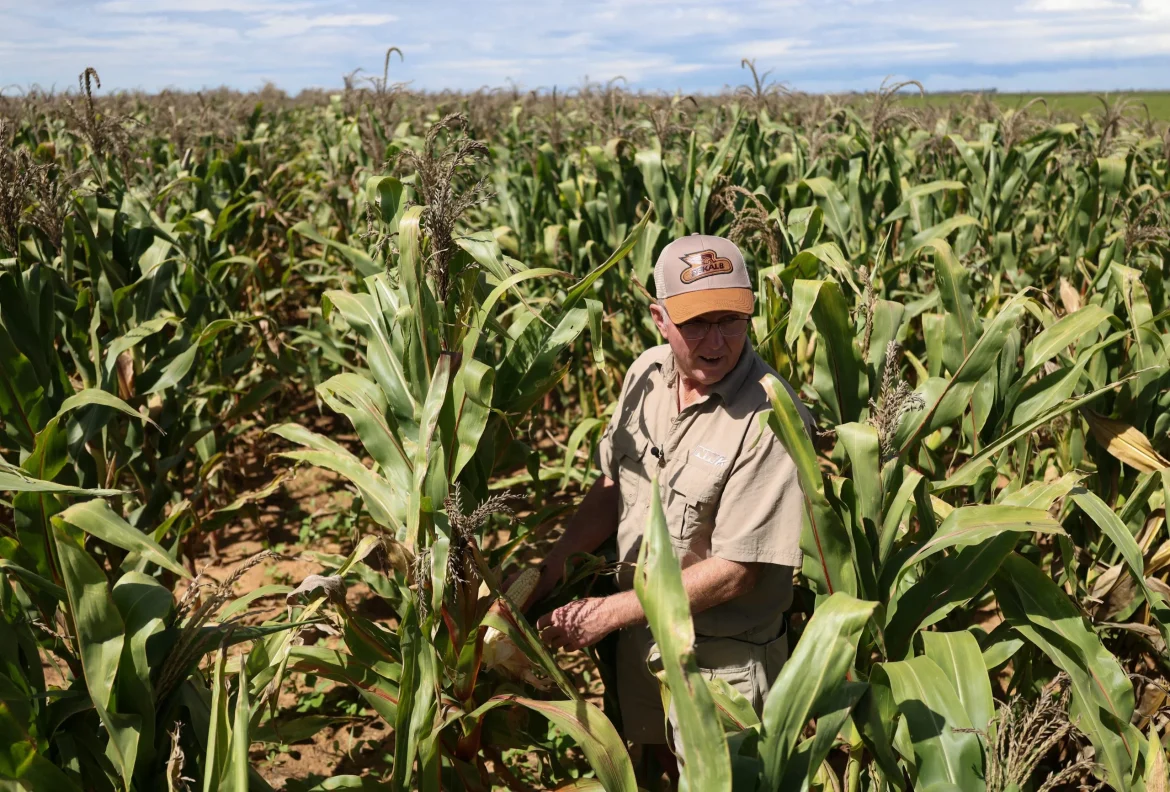
South African agribusiness confidence returned to positive territory in the third quarter of 2026, rising eight points to 53 as strong harvests and improved export performance lifted sentiment, but the recovery is being tested by the prospect of an El Niño-driven drought, higher financing costs and persistent infrastructure and trade constraints. The latest Agbiz/IDC Agribusiness Confidence Index shows that businesses entered the new production cycle from a stronger position than a year earlier, while simultaneously preparing for weaker agricultural conditions and tighter financial conditions in 2026/27.
The index, produced by the Agricultural Business Chamber of South Africa and the Industrial Development Corporation, had remained below the neutral 50-point level for two consecutive quarters before moving to 53 in the third quarter. The improvement was concentrated among financial-services businesses, grain traders, input suppliers and the feed industry, while other respondents broadly maintained their previous assessments. The survey was conducted in the first week of September across agricultural subsectors nationwide.
 Several indicators explain the improvement. The market-share subindex increased six points to 67, reflecting strong harvests in horticulture and field crops and better export performance. The export-volume subindex rose 21 points to 58, while the capital-investment subindex increased 29 points to 63. South Africa exported agricultural products worth $7.8 billion in the first half of 2026, an 11% increase from the same period last year, providing an important source of foreign exchange and supporting activity across farming, processing, logistics and associated services.
But the same survey shows why the headline confidence number needs to be read cautiously. The general agricultural conditions subindex fell 25 points to 36, its decline largely reflecting expectations of an El Niño-related deterioration in production conditions during the 2026/27 season. The financing-cost subindex, where a rise indicates greater financial strain, increased 42 points to 58. The debtor-provision subindex also rose 13 points to 46, reflecting concerns over higher input costs, animal diseases and the potential effects of drought on borrowers.
The climate risk is not merely a sentiment issue. The South African Weather Service warned in September that a strong El Niño event had developed and could intensify further, with below-normal rainfall and above-normal temperatures the most likely outcome across much of the country between October and December 2026. Similar conditions are expected in the November 2026 to January 2027 period. SAWS has also cautioned that El Niño does not produce drought in every event, but the current seasonal outlook raises the probability of water stress and heat-related pressure on agricultural production.
For farmers, the implications extend beyond crop yields. Drier conditions can increase irrigation requirements, raise electricity and water costs, increase livestock-feed pressures and reduce the financial capacity of producers to service debt. Higher fuel, fertiliser and other input costs add another layer of pressure, particularly for producers operating with narrow margins or relying on external financing for seasonal production.
The financing signal in the ACI is therefore significant. A 42-point rise in the financing-cost subindex suggests that businesses expect funding conditions to become less favourable even as capital investment sentiment has improved. This creates a potential mismatch between the desire to invest in machinery, irrigation and productive assets and the cost of financing those investments. For agricultural businesses, the timing is particularly sensitive because climate adaptation often requires upfront capital before the financial benefits become visible.
South Africa’s agricultural labour market also presents a mixed picture. The employment subindex declined 10 points to 46, while Statistics South Africa’s second-quarter labour-force data showed that farming employment fell 2% from the previous quarter to 944,000 jobs, although it remained 4% above the level recorded a year earlier. The quarterly decline partly reflects agriculture’s seasonal employment patterns, but a weaker production season could place additional pressure on rural employment and household incomes.
That matters beyond South Africa’s borders because the country’s agricultural economy is closely integrated into regional food markets. South Africa is a major producer and exporter of maize, fruit, wine, grains and other agricultural commodities, while its logistics networks and food-processing industries connect domestic production to markets across Southern Africa. A significant decline in production could therefore affect regional supplies, prices and cross-border trade, particularly in economies that depend on imports during periods of domestic shortfall.
The country’s export performance also illustrates the importance of market access. Although agricultural exports have strengthened, agribusinesses continue to identify the slow opening of new export markets as a constraint on longer-term growth. Export diversification is increasingly important as producers face changing geopolitical conditions, shipping disruptions and rising input costs. The disruption of global trade routes has added pressure to freight and farm-input costs, complicating the economics of agricultural exports even when production volumes are strong.
Port efficiency remains another structural concern. South Africa’s agricultural competitiveness depends on the ability to move perishable products quickly and predictably through ports and logistics corridors. Delays can reduce the value of exportable produce, increase storage and transport costs and weaken the competitiveness of producers relative to suppliers in other exporting countries. The combination of climate risk and logistics constraints therefore creates a compound vulnerability: production can be affected before goods reach the market, while infrastructure bottlenecks can reduce returns after a successful harvest.
The country’s experience also illustrates a broader African financing challenge. Climate risk is increasingly becoming a credit risk for banks, development-finance institutions and agricultural lenders. When drought raises production volatility, lenders face greater uncertainty over borrowers’ repayment capacity, while farmers need more capital to invest in irrigation, water storage, drought-tolerant inputs, insurance and other adaptation measures. Without appropriate risk-sharing mechanisms, the sectors most exposed to climate variability can become the sectors where finance becomes most expensive or difficult to obtain.
For South Africa, the relatively strong position created by the 2025/26 agricultural season provides some buffer. Good harvests have supported export earnings, improved food availability and strengthened parts of the agribusiness balance sheet. But those gains do not remove the structural exposure of agriculture to weather conditions, infrastructure quality and financing costs. The current confidence reading therefore reflects both a favourable season that has just ended and a cautious assessment of the season ahead.
The policy implications extend into water management, agricultural finance and infrastructure investment. The Department of Agriculture has urged producers to adopt climate-smart practices that conserve soil moisture and water and to ensure livestock numbers remain aligned with available grazing and carrying capacity. Such measures are becoming increasingly relevant as climate variability changes the assumptions underpinning agricultural investment and land management.
For investors and financial institutions, the challenge is increasingly to distinguish between short-term agricultural performance and the resilience of the underlying business model. Strong export revenues and favourable harvests can improve sentiment, but they do not eliminate exposure to drought, input-price volatility, animal disease, electricity costs or logistics failures. Sustainable agricultural finance therefore increasingly depends on whether lenders and producers can price these risks accurately and direct capital towards assets and practices that reduce vulnerability.

South Africa’s agribusiness confidence rebound consequently offers a more complicated picture than a move above the 50-point threshold suggests. The sector is entering the 2026/27 production cycle with stronger exports, healthy recent harvests and improved business sentiment, but also with rising financing costs and a climate outlook that threatens production conditions. For South Africa and the wider African food economy, the critical issue is whether the capital, infrastructure and risk-management systems supporting agriculture can withstand a less favourable production environment. The answer will have implications not only for farmers and agribusinesses, but also for food prices, rural employment, public finances, trade earnings and regional food security.


