


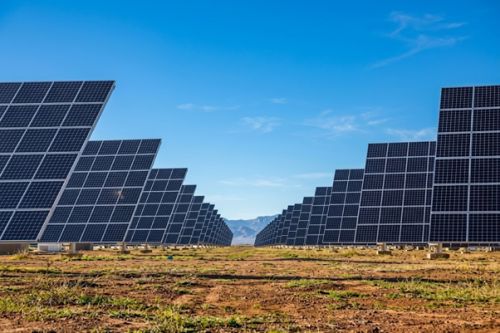
Odyssey Energy Solutions has raised $74 million in new equity and debt to expand financing for distributed renewable energy companies across emerging markets, including Africa, where smaller solar developers and installers continue to face difficulty securing the working capital needed to buy equipment, complete projects and wait for customer payments. The September 1 financing comprises $27 million in equity and $47 million in debt and comes as Africa’s electricity-access sector confronts a persistent shortage of private capital, particularly for smaller companies developing decentralised energy systems.
The financing brings together new and existing investors. Broadscale Group, FMO and Al Mada Ventures participated in the equity round alongside returning investors including Union Square Ventures, Equal Ventures, Abstract Ventures, Twelve Below, FJ Labs, MCJ and Transition Ventures. The debt financing includes commitments from British International Investment, BIO, the Facility for Energy Inclusion represented by Cygnum Capital and the Energy Entrepreneurs Growth Fund represented by TripleJump.
For Odyssey, the capital is intended to expand a financing model that targets a part of the renewable-energy value chain often overlooked by conventional project finance: the period before a solar project is completed and revenue is received. Distributed energy companies frequently have to purchase panels, batteries, inverters and other equipment before they can install systems and collect payment from customers. For smaller engineering, procurement and construction companies and solar installers, that timing creates a working-capital gap that can restrict how many projects they can execute even when demand exists.

Emily McAteer, Odyssey’s co-founder and chief executive, said distributed-energy finance has historically concentrated on post-construction capital, leaving small and midsize EPC companies and installers without sufficient liquidity to purchase equipment and complete projects. The company’s financing strategy is designed to address that mismatch by moving capital further upstream in the project cycle.
The problem is particularly significant in Africa because decentralised energy is expected to play a major role in expanding electricity access. According to the International Energy Agency, almost 600 million people in Africa still lack access to electricity, while financing for electricity access remains well below the level required to achieve universal access. The IEA estimates that Africa needs around $15 billion a year through 2035 for universal electricity access, including approximately $5 billion annually for mini-grids and $3 billion for solar home systems.
Yet the financing market for these businesses remains uneven. The IEA says less than $2.5 billion was committed to new electricity-access connections in sub-Saharan Africa in 2023, with private finance accounting for only $640 million, or about 25% of total commitments. Decentralised solutions recorded a 20% increase in financing between 2019 and 2023, but smaller African-owned companies continue to face difficulties accessing risk-taking capital.
That financing constraint has implications beyond individual solar businesses. Developers and installers are the commercial layer that turns capital and equipment into actual connections for households, businesses, telecom infrastructure, health facilities and rural enterprises. If those companies cannot finance procurement, projects can remain delayed even when customers, donors or investors have already committed funds. The challenge is particularly acute for companies that are growing faster than their balance sheets. A developer may have signed a customer contract and secured a project, but still need to pay suppliers several weeks or months before receiving the corresponding customer payment. Traditional banks can be reluctant to provide short-term financing against such contracts, especially when the borrower is relatively young, lacks substantial collateral or operates in a market perceived as high risk.
Odyssey has been developing financial and procurement products around this gap. Its current construction-credit offering provides solar companies with working capital aligned with project payment milestones, while its procurement-credit model allows companies to place a deposit for equipment and pay the remaining balance when equipment arrives. Odyssey says procurement financing is currently available in Nigeria and for selected equipment in Kenya, Ghana and South Africa.
The company has already tested the model in Nigeria. In 2023, Odyssey and the Renewable Energy Association of Nigeria agreed to make $100 million in equipment financing available to REAN members. The arrangement was designed to reduce the upfront cash burden on solar companies, with participating businesses able to place a small deposit and receive up to 60 days to pay the balance after equipment arrived in Nigeria.
Odyssey’s wider platform has also expanded considerably. The company says more than 6,000 renewable-energy companies use its financing, procurement and operations services across more than 50 countries, with more than $3 billion in available financing for renewable-energy projects. The new capital therefore arrives at a point when the distributed-energy sector is shifting from a collection of individual companies and projects towards a larger financing ecosystem involving developers, equipment suppliers, banks, development-finance institutions and specialised financial platforms.
For Africa, that shift matters because the economics of energy access are different from those of large utility-scale power projects. Large solar farms can attract institutional investors because they have identifiable assets, long-term contracts and relatively predictable revenue streams. Distributed energy projects are typically smaller and more numerous. A solar home system, commercial rooftop installation or mini-grid may require less capital individually but can be more expensive to finance on a transaction-by-transaction basis.
Aggregation can help address that problem. Odyssey’s platform model effectively combines project information, procurement and financing across multiple developers. Its 2023 reporting said the company had worked with development partners including the World Bank, African Development Bank, FCDO and CEI Africa, which collectively disbursed more than $134 million in financing to renewable-energy companies through the platform during that year. The company also said the financing supported a pipeline representing 250 MW of solar PV capacity and more than 2.3 million new connections.
The use of digital platforms in this market is important because information is itself part of the financing problem. Lenders need confidence that projects exist, equipment has been procured, installations are operational and customers are receiving electricity. Odyssey has said its software has been used to collect data from millions of smart meters and solar home systems, creating a monitoring layer that can help financiers verify project performance.
That can potentially reduce due-diligence costs and make smaller projects easier to aggregate into investable portfolios. The financing challenge, however, extends beyond the availability of working capital. The IEA estimates that the cost of capital for energy projects in Africa can be two to three times higher than in advanced economies and China, reflecting perceived country, currency, regulatory and project risks. The agency has argued that concessional capital and de-risking mechanisms will remain important to mobilise larger volumes of private investment.
This is where the composition of Odyssey’s new financing is significant. The $47 million debt component includes capital from development-finance institutions and specialised energy-investment facilities, while the equity component includes FMO, a Dutch development bank. Such a capital structure can allow a financial platform to take risks that conventional commercial lenders may not be prepared to assume directly. If the model demonstrates that short-term procurement and construction financing can be repaid against predictable project cash flows, it could provide a pathway for additional private lenders to participate.
The wider African market is already demonstrating demand for these financing structures. Nigeria has used distributed renewable energy as part of efforts to expand electricity access, while Kenya, Ghana and South Africa have developed growing markets for commercial and industrial solar. Odyssey’s procurement operations already span those markets, giving the company a regional base from which to expand the financing model. Nigeria’s experience is particularly relevant. The 2023 REAN-Odyssey arrangement was designed not simply to finance completed solar projects but to solve a supply-chain problem by allowing developers to access equipment without paying the full cost upfront. That reduces the amount of working capital tied up between procurement and installation.
For small African energy companies, the difference can be material. A developer that can finance equipment for five projects at once may be able to execute a larger pipeline than one that must wait for payment from the first customer before purchasing equipment for the next. This creates a potential link between financial innovation and energy-access outcomes. Faster working-capital cycles can allow local companies to undertake more installations, hire additional technicians and serve more customers without requiring each project to be separately financed through a conventional bank facility.
But the model also carries risks. Expanding credit to smaller developers requires robust assessment of project quality, customer contracts, equipment suppliers, foreign-exchange exposure and repayment capacity. In African markets where currencies can be volatile, dollar-denominated equipment purchases can create additional financial pressure when revenues are earned in local currency. For policymakers, the issue is therefore not simply how much capital enters distributed energy, but whether financing structures are aligned with local market conditions and whether African-owned businesses can access them. The IEA has warned that much of the private capital currently flowing into electricity-access projects originates internationally, which can put smaller African-owned companies at a disadvantage. It has also identified the limited availability of equity for early-stage developers as a constraint on the development of bankable projects for later-stage debt financing.
This creates a financing sequence that is important for Africa’s energy transition. Early-stage companies need equity and working capital to develop projects. Developers then need construction and equipment finance to build them. Once operating assets have established a revenue history, they may become suitable for longer-term project or asset finance. If the first stage is underfunded, the pipeline available to larger lenders later in the cycle remains limited. The new Odyssey funding is aimed squarely at that early commercial bottleneck. Its importance will ultimately depend on whether the company can translate the additional capital into financing for a much larger number of African developers and installations while maintaining credit quality.
That is a broader challenge facing Africa’s decentralised-energy market. The continent does not only need more solar panels, batteries and mini-grids. It needs financial systems capable of moving capital through the different stages of a distributed-energy business, from equipment procurement to construction, operation and eventual refinancing. The IEA’s projections underline the scale of the task. Under its pathway to universal electricity access, decentralised solutions such as mini-grids and solar home systems are expected to account for a substantial share of the investment required through 2035. The agency also says innovative mechanisms, including blended finance, guarantees, securitisation and energy-as-a-service models, will be needed to attract a wider range of investors.
Odyssey’s latest financing therefore sits within a much larger shift in how energy access is being financed. The emerging model is less dependent on financing one large project at a time and more focused on building platforms that can aggregate companies, equipment, data and capital. For Africa, the commercial test is straightforward: whether that approach can lower the financing barriers facing local developers sufficiently to allow more projects to move from signed contracts and equipment orders to completed installations.
If it can, the impact would extend beyond the companies receiving the financing. It could strengthen local renewable-energy supply chains, improve the ability of small and midsize developers to compete, and increase the pace at which decentralised power reaches businesses and communities that remain difficult to serve through conventional grids.
The $74 million raised by Odyssey is small relative to Africa’s overall energy-investment requirements. But the financing mechanism it is designed to expand addresses a specific bottleneck that has often been overlooked: the capital required before a renewable-energy project starts generating revenue. That first-mile financing gap may prove increasingly important as Africa seeks to combine private investment with decentralised energy systems to close one of the world’s largest electricity-access deficits.


