


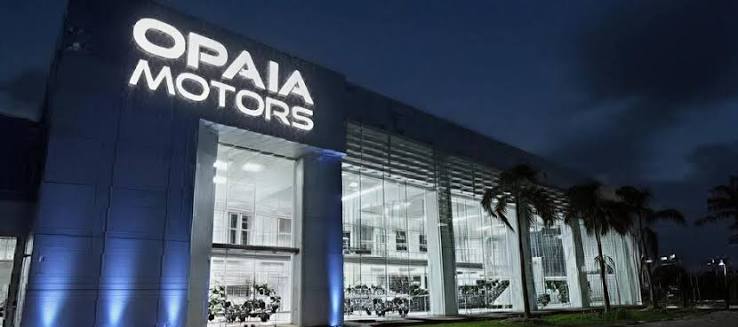
OPAIA Motors will serve as a Premium Sponsor of the E1 Luanda GP 2026, bringing Angola’s emerging automotive industry into a high-profile electric mobility event as the capital prepares to host the first all-electric powerboat race in the country on September 12 and 13. The partnership places the Angolan-owned automotive company alongside the UIM E1 World Championship, linking electric propulsion, technology and sustainability with a broader national effort to attract investment, strengthen tourism and develop domestic industrial capacity.
The E1 Luanda GP will take place in Luanda Bay and represents the championship’s first visit to Angola and its first race in Southern Africa. According to the E1 Series, Luanda is the fifth round of the 2026 championship, which also includes races in Jeddah, Lake Como, Dubrovnik, Monaco and Miami. The championship uses all-electric RaceBird boats, making the event a platform for testing and showcasing electric marine mobility in a competitive environment.
For OPAIA Motors, the sponsorship is closely linked to a wider industrial strategy rather than being limited to sports marketing. The company was launched in 2026 as the automotive arm of OPAIA Group, which has expanded its activities across sectors including construction, agriculture, finance, energy and infrastructure. Reuters reported in January that OPAIA had inaugurated Angola’s only operational vehicle assembly plant in Luanda, with an annual capacity of 22,000 light vehicles and 1,000 buses. The company has also indicated plans to move towards electric vehicles as its automotive operations develop.
That industrial context gives the E1 partnership a different significance for Angola’s mobility transition. Electric mobility is often discussed through the lens of vehicle sales, charging infrastructure and emissions, but the transition also raises questions about manufacturing, technical skills, supply chains and the ability of African economies to participate in the production and servicing of new transport technologies. OPAIA Motors’ participation places those questions alongside an international competition whose core technology is electric propulsion. The E1 championship describes itself as the world’s first all-electric raceboat championship, while the Angolan government has presented the Luanda race as an opportunity to combine tourism, nautical sport, technology and international promotion.
The economic case for hosting the event extends beyond the race itself. The Government of Luanda has said the competition is expected to strengthen the international profile of the capital and create opportunities to promote the city and its waterfront. The official E1 event programme also incorporates hospitality, entertainment and public activities around the race, broadening the event’s potential economic footprint. For Angola, this matters as the country seeks to diversify an economy historically dependent on oil revenues. Large international events can provide a platform for tourism and investment promotion, but their longer-term economic value depends on whether they connect with domestic businesses and capabilities rather than remaining isolated events.
OPAIA’s position within that ecosystem is therefore relevant. The company describes itself as part of a broader Angolan industrialisation agenda focused on domestic production, professional training, employment creation and reducing reliance on imported goods. Those objectives are particularly relevant to the automotive sector, where import dependence has historically shaped the structure of African vehicle markets. The establishment of an assembly plant represents one step in building domestic industrial capacity. Reuters reported that OPAIA’s initial automotive operations involve assembling imported vehicles under the OPAIA Motors brand, with partnerships involving Chinese manufacturers Chery and Dongfeng for passenger vehicles and Volvo for buses. The company has said it intends to develop local production capabilities over time, including electric vehicles.
The transition from assembly to deeper manufacturing, however, is likely to depend on market size, supplier networks, skills, infrastructure and investment. Electric vehicles introduce additional requirements around batteries, power electronics, charging systems, software and after-sales technical expertise. The development of these capabilities could determine how much economic value African countries retain as mobility systems electrify. That makes skills development an important part of the industrial equation. Angola’s Ministry of Youth reported in June that OPAIA Motors had already generated more than 1,500 jobs, predominantly for young people, and had set a target of reaching 3,500 jobs. The company’s leadership also highlighted vocational training and youth entrepreneurship as part of its broader development agenda.
The figures are significant in a country where industrialisation and employment creation remain closely connected. An automotive industry can create jobs not only at assembly facilities but also across maintenance, logistics, parts distribution, dealerships, software, electrical engineering and technical services. Electric mobility could eventually broaden that ecosystem, although the scale of the opportunity will depend on whether demand develops quickly enough to support investment in local capabilities. The E1 event provides a highly visible demonstration of the technology, but the transition of road transport in Angola will involve very different economic considerations. Electric boats competing in a controlled sporting environment are not directly comparable with commercial vehicles operating in cities and across long distances. Road electrification requires charging networks, grid capacity, financing mechanisms, vehicle availability and predictable electricity supply.
Nevertheless, international electric-mobility events can contribute to public familiarity with the technology and create opportunities for manufacturers, investors, policymakers and transport companies to examine emerging technologies. This is part of the reason E1 has attracted attention from outside the traditional motorsport industry. Its teams include prominent international figures, and the championship has positioned its races as demonstrations of electric marine technology. The Luanda round is particularly significant for Africa because it follows the championship’s expansion to the continent and provides Angola with an international platform at the intersection of technology, tourism and the blue economy.
The event is also taking place within a wider push to position Luanda as an international destination. The Angolan government has described the E1 race as an opportunity to promote tourism and investment while showcasing the country’s natural and economic potential. The official E1 Luanda GP call similarly frames the event around tourism, private investment and the blue economy. That framing gives sustainability a broader economic meaning. For Angola, the value of an electric-mobility event is not simply the reduction in emissions from the race boats. It also lies in whether technology-focused events contribute to new investment relationships, technical knowledge, business opportunities and domestic capabilities.
OPAIA Group’s broader portfolio reflects that approach. The group operates across construction, agriculture, water, energy, finance and tourism, while its leadership has positioned the company as an Angolan investment platform focused on infrastructure and industrial development. Agostinho Kapaia, who founded OPAIA in 2002, serves as chairman and chief executive of the group. For the automotive business, the E1 sponsorship can therefore be read as part of a wider attempt to associate industrial development with emerging technologies. OPAIA Motors is not simply presenting itself as a vehicle company; its participation in the event places the brand within a broader conversation about the future of mobility and the capacity of African businesses to engage with that transition.
The challenge will be turning visibility into industrial substance. Electric mobility requires more than branding around sustainability. Manufacturers need reliable supply chains, access to finance, technical expertise and customers willing and able to adopt new technologies. Governments need appropriate policies, infrastructure and standards. Energy systems need to support additional electricity demand, while charging infrastructure must expand alongside vehicle deployment. For African markets, affordability will remain particularly important. The economics of electric mobility are influenced by vehicle purchase prices, battery costs, electricity tariffs, financing conditions and maintenance requirements. The transition will therefore not occur simply because cleaner technologies become available; it will depend on whether those technologies can be integrated into transport systems at a cost that consumers and businesses can absorb.
Angola’s industrial policy will consequently matter as much as the visibility generated by events such as the E1 Luanda GP. The government’s decision to host the competition provides an opportunity to expose local businesses and institutions to international electric-mobility technologies. OPAIA Motors’ sponsorship adds a domestic industrial participant to that ecosystem. Whether this develops into deeper technology transfer, supplier relationships or investment will depend on the commercial partnerships that emerge beyond the event.
The timing is notable because E1’s 2026 calendar places Luanda between European and American race locations, giving the Angolan capital a position within an international series that is deliberately built around electric propulsion. E1 says the Luanda race is its first in Southern Africa and its second race location on the African continent. For Angola, the event also offers a test of the country’s ability to use major international platforms to support economic diversification. Tourism, mobility, manufacturing and the blue economy are separate sectors, but the E1 race creates a temporary intersection between them.
The economic impact should therefore be judged less by the spectacle of the race than by the networks and capabilities that remain after the boats leave Luanda Bay. If the event helps create commercial relationships, strengthens Angola’s profile among mobility investors, exposes local engineers and businesses to new technologies and supports the development of domestic automotive capabilities, its significance could extend beyond two days of competition. For OPAIA Motors, the sponsorship provides an opportunity to place its automotive ambitions within that broader transition. The company is building an industrial platform in a market where vehicle manufacturing remains at an early stage, while the global industry is simultaneously moving towards electrification and new forms of mobility.
That creates both an opportunity and a constraint. African manufacturers have the potential to participate in the emerging mobility economy, but they must develop capabilities quickly enough to avoid remaining primarily consumers of technologies developed elsewhere. The E1 Luanda GP does not resolve that industrial challenge. It does, however, provide a visible platform on which Angola can connect its emerging automotive sector with the global conversation around electric mobility.
For a country seeking greater economic diversification and industrial depth, that connection may prove more significant than the sponsorship itself. The E1 Luanda GP will take place on September 12 and 13, with Luanda becoming the fifth stop on the 2026 E1 championship calendar. The race will put electric boats on the waters of the capital while OPAIA Motors uses the platform to showcase its automotive ambitions. The longer-term question is whether the event can help move Angola’s electric-mobility conversation from international visibility towards domestic capability from showcasing electric technology to developing the skills, businesses, infrastructure and investment needed to make cleaner mobility commercially viable in an African market.


