


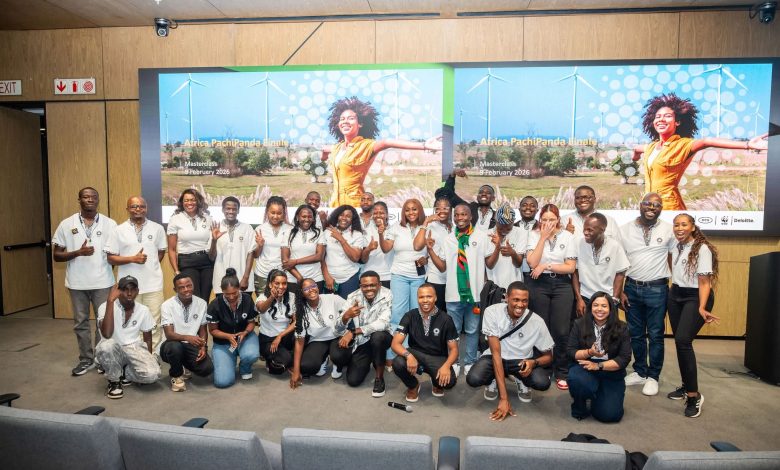
MTN South Africa has opened applications for the 2026 PachiPanda Challenge, calling on entrepreneurs aged 18 to 35 to develop nature-based and technology-driven businesses addressing environmental and socio-economic challenges, as South Africa seeks to expand youth participation in its green economy. Backed by Nedbank and delivered with Indalo Inclusive NPC, the programme is focused on climate resilience, biodiversity, sustainable livelihoods, circular economy solutions and community development, with the eventual national winner advancing to the continental Africa PachiPanda competition.
The challenge, themed “Nature Meets Innovation: Unlocking Africa’s Green Economy”, is part of the wider Africa PachiPanda Challenge developed by MTN and WWF to support youth-led enterprises working on environmental problems. The programme began in Zambia in 2022 before expanding to South Africa, Nigeria and Cameroon in 2024 and Uganda in 2025. MTN says the 2025 continental programme received 3,436 applications and developed 158 finalists through its pitch programme, illustrating the growing pool of young African entrepreneurs working on environmental solutions.
For South Africa, the programme arrives against a difficult labour-market backdrop. Statistics South Africa reported that 21 million people aged 15 to 34 were part of the country’s working-age population in the first quarter of 2026. Of those, 4.7 million were unemployed, with unemployment reaching 60.9% among people aged 15 to 24 and 40.6% among those aged 25 to 34.
That makes the development of commercially viable green enterprises more significant than simply increasing participation in environmental programmes. The challenge is designed to provide participants with mentorship, technical assistance, business-development support and pitch preparation, with the stated objective of helping promising ideas move towards viable businesses. The programme is open to South African individuals and youth-led small businesses, with applicants expected to demonstrate either a proof of concept, pilot-stage solution or, for established businesses, market traction and revenue.
The 2026 competition is structured around four areas: turning Africa’s natural assets into green economic opportunities, developing circular-economy and waste-to-value businesses, improving water conservation and security, and advancing regenerative agriculture and food systems. These areas reflect some of the practical pressures facing African economies, where climate change is increasingly affecting agricultural productivity, water availability, ecosystems and the cost of managing waste.
Nature-based solutions are particularly relevant because Africa’s natural resources underpin large parts of economic activity, from agriculture and fisheries to tourism and forestry. The challenge’s focus on combining indigenous knowledge, technology and nature-based approaches is therefore aimed not only at environmental protection but also at creating enterprises, employment and investment opportunities around natural capital.
The circular economy component similarly shifts the discussion from waste management as a municipal cost towards waste as a potential source of economic value. Applicants are encouraged to develop solutions around recycling, upcycling, organic waste, e-waste recovery, sustainable packaging, waste-to-energy and digital systems for collection and market access. Such businesses can potentially address two constraints simultaneously: reducing environmental pressure while creating revenue streams and jobs.
Water is another area where the economics of resilience are becoming increasingly important. The South African challenge is seeking innovations such as leak detection, smart metering, stormwater management, wastewater reuse and rural water-access technologies. These solutions have relevance beyond environmental performance because water losses impose costs on households, farmers, municipalities and businesses, while drought and unreliable supply can constrain production and investment.
Agriculture provides another route through which the programme connects climate resilience with enterprise development. The regenerative agriculture category encourages solutions involving soil restoration, agroforestry, biodiversity, climate-smart farming, sustainable aquaculture and resource-efficient agricultural technologies. For African economies where large numbers of households depend directly or indirectly on agriculture, improvements in soil, water and productivity can have implications for both food security and rural incomes.
The programme is also building on businesses that emerged from earlier editions. Among the 2025 South African participants cited in the challenge material were Wendile Mpofu, founder of Carbonsmart Solutions Africa, which uses digital soil monitoring, precision input management and carbon-market access to support smallholder farmers; Gift Mabena, founder of AgriAdapt, which provides digital tools to help farmers respond to climate risks; and Bafokeng Mofokeng, who developed a circularity verification platform for the e-waste sector.
The previous South African cohort consisted of 10 finalists who received technical support, mentorship and grant funding, completing more than 113 mentorship sessions and creating 27 part-time and full-time jobs, according to the information provided by the organisers. These outcomes illustrate the potential value of combining early-stage capital with business development rather than relying on competitions that only provide recognition.
That approach is consistent with a wider shift among African development institutions towards supporting youth-led enterprises as part of the continent’s employment and economic transformation agenda. The African Development Bank has identified youth entrepreneurship and innovation as a route towards job creation and has supported early-stage businesses through initiatives designed to improve access to finance, skills and markets. In March 2026, for example, the bank approved a €7.5 million investment in the Breega Africa Seed I Fund, targeting young African technology companies including businesses in climate technology.
The financing challenge remains significant. Early-stage green businesses often face the same constraints as other African startups — limited collateral, relatively short operating histories and difficulties demonstrating predictable revenues — while climate and nature businesses can face additional challenges because their economic returns may take longer to materialise.
This makes the structure of programmes such as PachiPanda important. Mentorship can help founders refine business models and establish customer propositions, while technical assistance can improve the credibility of their solutions. Exposure to investors and other market participants can also help businesses understand the requirements needed to progress beyond grant or competition funding.
MTN’s broader PachiPanda programme has been positioned around precisely this gap. The company says the initiative is intended to identify young innovators who are developing responses to environmental challenges and provide them with skills, visibility and networks to help scale their solutions. Its partnership with WWF places the programme within a wider conservation and climate framework, while country-level partnerships bring financial and enterprise-development support into the process.
For Nedbank, participation provides another link between green entrepreneurship and financial-sector involvement. The bank’s support means the programme is not limited to environmental advocacy but is connected to the broader question of how sustainable enterprises can become commercially viable. Poovi Pillay, Executive Head of Nedbank’s Social Impact Unit, said targeted support, mentorship and funding can help unlock businesses delivering both environmental and socio-economic value.
The African dimension is important because the PachiPanda model is designed to move beyond national competitions. The national winners can progress to the continental competition, creating a pathway through which businesses initially developed around local environmental problems can gain exposure to a wider African market.
That regional pathway could matter for solutions whose underlying challenges are shared across borders. Water scarcity, agricultural climate risk, waste management, ecosystem degradation and access to sustainable livelihoods are not confined to individual national markets. A technology developed for farmers in South Africa, for example, could potentially have applications in other African agricultural systems, provided it is adapted to local conditions, regulation and purchasing power.
The challenge also reflects an increasingly important distinction in Africa’s green-transition debate: the difference between identifying environmental problems and building businesses capable of solving them at scale.
Young entrepreneurs may have technical solutions, but scaling requires customers, financing, regulatory support, reliable supply chains and skilled workers. The success of green entrepreneurship programmes will therefore depend less on the number of ideas submitted than on how many businesses can survive after the programme ends and secure the capital and market access needed to grow.
The 2026 PachiPanda Challenge opened applications on September 3 and will close submissions on October 4. The top 10 finalists are scheduled to be announced on October 23, with the pitch event and South African winners expected on November 25. The first-, second- and third-place winners are set to receive prizes valued at R87,000, R52,000 and R35,000 respectively, while the top two winners in the existing-business category will represent South Africa at the continental finale.

The broader test will be whether the programme can convert entrepreneurial potential into durable businesses. South Africa’s youth unemployment figures underline the urgency of creating enterprises capable of generating employment, while the country’s climate and environmental pressures create an expanding market for technologies and business models that improve resource efficiency and resilience.
For Africa, the significance of initiatives such as PachiPanda ultimately lies in whether environmental innovation can become part of mainstream economic activity. If young businesses can move from pilots to paying customers, attract investment and expand across markets, the green economy can provide more than an environmental response. It can become a source of enterprise formation, employment, technology development and new investment opportunities.
The challenge is therefore not simply to find young people with ideas. It is to build the financing, market and institutional conditions that allow those ideas to become companies capable of solving Africa’s environmental problems at commercial scale.


