


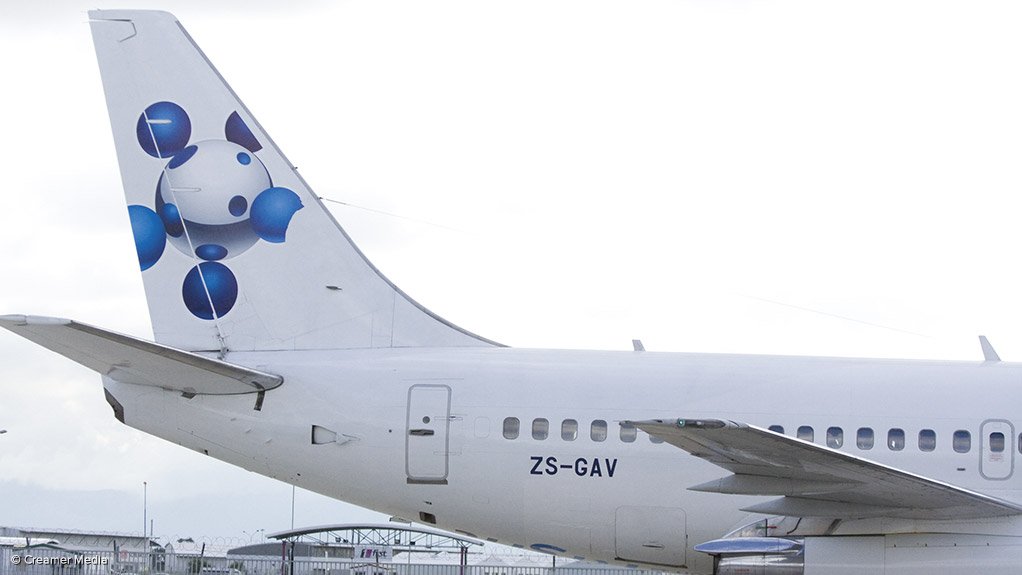
South Africa has taken another step towards establishing a domestic sustainable aviation fuel market, with agreeing to supply its first commercial volumes of sustainable aviation fuel to Antarctic expedition operator White Desert for flights between Cape Town and Antarctica.
The agreement, announced on September 15 at the Africa Green Hydrogen Summit in Cape Town, connects Sasol’s existing fuels infrastructure with a commercial aviation customer seeking to reduce the emissions associated with its operations. It also provides an early demonstration of how South Africa’s established industrial capabilities could be adapted to participate in emerging lower-carbon fuel markets.
The SAF supplied under the agreement is produced from sustainable bio-feedstocks. Sasol describes bio-based SAF as an initial pathway towards future synthetic fuels produced using green hydrogen, positioning the arrangement within a broader transition from conventional fuel production towards lower-carbon molecules.

For South Africa, that distinction is important. The country’s sustainable-fuels opportunity is not limited to replacing conventional jet fuel with a different product. It is increasingly linked to whether existing industrial infrastructure, engineering capabilities, renewable-energy resources and international logistics networks can be repurposed to create new export-oriented industries.
Sasol’s Natref refinery provides part of that industrial base. The refinery recently received ISCC+ sustainability certification, enabling greater traceability and sustainability verification across relevant supply chains. The certification is important because the development of SAF markets depends not only on producing a fuel that meets technical specifications, but also on demonstrating the sustainability characteristics of the feedstocks and supply chain behind it.
The White Desert agreement creates a commercial demand point for that capability. White Desert operates Antarctic expeditions from Cape Town, using aviation to connect South Africa with its operations on the continent. Its decision to use locally supplied SAF provides Sasol with an operating customer rather than a demonstration project alone, although the volumes involved in the initial agreement have not been publicly disclosed.
That commercial element matters because one of the central challenges facing emerging green-fuel markets is the gap between potential supply and bankable demand. South Africa’s government has increasingly identified offtake agreements as a prerequisite for moving hydrogen and sustainable-fuel projects towards investment decisions.
At the same Africa Green Hydrogen Summit, President Cyril Ramaphosa announced the first wave of six priority green-hydrogen projects. The leading project, Phelan Green Group’s electro-SAF development in Saldanha Bay, has reached final investment decision, secured an offtake agreement and committed $100 million in equity. Construction is expected to begin in the first quarter of 2027, with first exports targeted for the first quarter of 2029.
The developments involving Sasol and Phelan therefore represent different stages of the same emerging market. Sasol is putting bio-based SAF into a commercial aviation operation, while Phelan is advancing an electro-SAF project based on green hydrogen and renewable electricity towards construction.
Together, they illustrate the different technological pathways South Africa is exploring as it attempts to establish a sustainable-fuels industry. The country’s policy framework already recognises sustainable aviation fuel as part of the broader green-hydrogen and Power-to-X opportunity. The Just Energy Transition Implementation Plan identifies sustainable aviation fuel among the products that can be produced from green hydrogen and renewable electricity. South Africa’s Green Hydrogen Commercialisation Strategy similarly positions Power-to-X products, including sustainable fuels, as potential components of a new industrial value chain.
Government has also linked the opportunity to industrialisation. Trade, Industry and Competition Minister Parks Tau said at the September summit that green hydrogen should be viewed as a tool for developing new industries, including sustainable aviation fuel, green chemicals, green shipping fuels and advanced manufacturing. That approach places SAF within a wider economic discussion. South Africa already has fuel-processing infrastructure, chemical engineering expertise, established ports and international aviation links. The question is whether those existing advantages can be combined with sustainable feedstocks, renewable electricity and new technologies at a cost that can compete in increasingly carbon-constrained aviation markets.
Sasol’s own SAF strategy provides an indication of the potential scale. The company says it is considering feedstocks including used cooking oil, non-edible vegetable oils, biogenic and recycled feedstocks for production using existing assets in Secunda, Sasolburg and Natref. It forecasts SAF production of about 6,000 tonnes per year in 2026, rising to 19,000 tonnes in 2027, approximately 100,000 tonnes by 2029/30 and potentially 300,000 tonnes beyond 2030.
Those figures represent a much larger ambition than the initial White Desert agreement, but they also highlight the scale of the supply-chain challenge. SAF production requires reliable and sustainably sourced feedstocks, appropriate processing capacity, certification, distribution infrastructure and customers willing to purchase the fuel. The economics can also be affected by feedstock availability, renewable-energy costs and the price differential between sustainable and conventional aviation fuel.
For South Africa, feedstock sustainability will be particularly important. The Department of Transport has previously identified biomass, waste, residues and end-of-life products as potential SAF feedstocks, while warning that development must account for food security, water availability and biodiversity.
The eventual transition towards electro-SAF introduces another set of requirements. Producing synthetic aviation fuel from green hydrogen requires large quantities of renewable electricity, hydrogen production capacity and a sustainable source of carbon. The economics therefore depend on the availability and cost of several inputs rather than fuel production alone.
South Africa is nevertheless building a policy and investment pipeline around these technologies. In August, the government said Sasol had commissioned Envision to design a green-hydrogen system at its Sasolburg operations that could initially produce e-methanol and eventually support sustainable aviation fuel production.
The government has also established a Green Hydrogen Deal Book to provide investors, financiers, technology partners and potential offtakers with greater visibility into projects emerging across the country’s hydrogen economy. The initiative forms part of the Just Energy Transition Investment Plan’s GH₂ Programme. For aviation, the commercial logic is increasingly significant because SAF remains one of the principal routes available for reducing lifecycle emissions from aircraft that cannot readily transition to battery-electric propulsion.
But establishing a SAF market will require more than isolated supply agreements. Airlines, expedition operators, airports, fuel suppliers, refiners, financiers and policymakers need enough certainty about standards, demand, supply and pricing to justify investment in production and distribution infrastructure.
Certification can help address part of that uncertainty. Natref’s ISCC+ certification provides a recognised framework for sustainability and traceability, while international aviation markets will continue to place their own requirements on fuel sustainability and emissions accounting. The commercial agreement between Sasol and White Desert therefore represents a relatively small transaction within a much larger industrial transition. Its significance lies in demonstrating that locally produced SAF can move from strategy and technology discussions into an operating aviation application.
It also provides an early example of how established South African industrial assets can be used as part of the transition rather than simply being replaced. Sasol’s strategy is built around gradually introducing more sustainable feedstocks into existing facilities while developing technologies that could support hydrogen-derived fuels over time.
The next test will be scale. South Africa will need to demonstrate that it can secure sustainable feedstocks, maintain credible certification systems, attract capital, develop competitive production costs and secure long-term customers. For electro-SAF in particular, reliable renewable electricity and green-hydrogen supply will become critical to commercial viability.
The White Desert agreement provides an early demand signal. Phelan Green’s investment decision provides another indication that larger-scale e-SAF projects can progress when financing and offtake are aligned. The challenge now is turning individual projects and commercial agreements into a functioning sustainable-fuels value chain.

For South Africa, the opportunity extends beyond aviation emissions. A competitive SAF and e-fuels industry could create demand for renewable power, green hydrogen, sustainable feedstocks, engineering services and specialised manufacturing while allowing the country to retain more value from its existing industrial capabilities.
The first commercial SAF supplied by Sasol may therefore be modest in volume, but it marks an important transition in the country’s energy story: from discussing sustainable aviation fuel as a future market to putting locally produced fuel into an aircraft operation.
Whether that first step develops into a scalable industry will depend on what comes next—investment, certification, feedstock supply, infrastructure and, most importantly, sustained commercial demand.


