


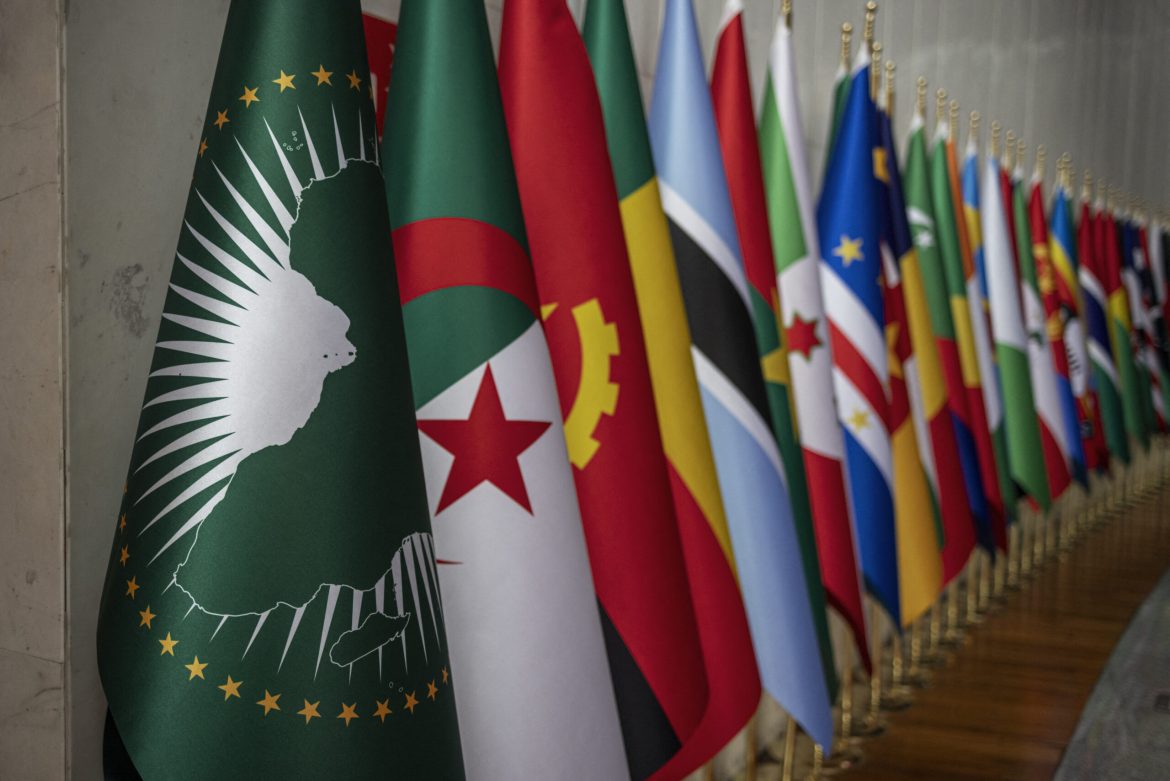
Africa’s role in the global economy came under renewed scrutiny in New York this week as political, business and financial leaders gathered for Unstoppable Africa 2026, calling for greater African participation in global trade and decision-making while placing local value creation, industrialisation, energy access and investment at the centre of the continent’s economic agenda. Held alongside the 81st session of the United Nations General Assembly, the Global Africa Business Initiative meeting brought together African and international leaders to examine how the continent can capture more economic value from its natural resources, markets and growing workforce.
The discussions reflected a shift in emphasis from Africa as a supplier of commodities towards Africa as a location for processing, manufacturing, and higher-value services. UN Secretary-General António Guterres called for a greater African role in international affairs and argued that the continent’s growing influence in global markets should be matched by a stronger voice in international institutions. He also highlighted the need for critical minerals and other natural resources to generate greater local value and decent employment rather than leaving economies primarily exposed to the export of unprocessed commodities.
 For African economies, the distinction is material. Commodity exports generate foreign exchange and fiscal revenues, but limited domestic processing can leave countries exposed to fluctuations in global prices while much of the value created further along international supply chains accrues elsewhere. The push for local processing therefore intersects directly with industrial policy, public revenue, employment, and the ability of governments to build more diversified economies.
African Union Commission Chairperson Mahmoud Ali Youssouf said the continent’s market of about 1.5 billion people provides a significant foundation for industrial transformation, but identified affordable energy, infrastructure, finance, skills, technology and effective standards as necessary conditions for converting market size and natural resources into productive capacity. He also called for stronger African value chains and fewer barriers to intra-African trade.
The emphasis on value chains comes as global demand for critical minerals is reshaping investment and trade patterns. Africa holds substantial deposits of minerals required for renewable energy technologies, electric vehicles, batteries, and other industrial applications. Yet the economic benefits available to producing countries depend not only on extraction volumes but also on the extent to which processing, refining, manufacturing and associated services are developed locally.
The agenda for Unstoppable Africa reflected that challenge. Discussions included critical minerals, infrastructure, energy, trade and investment, with business leaders arguing for greater development of processing and manufacturing capacity within African economies. The initiative’s programme noted that Africa produces a substantial share of global cobalt and manganese but captures a relatively small share of the value generated by clean-energy manufacturing.
The question is consequently becoming less about whether Africa has resources and more about what economic structures can be built around them. Developing domestic value chains requires reliable electricity, transport corridors, ports, industrial land, digital infrastructure, and access to finance. It also requires regulatory systems capable of supporting long-term investment and standards that allow African-produced goods to enter regional and international markets.
Energy remains one of the most immediate constraints. At the New York gathering, the newly launched Nigeria Distributed Renewable Energy Fund reached its first close with initial capital commitments. The $300 million facility, managed by the Nigeria Sovereign Investment Authority and Africa50, is designed to provide equity financing to local clean-energy developers working on solar mini-grids, solar home systems, commercial and industrial power solutions and energy storage. The fund is aligned with Mission 300, which aims to connect 300 million Africans to electricity by 2030.
The Nigerian initiative illustrates the connection between energy access and industrial development. For businesses, unreliable electricity can increase operating costs and constrain production. For households, inadequate access limits opportunities to use electricity for productive activities. Expanding decentralised renewable power therefore has implications beyond emissions reduction, particularly where grid expansion remains expensive or slow.
The financing challenge is equally important. African governments face competing demands for public capital, including debt service, infrastructure, health, education and climate adaptation. The ability to mobilise private investment alongside public resources is therefore becoming increasingly important for energy and infrastructure development. Discussions at Unstoppable Africa focused on how innovative financing structures could help channel more capital into power infrastructure and expand reliable electricity access.
The African Union has also placed domestic capital mobilisation within its broader economic transformation agenda. At the gathering, Youssouf said Africa needed to make better use of resources already held within the continent, including savings, bank deposits, insurance assets and pension funds, by directing more of that capital towards productive investment. The argument points to an ongoing challenge for African financial systems: converting domestic liquidity into long-term financing for infrastructure and productive enterprises.
That challenge is closely linked to the continent’s sustainability agenda. The transition to lower-carbon economies require large investments in electricity generation and transmission, transport, manufacturing, buildings and climate resilience. If African countries remain primarily dependent on external financing for these investments, high borrowing costs and currency risks can affect the pace and affordability of development. Stronger domestic capital markets and regional investment mechanisms could therefore become important components of the continent’s transition of financing architecture.
The African Continental Free Trade Area is another part of the equation. Removing tariff and non-tariff barriers can expand the market available to African manufacturers and create opportunities for regional supply chains, but trade integration alone does not create productive capacity. Businesses still require competitive electricity, logistics, finance, skills and predictable regulatory systems to manufacture at scale. The AU has consequently linked continental trade integration with infrastructure development, investment conditions, and stronger institutions.
For governments, the implications extend to public finances. Greater domestic processing can potentially broaden tax bases, increase export earnings and reduce exposure to commodity cycles, but industrial projects also require substantial upfront infrastructure and policy support. The economic benefits will therefore depend on whether investments create commercially viable industries rather than simply shifting extraction and processing activities from one location to another.
The debate also comes at a time when global supply chains are being reshaped by geopolitical tensions, energy-security concerns, and changing trade policies. The UN Global Compact has described critical minerals, green energy, digital platforms and other sectors as areas in which Africa’s resources and markets are becoming increasingly relevant to global investment strategies.
That creates both opportunities and governance requirements. African governments seeking greater value from natural resources will need to balance investment attraction with fiscal interests, environmental safeguards, local employment and community impacts. Mining and energy projects can generate substantial economic activity, but their long-term contribution depends on how revenues, infrastructure, and productive linkages are managed.
For the private sector, the discussions in New York also underscore the scale of the opportunity created by Africa’s expanding consumer and business markets. More than 2,000 African and global business leaders and heads of state were expected to participate in Unstoppable Africa 2026, reflecting growing interest in investment and commercial opportunities across the continent.
The challenge for Africa is to translate that interest into durable productive capacity. The continent’s ability to capture more value from its resources will depend on whether investment reaches processing facilities, power systems, transport networks, technology platforms, and businesses that can compete within regional and global markets. In that context, the debate taking place alongside the UN General Assembly is as much about economic architecture as international representation.
Africa’s push for a larger role in global affairs is therefore closely connected to how effectively its economies can build domestic value chains and mobilise capital. Greater influence in global markets will ultimately intersect with practical questions of energy reliability, infrastructure quality, industrial capacity, fiscal space, skills, and access to finance. The developments discussed at Unstoppable Africa suggest that these economic foundations are increasingly being treated as part of the same agenda: strengthening Africa’s position in the global economy while retaining more of the value generated by its resources, markets and people.


