


The 2026 Africa Food Systems Forum (AFSF) in Kigali has placed blended finance at the centre of Africa’s agricultural investment agenda, with a $200 million rural climate-finance mechanism, a $500 million West Africa Rice Investment Facility and additional financing for early-stage agribusinesses and farmer organizations highlighting a growing effort to move capital deeper into the continent’s food systems. The forum brought together more than 5,000 participants from over 50 countries from August 31 to September 4, marking two decades of efforts to transform a sector that accounts for nearly 25% of Africa’s gross domestic product.
Held under the theme “Investing in Africa’s Food Systems: Feeding Nations, Creating Jobs and Building Resilience,” the 2026 AFSF reflected a shift in the continent’s agricultural investment debate from increasing farm production alone towards financing the wider systems that connect farmers to consumers. Storage, processing, logistics, trade, climate resilience, digital services and value addition increasingly form part of the investment equation as African countries attempt to address persistent food insecurity while responding to climate change, population growth and rapid urbanisation.
The scale of the challenge remains substantial. According to figures presented at the forum, about 309 million Africans suffered from hunger in 2025, while 57% of the continent’s population faced moderate or severe food insecurity. The figures illustrate the gap between Africa’s agricultural potential and the ability of existing food systems to consistently provide affordable and nutritious food. They also reinforce the importance of investment beyond primary production, particularly in infrastructure, markets and businesses that determine how much value farmers capture from what they produce.

Hailemariam Dessalegn, chairman of AGRA’s board, framed the structural challenge around three interconnected “traps”: low productivity, weak value capture and insufficient implementation capacity. The argument is that higher agricultural output alone cannot deliver transformation when farmers face inadequate returns, weak markets and limited access to processing, storage, logistics, standards and finance. The emphasis therefore is increasingly on building commercially viable food systems rather than simply expanding production.
Blended finance emerged as one of the principal mechanisms for addressing this financing challenge. The approach combines public, concessional or philanthropic resources with private and commercial capital, using guarantees, grants, technical assistance and loss-sharing mechanisms to reduce risks that conventional financiers may be unwilling to assume. In agricultural markets, where climate exposure, fragmented value chains, limited collateral and small transaction sizes can increase the perceived cost of lending, such structures are designed to bring commercial finance into segments that have historically struggled to attract sufficient capital.
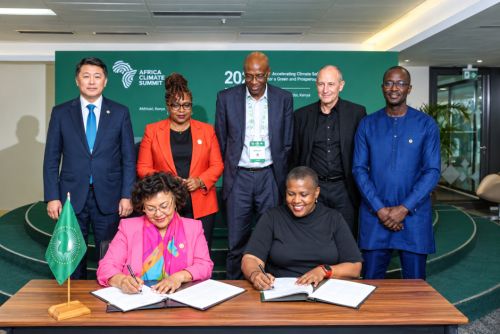
The most significant financing initiative announced at the forum was the Africa Rural Climate Adaptation Finance Mechanism, or ARCAFIM, launched by the International Fund for Agricultural Development (IFAD) and Equity Group. The 12-year, $200 million mechanism targets Kenya, Uganda, Tanzania and Rwanda and is structured around $180 million in lending capital and approximately $20 million in technical assistance. IFAD says the lending capital is expected to revolve through roughly four investment cycles, potentially generating about $266 million in cumulative loans to smallholder farmers and rural micro, small and medium-sized enterprises.
Equity Group will contribute $90 million from its own balance sheet, matching the concessional contribution on a one-for-one basis. International financing partners provide different layers of credit protection, including first-loss and mezzanine capital, while the bank assumes senior risk. The structure is intended to demonstrate that climate adaptation lending can move from donor-supported projects towards a sustainable commercial banking business line.
ARCAFIM aims to reach approximately 260,000 smallholder producers and 500 rural MSMEs, with women accounting for at least 50% of intended beneficiaries and young people at least 30%. Financing will support irrigation and water harvesting, livestock resilience, post-harvest storage, renewable energy and climate-resilient agro-processing. IFAD estimates that the mechanism could strengthen food security for approximately 1.2 million people and benefit about 1.5 million people directly and indirectly.
The financing architecture also illustrates a broader shift in how climate adaptation is being approached in African agriculture. Rather than treating resilience solely as a public-sector or donor responsibility, ARCAFIM is designed to integrate adaptation finance into the operations of financial institutions. Its technical assistance component will support participating financial institutions, microfinance institutions and SACCOs while helping farmers and rural enterprises identify investments that can reduce exposure to climate risks.
IFAD also signed a $10 million loan agreement with AgDevCo Ventures to finance early-stage agricultural businesses in Ethiopia, Kenya, Rwanda, Tanzania and Uganda. The investment is intended to address financing gaps affecting businesses that conventional lenders can consider too risky or too small, while providing pathways for private investment into agribusinesses operating in underserved markets.
In Rwanda, IFAD, Bank of Kigali and Aceli Africa also announced financing aimed at strengthening access to capital for farmer organizations. The initiative is intended to support organizations operating across value chains including maize, rice, cassava, dairy products and horticulture, reinforcing the forum’s focus on financing the businesses and institutions that connect producers to markets. IFAD subsequently confirmed the financing agreement as part of its broader package of partnerships announced during the Kigali forum.
The 2026 AFSF also brought greater coherence to the continent’s agricultural agenda through five broad pillars: finance; food security and nutrition; climate resilience; digital innovation and youth employment; and trade, markets and value chains. These priorities align with the 2026–2035 strategy and action plan of the Comprehensive Africa Agriculture Development Programme, or CAADP, and the Kampala Declaration, which place investment, sustainability, inclusive livelihoods and governance at the centre of Africa’s agricultural transformation agenda.
Soil health was another area of emphasis. The Soil Values programme, launched by AGRA and the International Fertilizer Development Center in 2024 with support from the Dutch government, has called for expanded digital soil mapping, integrated soil-fertility management, new distribution models and last-mile technologies. The focus reflects a broader recognition that agricultural productivity depends not only on inputs and farm-level technologies but also on the condition of the underlying resource base.
Trade and regional value chains also featured prominently. AGRA and the African Continental Free Trade Area Secretariat signed a memorandum of understanding in February aimed at using agriculture as a driver of farmer prosperity, value creation and regional food security. The partnership focuses on reducing non-tariff barriers, facilitating trade, increasing local value addition and attracting investment into regional value chains.
The forum subsequently placed rice at the centre of a major West African financing initiative. Representatives from Nigeria, Senegal, Côte d’Ivoire, Guinea, Ghana and Sierra Leone participated in a rice-focused roundtable associated with the launch of the $500 million West Africa Rice Investment Facility. The ECOWAS Bank for Investment and Development, or EBID, announced a $100 million contribution, with the facility targeting access to financing and agricultural inputs, processing capacity and private-sector partnerships across the rice value chain.
The emphasis on rice reflects the wider economic importance of staple-food value chains in Africa, where import dependence, climate shocks, inadequate processing infrastructure and fragmented markets can expose consumers to price volatility. Financing processing and logistics alongside farm production can allow a greater share of the value generated within food systems to remain within African economies.
The Kigali forum also marked a transition in the history of the platform itself. The initiative began in Oslo in 2006 under the impetus of Norwegian fertilizer producer Yara as a conference on Africa’s Green Revolution. It later became the African Green Revolution Forum, or AGRF, before adopting the Africa Food Systems Forum name in 2022.
Amath Pathe Sene, managing director of the AFSF, described the platform as having evolved from an annual gathering into a broader continental platform for dialogue, partnerships and commitments. In its 20-year review presented in Kigali, the organisation said its events had attracted more than 54,000 participants and hosted more than 3,000 sessions, while countries and small and medium-sized enterprises had presented more than $200 billion in investment needs or requests through the forum over the years.
The forum’s legacy, however, also remains subject to debate. Several organisations have criticised aspects of the agricultural transformation model associated with the platform and AGRA, particularly its emphasis on agricultural intensification, improved seeds and fertilisers. AGRA has acknowledged that progress to date has not completed Africa’s agricultural transformation, while continuing to position itself as a catalyst for identifying bottlenecks, connecting governments and investors, testing solutions and transferring successful approaches to markets and national institutions.
That unfinished transformation is reflected in the continent’s food-security indicators. At the same time, Africa’s young population, expanding urban markets and opportunities across production, storage, transportation, processing, distribution, food services and digital services provide a potentially significant market for agricultural investment.
The central question emerging from Kigali is therefore increasingly about how quickly capital can be converted into productive capacity. The announcements around ARCAFIM, early-stage agribusiness finance, farmer-organization financing and the West Africa Rice Investment Facility point towards a model in which public and development finance is used to reduce risk and crowd in private capital rather than finance entire agricultural systems on its own.

For African financial institutions, this creates an opportunity to develop new lending products around climate resilience, agricultural value chains and rural enterprises. For investors, it increases the focus on commercially viable segments beyond primary production. For governments, it reinforces the need for policies that improve infrastructure, trade, market access, regulatory certainty and the investment environment.
The financing challenge remains considerable, however. Africa’s food systems require capital at a scale that cannot be supplied by development institutions alone. The effectiveness of blended finance will ultimately depend on whether concessional resources can demonstrate viable business models, build local financial capacity and gradually attract larger pools of commercial capital.
As the Africa Food Systems Forum moves into its next phase, the emphasis is shifting from whether Africa can transform its food systems to how quickly that transformation can be financed and implemented. The investments announced in Kigali suggest a growing willingness to combine climate finance, development capital and commercial balance sheets around agricultural opportunities. The next test will be whether those structures can scale beyond individual programmes and help create food systems capable of feeding a growing population, creating jobs, improving farmer incomes and withstanding increasingly complex climate and economic shocks.


