


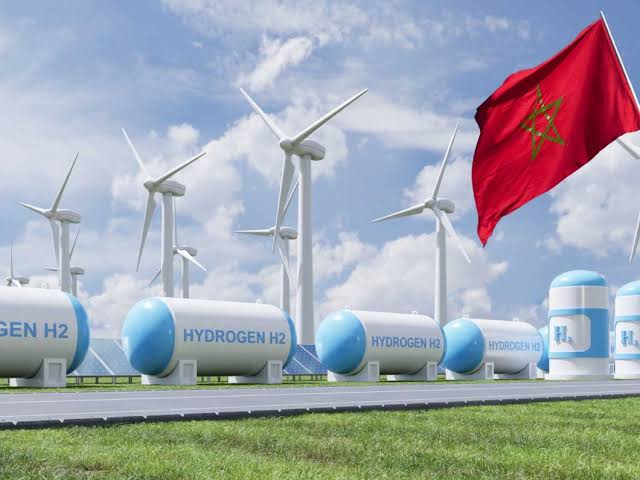
The African Development Bank Group is backing Morocco’s push to build a large-scale green hydrogen industry, selecting the Guelmim Green Hydrogen Valley for a proposed $5.28 million reimbursable grant aimed at moving the project closer to investment readiness. The announcement, made during the Africa Green Hydrogen Summit in Cape Town on 18 September 2026, places the Moroccan project among four African green hydrogen and derivatives developments selected for pre-investment support under the African Development Bank’s Africa Green Hydrogen Programme.
The proposed financing will be provided through the Sustainable Energy Fund for Africa (SEFA), subject to approval by the AfDB Board of Directors. Rather than financing construction, the grant is intended to fund the technical, environmental and financial work required to prepare the project for investment, including feasibility studies, engineering, environmental assessments and financial structuring. The AfDB’s wider Green Hydrogen Programme was established to provide pre-investment support that can help projects progress towards final investment decisions and financial close.
The distinction is significant for an industry where project development can require substantial capital long before construction begins. Green hydrogen developments must establish the availability and cost of renewable electricity, water requirements, electrolyser technology, infrastructure, offtake arrangements, environmental safeguards and long-term commercial viability before investors can commit the larger sums required for construction. Development finance at this stage can therefore address some of the risks that prevent potentially viable projects from reaching bankability.

Guelmim Green Hydrogen Valley forms part of Morocco’s wider strategy to establish an integrated green hydrogen value chain based on its renewable energy resources. Located in the Guelmim region, the project is positioned to use solar and wind-generated electricity to power electrolysis, the process through which water is separated into hydrogen and oxygen. The wider development model encompasses green hydrogen and derivatives, including green ammonia and synthetic fuels, linking renewable power generation with industrial processing and export-oriented markets.
Morocco’s policy framework is designed around this integrated approach. Its Green Hydrogen Offer covers the value chain from renewable electricity generation and electrolysis to downstream products such as ammonia, methanol and synthetic fuels, together with associated logistics and infrastructure. In March 2025, the Moroccan government selected Nareva among investors to develop green hydrogen projects in the country’s southern regions, including projects involving ammonia, synthetic fuels and green steel.
Nareva’s role also reflects the increasing focus on developing domestic African companies capable of participating across emerging clean-energy value chains. The company describes its green hydrogen portfolio as covering hydrogen, green ammonia and synthetic fuels, ranging from pilot projects to large-scale industrial developments, with projects intended for both domestic and export markets.
The AfDB’s selection places Guelmim within a wider continental pipeline. The four projects selected under the Africa Green Hydrogen Programme — in Egypt, Morocco, Namibia and South Africa — represent estimated potential investments of $23 billion. Collectively, they are associated with approximately 20 gigawatts of solar and wind generation capacity, 7 gigawatts of electrolyser capacity and 2,950 megawatt-hours of battery energy storage.
The other selected projects are Project Ra in Egypt, sponsored by DAI Infrastruktur GmbH and allocated a proposed $3.55 million grant; the Hyphen project in Namibia, sponsored by Hyphen Hydrogen Energy and allocated $5.93 million; and the Saldanha Hydrogen Direct Reduced Iron project in South Africa, developed by Enertrag SE in collaboration with ArcelorMittal South Africa and allocated $5.24 million. Together, the projects illustrate how green hydrogen is being positioned beyond electricity generation, including applications in sustainable marine and aviation fuels and low-carbon iron.
For Africa, that diversification is central to the economic case for green hydrogen. The technology can function not only as an energy carrier but also as an industrial feedstock for sectors that are difficult to decarbonise through direct electrification. Hydrogen-derived products such as green ammonia and synthetic fuels can also connect renewable energy resources with international industrial and transport markets.
According to Daniel Schroth, AfDB Director for Renewable Energy and Energy Efficiency, Africa’s renewable energy resources provide an opportunity for the continent to participate in the emerging global market for green hydrogen and its derivatives. The AfDB has positioned its programme around improving project bankability and creating conditions for private-sector investment. Schroth has previously described the SEFA Green Hydrogen Programme as a mechanism for moving projects from development towards bankability in an emerging sector that requires rigorous preparation.
The programme’s significance therefore extends beyond the value of the grants themselves. The AfDB said the four selected projects are expected to support renewable energy deployment, industrial development, export revenues, technology and knowledge transfer and employment. The projects also have potential linkages with desalination and wider renewable electricity systems, reflecting the infrastructure requirements of large-scale hydrogen production.
Morocco has been building its hydrogen policy around precisely this type of integrated infrastructure. The country’s Green Hydrogen Offer includes renewable electricity generation, electrolysis, downstream conversion, logistics and supporting infrastructure. The government has also linked the development of the sector with investment in renewable energy, desalination, ports, transport and storage infrastructure.
The country’s renewable energy institutions will consequently have a central role in translating policy ambitions into operating projects. MASEN, Morocco’s renewable energy agency, has been involved in the development of the country’s renewable energy programme and in advancing projects under the Green Hydrogen Offer. In its 2026–2028 strategic programme, MASEN highlighted continued progress on Morocco’s green hydrogen projects alongside plans for additional renewable energy capacity.
The development finance component is particularly relevant because the main challenge for emerging green hydrogen markets is not simply the availability of renewable resources. Projects also require predictable regulation, infrastructure, competitive renewable electricity, access to water, credible offtake arrangements, appropriate technology and financing structures capable of absorbing development-stage risks.
This is where instruments such as reimbursable grants can play a catalytic role. By financing studies, engineering, advisory services and transaction preparation, development institutions can help reduce the information and execution gaps that often prevent private investors from committing capital to projects that remain at an early stage. The AfDB’s April 2026 call for proposals explicitly identified feasibility studies, engineering design and transaction advisory services as areas eligible for support under the programme.
At continental level, the initiative also reflects a broader attempt to connect Africa’s renewable resource base with industrialisation strategies. Countries with strong solar and wind potential are increasingly exploring whether renewable electricity can support domestic manufacturing, industrial feedstocks and export-oriented clean-energy products rather than simply being added to national power grids.
That approach could have implications for skills and local value chains. If projects such as Guelmim progress into construction and operation, demand could expand for engineering, project development, environmental assessment, renewable energy services, electrolyser expertise, industrial processing and logistics. The scale of the opportunity will depend, however, on how much of that activity is retained within African economies and how effectively countries develop the technical and institutional capabilities required to operate increasingly complex energy systems.
For Morocco, the Guelmim project therefore sits at the intersection of renewable energy, industrial policy and investment mobilisation. Nareva’s selection under the Morocco Offer, combined with AfDB pre-investment support, provides a development pathway in which project preparation precedes the larger financing decisions required for construction. The Moroccan government’s broader framework is similarly structured around integrated projects spanning renewable generation, electrolysis, downstream conversion and infrastructure.
The continental dimension is equally important. The four AfDB-supported projects collectively represent an estimated $23 billion investment pipeline, but the eventual economic and environmental impact will depend on their ability to progress beyond development-stage preparation and secure subsequent financing. The proposed grants do not constitute construction financing, making future investment decisions, commercial arrangements and project execution the critical next stages.
For Africa’s emerging green hydrogen market, the Guelmim case illustrates the importance of development finance in closing the gap between renewable resource potential and commercially viable industrial projects. It also highlights the broader question facing African policymakers: how to use clean-energy investment not only to produce lower-carbon energy, but also to create industrial capacity, export products, technical expertise and domestic economic value.
The initiative is consistent with the ambitions of AU Agenda 2063, particularly the objective of building environmentally sustainable and climate-resilient economies and communities. For Morocco and other African countries pursuing green hydrogen, the next phase will be measured less by the size of announced projects than by their ability to complete technical preparation, secure investment, develop supporting infrastructure and ultimately deliver commercially sustainable production and industrial value at scale.


