


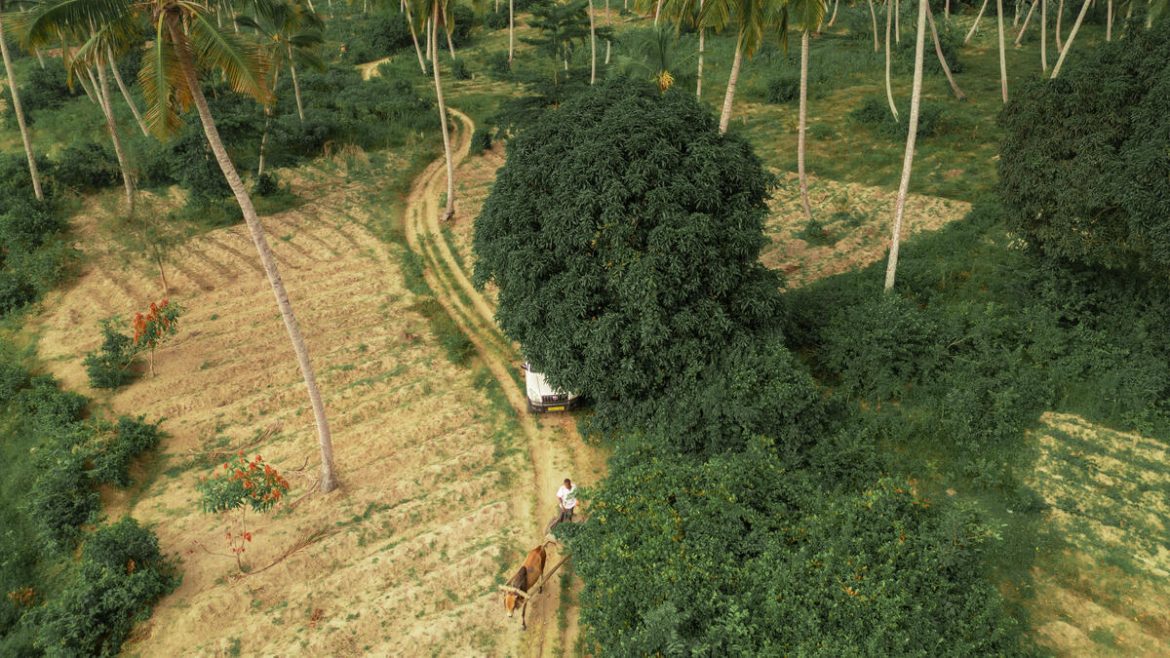
Africa’s forest and landscape restoration agenda is moving towards a more investment-focused phase as development finance institutions, investors, financial institutions and technical partners meet on September 24–25 to examine how small-scale restoration enterprises can attract capital and become commercially viable. Convened under the Blended Finance Working Group of the African Forest Landscape Restoration Initiative (AFR100) Support Programme, the meeting is focusing on investment-ready project pipelines, blended finance, carbon and biodiversity markets and partnerships with local financial institutions, reflecting a broader effort to move restoration finance from commitments and grants towards businesses capable of accessing and deploying capital.
The financing question is becoming more important as African countries seek to deliver against the AFR100 commitment to restore at least 100 million hectares of degraded land and forests by 2030. Thirty-four African countries are participating in the initiative, with national commitments now totalling 129.5 million hectares, according to the Food and Agriculture Organization of the United Nations (FAO). The scale of those commitments places restoration within a much wider economic challenge involving agriculture, land productivity, water security, rural employment and climate resilience.
Yet translating hectares into investable economic activity is more complicated than setting restoration targets. Smallholder producers, forest and farm producer organisations and micro, small and medium-sized enterprises often operate at a scale that makes them difficult for conventional financiers to assess and finance. Their revenues may be seasonal, their assets limited and their projects exposed to agricultural, market and climate risks. The result can be a mismatch between the scale at which restoration takes place and the financial products available to fund it.
The AFR100 meeting is therefore focusing on what happens between a restoration idea and an investment decision. According to FAO, the two-day dialogue will examine how to strengthen investment-ready pipelines, improve the bankability of restoration enterprises and connect local actors with appropriate sources of finance. Particular attention will be given to blended finance, carbon and biodiversity markets and partnerships with local financial institutions.
That emphasis reflects a broader shift in development finance. Concessional capital can provide grants or below-market financing for activities that commercial lenders may initially consider too risky. When combined with technical assistance, guarantees or other risk-sharing mechanisms, it can potentially help enterprises establish operating records, develop credible business models and reach the stage at which commercial finance becomes possible.
FAO’s AFR100 Support Programme provides an example of this approach. The four-year programme, running from 2024 to 2027, has a budget of €40 million from Germany’s Federal Ministry for Economic Cooperation and Development and operates in the Democratic Republic of Congo, Kenya, Madagascar, Malawi, Togo and Tanzania. It provides financial and technical assistance to local communities, smallholder forest and farm producers and enterprises, while supporting value-added businesses and restoration-related livelihoods.
The programme has set a more targeted operational objective than restoration alone. Across the six countries, it aims to support the restoration of 7,000 hectares and improved management of more than 20,000 hectares in each country, while creating opportunities for restoration-based businesses. The programme also seeks to mobilise additional investment, making the development of enterprises and financing mechanisms a central component of the restoration model.
The economic implications are significant because degraded landscapes impose costs well beyond the forestry sector. Soil degradation can reduce agricultural productivity, while declining tree cover can affect water availability and increase exposure to erosion and extreme weather. For rural households whose income depends on farming, forestry and natural resources, the condition of the surrounding landscape can directly influence production and household resilience.
Restoration finance can therefore support several economic objectives at the same time, provided projects generate credible revenue streams. Agroforestry, sustainable forest products, restoration-linked agriculture, ecosystem services and other value-added activities can create income while improving land management. But the commercial case will vary significantly by location, enterprise and value chain, meaning that financing models need to account for local market conditions rather than treating restoration as a single asset class.
Carbon markets are one part of this emerging financing landscape. Restoration activities can generate carbon-related revenues where projects meet applicable standards and demonstrate measurable climate outcomes. However, access to carbon finance requires project development, monitoring, reporting and verification systems that can be costly for small enterprises. For local businesses, the transaction costs associated with entering carbon markets can therefore become a barrier unless aggregation, technical assistance or other financial support is available.
The same issue applies to biodiversity finance. Biodiversity-related markets remain less mature than carbon markets, and the revenue models available to restoration enterprises can be less established. The FAO meeting’s inclusion of both carbon and biodiversity markets reflects the search for financing mechanisms that can recognise different environmental outcomes rather than relying on a single source of revenue.
Local financial institutions could become an important link in that process. Banks and other domestic financiers have a better understanding of local businesses and markets than many international investors, but they may lack suitable financial products, technical capacity or risk-sharing mechanisms for restoration enterprises. Partnerships that combine local market knowledge with concessional capital and technical assistance could help address some of these constraints.
There is already evidence of this approach being tested. In February, an AFR100 matchmaking event in Arusha, Tanzania, brought together more than 130 restoration-focused enterprises, forest and farm producer organisations and financial institutions. FAO reported that financial institutions signalled more than $2 million in potential financing following the discussions, while participants identified limited access to certification, intellectual-property support and tailored financial products as barriers to investment.
These constraints illustrate why bankability is as much an institutional issue as a financial one. Investors need reliable information about enterprises, land arrangements, revenue prospects, environmental outcomes and regulatory conditions. Restoration businesses, meanwhile, need the capacity to prepare financial projections, meet reporting requirements and structure projects in ways that financiers can evaluate.
For governments, the financing question also intersects with land governance and public policy. Restoration investments depend on clear rights over land and resources, predictable regulations and institutions capable of monitoring environmental outcomes. Where these systems are weak, financial risk can increase even when an underlying restoration opportunity has strong ecological or economic potential.
Kenya offers one example of how restoration finance is being linked to broader economic planning. Under the AFR100 programme, FAO and its partners are supporting community-led restoration in the Kerio Valley, where the programme aims to strengthen access to finance and investment, including blended-finance mechanisms that can mobilise private-sector capital. FAO notes that agriculture employs more than 40% of Kenya’s population and that land degradation, deforestation and climate change pose risks to ecosystems and livelihoods.
For Africa’s financial sector, the emerging restoration economy could consequently create a new category of financing demand, but its development will depend on whether risks can be properly assessed and returns clearly demonstrated. Commercial capital is unlikely to replace grants and concessional finance entirely, particularly during the early stages of enterprise development. Instead, the financing architecture is likely to require different forms of capital at different stages of a project or business.
The current AFR100 discussions are significant in that context because they focus explicitly on investment pathways rather than restoration targets alone. The meeting is expected to identify partnership opportunities and actionable recommendations aimed at mobilising finance for locally driven restoration and informing wider discussions on financing forest-based solutions.
The broader challenge for Africa is to ensure that restoration finance reaches the businesses and communities managing landscapes on the ground. Large international commitments can establish a financial envelope, but their development impact ultimately depends on whether funds can be converted into functioning enterprises, productive value chains and durable local investment.
As African countries pursue their restoration commitments, the financing question is therefore becoming more precise. The issue is not only how much money can be mobilised for forests and degraded land, but whether financial institutions can develop products, risk-sharing mechanisms and investment pipelines capable of turning restoration into a viable economic activity. The outcome will have implications not only for Africa’s environmental targets, but also for rural incomes, agricultural productivity, water security and the resilience of local economies.


