


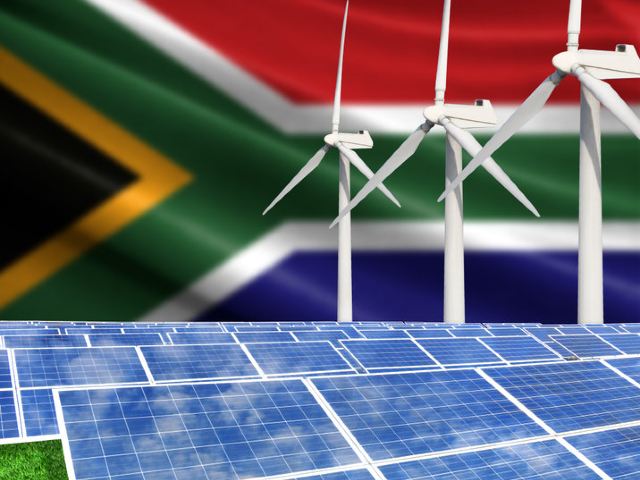
South African real estate investment trusts are increasingly treating renewable energy, water security and climate resilience as core operating and capital-allocation priorities, as prolonged electricity constraints, rising utility costs and unreliable municipal infrastructure reshape the economics of commercial property. The shift, which has accelerated across the listed property sector, is moving sustainability beyond ESG reporting and towards a practical strategy for protecting rental income, controlling operating costs and maintaining the value of buildings and shopping centres.
For South Africa’s REITs, the change has been driven less by sustainability reporting requirements than by the immediate business consequences of infrastructure weakness. Periods of load shedding exposed the dependence of offices, shopping centres, logistics facilities and other commercial properties on a constrained electricity system. At the same time, water disruptions and deteriorating municipal infrastructure have increased the operational risks facing landlords and their tenants.
 The response has been a growing investment in rooftop solar, battery storage, renewable electricity procurement, energy wheeling, water harvesting, boreholes, greywater systems and intelligent monitoring. According to analysis from Mazi Asset Management, falling technology costs combined with higher electricity tariffs have improved the economics of these investments, shortening payback periods and making resilience projects increasingly relevant to earnings and cash-flow management.
The significance for REITs is straightforward. A building that can generate part of its own electricity or secure renewable power through wheeling arrangements is less exposed to interruptions and volatile utility costs. A shopping centre with alternative water supplies is better positioned to maintain trading when municipal systems fail. These measures can therefore affect tenant experience, occupancy, operating expenses and ultimately the income generated by an asset.
Growthpoint provides one of the clearest examples of this transition. The company has expanded its rooftop solar portfolio substantially and is combining on-site generation with renewable electricity procurement and wheeling. By the end of its 2026 financial year, Growthpoint reported 69.31MWp of solar photovoltaic capacity across 98 plants, following more than R1 billion of cumulative investment in solar installations. Renewable energy accounted for about 19% of its electricity consumption during the year.
The company is also using its property portfolio to test new approaches to electricity procurement. Its renewable power purchase agreement is expected to provide 195GWh of electricity annually when fully implemented, while a pooled wheeling model developed with Etana Energy and the City of Cape Town allows renewable electricity generated elsewhere to be allocated across multiple properties. The model is significant because it illustrates how private property owners can increasingly interact with changing electricity-market structures rather than relying solely on conventional municipal supply.
Resilient REIT has followed a similar path, with energy security closely connected to the performance of its retail centres. Its South African solar capacity is expected to reach 94.4MWp by the end of the 2026 financial year, enough to supply an estimated 43.2% of the group’s electricity requirements. Battery energy storage capacity had reached 30.7MWh by June, with additional projects under development.
Water has become the second major component of this resilience strategy. The experience of Cape Town’s Day Zero crisis demonstrated that water scarcity can quickly become a business-continuity issue rather than simply an environmental concern. Across the property sector, investments in boreholes, rainwater harvesting, storage, greywater recycling, leak detection and water-efficient technologies are being used to reduce dependence on municipal systems.
The financial logic is increasingly interconnected. Lower energy consumption can reduce operating expenditure, while more reliable electricity and water can help tenants continue operating through periods of infrastructure disruption. For landlords, that can support occupancy and protect rental income. For investors, the question is consequently shifting from whether a sustainability project improves an environmental metric to whether it also reduces risk, strengthens cash flows or protects the long-term utility of an asset.
Other listed property groups are making similar changes. Redefine Properties, which has a portfolio valued at about R101.2 billion, has expanded solar generation while investing in battery storage and targeting a reduction in portfolio water withdrawal. The group has said that around 23% of its electricity demand is already met from renewable sources and has set a target of approximately 40% by 2028. Hyprop, meanwhile, has expanded solar capacity and water-efficiency measures while adding climate resilience to its ESG priorities.
The broader shift matters beyond South Africa’s property market. Buildings are major consumers of electricity and water, and commercial property portfolios can therefore influence demand for distributed renewable generation, energy storage, efficient water systems and green construction technologies. As African cities expand, the ability of commercial and residential developments to operate reliably amid constrained infrastructure will increasingly affect investment decisions and the cost of urban development.
South Africa’s experience also offers a practical case study for other African markets where electricity reliability, municipal finance and water infrastructure remain persistent constraints. In countries where utilities struggle to meet growing demand, private investment in distributed generation and resource efficiency can reduce pressure on public systems while creating new markets for renewable energy developers, technology providers, financiers and infrastructure companies.
There are limits, however, to treating private resilience investment as a substitute for functioning public infrastructure. Solar panels, batteries, boreholes and water-storage systems require significant upfront capital and are more accessible to large property owners than smaller businesses or lower-income communities. If resilience becomes increasingly dependent on the balance sheets of individual asset owners, differences in infrastructure quality could also widen between well-capitalised commercial developments and areas that remain dependent on overstretched municipal systems.
The financing implications are therefore important. Green bonds, sustainability-linked finance, power purchase agreements and other structures can spread the cost of capital-intensive resilience investments over longer periods, while stronger data on energy, water and climate risks can help investors assess the financial materiality of such projects. South Africa’s established REIT market provides a relatively sophisticated environment in which these approaches can be tested and measured.
For Africa’s wider property and infrastructure sectors, the lesson is less about adopting a particular technology than about changing how resilience is incorporated into investment decisions. Energy security, water availability and climate exposure increasingly influence whether an asset can operate efficiently, retain tenants and preserve its economic value.
 The South African REIT experience shows how an infrastructure crisis can alter the commercial calculation around sustainability. What began largely as a response to ESG expectations and environmental commitments is increasingly being integrated into decisions about operating costs, capital allocation, infrastructure reliability and asset protection. For African property markets facing similar pressures, that convergence between sustainability and financial resilience could become an increasingly important feature of how buildings are financed, developed and managed.


