


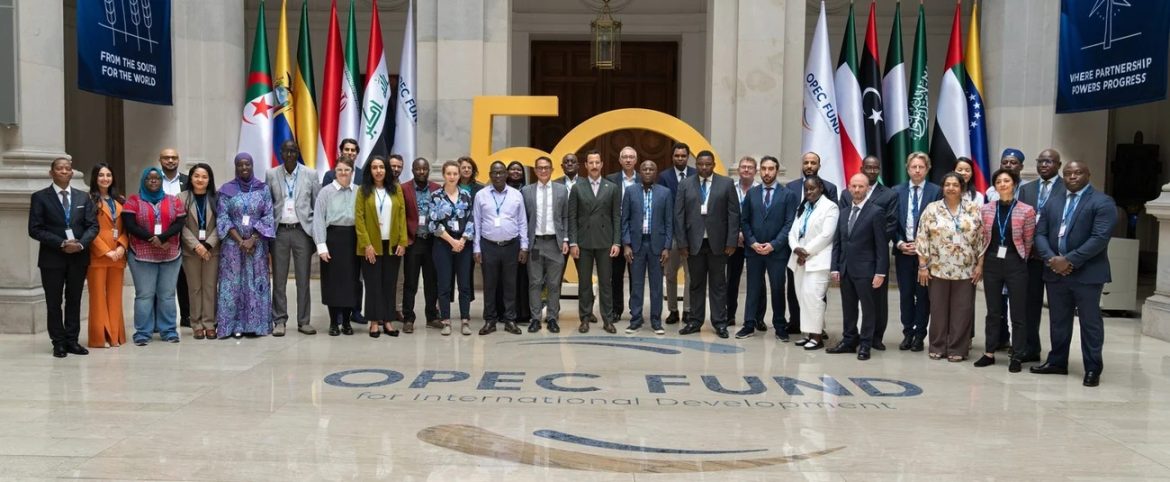
More than 50 representatives from African governments and development finance institutions met in Vienna last week for a three-day workshop aimed at strengthening environmental and social risk management systems that underpin development projects across the continent. Led by the African Development Bank Group (AfDB) and the OPEC Fund for International Development, with support from the Netherlands Commission for Environmental Assessment (NCEA), the workshop brought regulators and development financiers together to address gaps in how projects manage issues ranging from land acquisition and biodiversity to social inclusion, gender-based violence and community safety.
The meeting marked the second phase of the AfDB/OPEC Fund Environmental and Social Capacity Building initiative, launched in Vienna in June 2025. Participants from Chad, Comoros, the Democratic Republic of Congo, Kenya, Madagascar, Niger, Senegal and Uganda joined representatives from multilateral and bilateral development finance institutions, including the World Bank, Islamic Development Bank, Asian Infrastructure Investment Bank, European Bank for Reconstruction and Development and several Arab development funds.
The initiative comes as African governments seek to mobilise more capital for infrastructure, energy, transport, agriculture and other development priorities while facing growing scrutiny over the environmental and social risks associated with large projects. For development finance institutions, the ability of national regulators and project implementers to identify, manage and monitor those risks is increasingly linked to whether projects can move from financing approval to implementation without costly disputes, delays or compliance failures.
According to the African Development Bank, the programme is built around Environmental and Social Country System Assessments that examine the legal, regulatory and institutional capacity of African countries to manage environmental and social risks. The Bank has undertaken such assessments across a broad group of its regional member countries, including Benin, Burkina Faso, Burundi, Chad, Comoros, Côte d’Ivoire, the Democratic Republic of Congo, Eritrea, Gabon, The Gambia, Madagascar, Mali, Mauritania, Morocco, Niger, Nigeria, Senegal, Sierra Leone, South Sudan, Togo, Tunisia and Uganda.
The assessments are intended to move environmental and social risk management beyond individual project compliance towards stronger national systems. The AfDB has previously found that capacity constraints can cut across countries at different levels of development and that weaknesses may be particularly evident in areas such as gender, vulnerable groups, labour conditions, monitoring, grievance mechanisms and institutional coordination. The latest workshop therefore focused on practical areas that can determine whether safeguards work during implementation rather than simply appearing in project documentation. Participants examined land acquisition and resettlement, biodiversity conservation, cultural heritage, social inclusion, gender-based violence and sexual exploitation, abuse and harassment, as well as occupational and community health and safety.
These issues carry direct economic implications for African infrastructure projects. Roads, dams, electricity systems, mines, industrial facilities and urban developments can require access to land and natural resources and can affect communities located around construction sites. Weak consultation, inadequate compensation or poor monitoring can result in grievances and disputes that delay construction, increase project costs or undermine public confidence.
Land acquisition is particularly important in countries where large infrastructure projects intersect with agricultural livelihoods and customary land systems. Effective systems need to clarify who has rights over land, how affected households are identified, how compensation is assessed and how grievances are resolved. The World Bank’s Environmental and Social Framework similarly places requirements on land acquisition, involuntary resettlement, stakeholder engagement and livelihood restoration, reflecting the central role these issues play in project risk management.
Biodiversity presents another increasingly important dimension as African economies expand infrastructure and natural-resource development. Projects in energy, mining, agriculture and transport can intersect with forests, wetlands, wildlife habitats and other ecosystems that support local livelihoods and economic activity. Effective environmental assessment can therefore influence not only ecological outcomes but also the long-term viability of projects dependent on natural resources.
For financial institutions, stronger country systems can also help reduce duplication. Development projects involving several lenders can face multiple environmental and social requirements, particularly when institutions apply different standards or reporting systems. The Vienna workshop included discussions on cooperation between financial institutions and national regulators, as well as ways to finance and monitor environmental and social management plans.
The World Bank has similarly emphasised the importance of strengthening national environmental and social management systems and institutions. Its Environmental and Social Framework uses a risk-based approach and covers issues including biodiversity, labour, community health and safety, gender, stakeholder engagement and grievance mechanisms. The framework also places emphasis on borrower capacity building and national systems.
This convergence among development finance institutions matters for Africa because governments are increasingly expected to deliver large volumes of infrastructure investment while maintaining fiscal discipline. Better safeguard systems can help governments and lenders identify risks earlier, assign responsibilities more clearly and reduce uncertainty during project implementation.
The financial implications can be substantial. When environmental and social risks are identified late, projects may require redesign, additional mitigation measures or changes to implementation schedules. Disputes involving land or communities can also create legal and reputational exposure for project sponsors and financiers. By contrast, stronger systems allow risk management to become part of project preparation and financial planning rather than a corrective exercise after construction has begun.
The workshop also reflects a wider shift in development finance towards institutional capacity rather than project-by-project technical assistance. The AfDB’s earlier work on country systems found that strengthening national institutions can support greater reliance on country systems for development operations. The Bank’s Integrated Safeguards System is designed in part to integrate environmental and social considerations into policy, programme and project decision-making.
The AfDB’s updated Integrated Safeguards System became effective in May 2024, increasing the relevance of capacity building for governments and implementing agencies working on Bank-supported projects. The system provides a framework for assessing and managing environmental and social risks throughout the project cycle.
The same institutional challenge is visible beyond AfDB-financed projects. In June 2026, the World Bank highlighted a South-South knowledge exchange between Somalia and Ghana focused on environmental and social risk management, including regulatory coordination, land governance and institutional capacity. The Bank said stronger systems can help reduce uncertainty around investment and support infrastructure and job creation. For countries such as Kenya, Uganda, Senegal and the Democratic Republic of Congo participating in the Vienna initiative, the practical question will be how lessons from regional and international institutions are translated into national regulatory practice. National systems vary considerably in their legal frameworks, institutional mandates, technical capacity and ability to monitor compliance.
That makes the next phase of the initiative particularly important. The organisers expect to undertake tailored national-level training addressing country-specific challenges, moving the programme from regional peer learning towards more targeted institutional support. Dennis van Peppen, Director of the Netherlands Commission for Environmental Assessment, highlighted the importance of peer learning and dialogue in addressing the challenges associated with strengthening environmental and social country systems. The NCEA’s role in the initiative places emphasis on practical assessment and monitoring approaches rather than standards alone.
For Africa’s development finance landscape, that distinction is important. The continent requires substantial investment in infrastructure and productive sectors, but financing alone does not guarantee sustainable project delivery. The quality of regulatory institutions, environmental assessment processes, community engagement and monitoring systems can influence whether projects deliver their intended economic benefits and how risks are distributed among governments, investors and communities.
The Vienna initiative therefore places environmental and social safeguards within a broader question of development governance. As African countries seek more capital from multilateral banks, sovereign funds, private investors and other financiers, stronger national systems could increasingly become part of the institutional infrastructure required to absorb that capital effectively. The next stage of the AfDB-OPEC Fund programme will test whether capacity built through regional cooperation can be translated into stronger systems at country level.


