


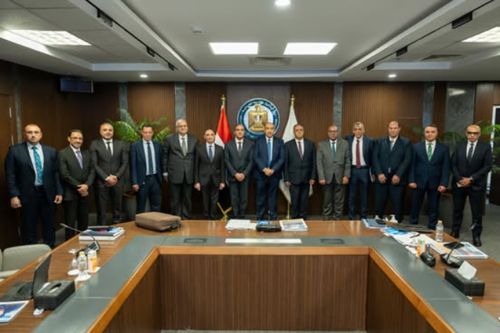
Chevron has committed a minimum of $88 million to explore Egypt’s offshore Lotus area in the Mediterranean, adding two exploratory wells and 3D seismic-data reprocessing to its expanding upstream programme in the country.
The agreement, signed on October 5 between Chevron and the Egyptian Natural Gas Holding Company (EGAS), covers an area about 200 kilometres offshore in water depths of between 2,000 and 2,800 metres. The work programme includes two exploration wells and the reprocessing of existing three-dimensional seismic data.
The deal comes as Egypt seeks to revive upstream investment after years of financial pressure on the petroleum sector. The government fully cleared about $6.1 billion in outstanding arrears owed to foreign oil and gas companies in June 2026, removing one of the constraints that had affected investment and exploration activity. Reuters reported that the arrears had accumulated amid a prolonged shortage of foreign currency and had contributed to delays in payments to international energy companies.

For Chevron, the Lotus agreement extends an exploration footprint that already covers several areas of Egypt’s Mediterranean. The company is currently involved in six offshore exploration areas, including Nargis, North El-Dabaa, Lotus, North West Atoll, North Samian and North Cleopatra.
The company has already moved beyond early-stage acreage in some of these areas. At Nargis, Chevron is the operator in a partnership that includes Eni, Mubadala Energy and Egypt’s Tharwa Petroleum. Drilling of a new well began in May as the partners continued work to evaluate the gas discovery and move it towards development and production. Egypt’s Petroleum Ministry has identified the project as part of efforts to increase domestic gas supply and reduce reliance on imports.
Chevron also remains operator of the North El-Dabaa block, where QatarEnergy acquired a 23% interest in 2024. Chevron retained 40%, while Woodside holds 27% and Egypt’s Tharwa Petroleum owns the remaining 10%. The transaction underscored continued interest from international energy companies in Egypt’s offshore acreage and added another major regional player to Chevron’s exploration portfolio.
The company’s position has expanded through more recent acreage awards. In June 2025, Chevron and Shell’s BG Group were awarded the North Samian and Northwest Atoll offshore blocks as part of an Egyptian licensing round expected to generate $245 million in investment and at least 13 exploration wells across six awarded blocks. Chevron was also awarded exploration work in the East Alexandria offshore area.
The growing portfolio reflects a wider effort by Egypt to attract capital into exploration while seeking to restore domestic production. In August, the Ministry of Petroleum launched its 2026 international bid round, offering 14 exploration blocks to international and Egyptian companies. Eight of the blocks are located in the Mediterranean, Nile Delta and North Sinai under EGAS, while six are in the Gulf of Suez, Sinai and Western Desert under the Egyptian General Petroleum Corporation.
The government is also seeking to make existing infrastructure more relevant to new exploration investment. The ministry has highlighted opportunities located near established pipelines, processing facilities and export infrastructure, which can potentially reduce development costs and shorten the time required to bring commercially viable discoveries into production.
That consideration is particularly important in deepwater exploration, where drilling and appraisal require substantial upfront capital before commercial reserves can be established. The Lotus agreement therefore represents an exploration commitment rather than a guarantee of new production. The two wells and seismic work will determine whether the geological potential of the area can support further appraisal and development.
Egypt’s broader upstream strategy is being shaped by the need to balance investment attraction with domestic energy requirements. The country has been working to increase gas production while managing import needs and making greater use of its existing energy infrastructure. Recent agreements and drilling programmes suggest that exploration is being positioned as part of a wider effort to rebuild production capacity rather than as a series of isolated licensing transactions.
The clearance of arrears is an important part of that effort because exploration decisions depend not only on geological prospects but also on confidence in the commercial framework. By eliminating the accumulated payments owed to foreign partners, Cairo has sought to address a long-standing concern for companies committing capital to projects with extended development timelines.
For Chevron, the timing also fits with Egypt’s broader role in the Eastern Mediterranean gas market. In September, Petroleum Minister Karim Badawi discussed with Chevron opportunities to expand its Mediterranean gas exploration activities and accelerate arrangements to connect Cyprus’s Aphrodite gas field to Egyptian infrastructure. The project would potentially use Egypt’s processing and export infrastructure to move gas towards international markets.
The Lotus agreement consequently places Chevron within a broader restructuring of Egypt’s upstream investment landscape, where deepwater acreage, existing infrastructure and new licensing opportunities are being combined to attract international capital. The immediate test will be whether exploration delivers commercially recoverable resources. For Egypt, the value of the new investment will ultimately depend on whether discoveries can be converted into production, revenue and more reliable domestic gas supplies.


