


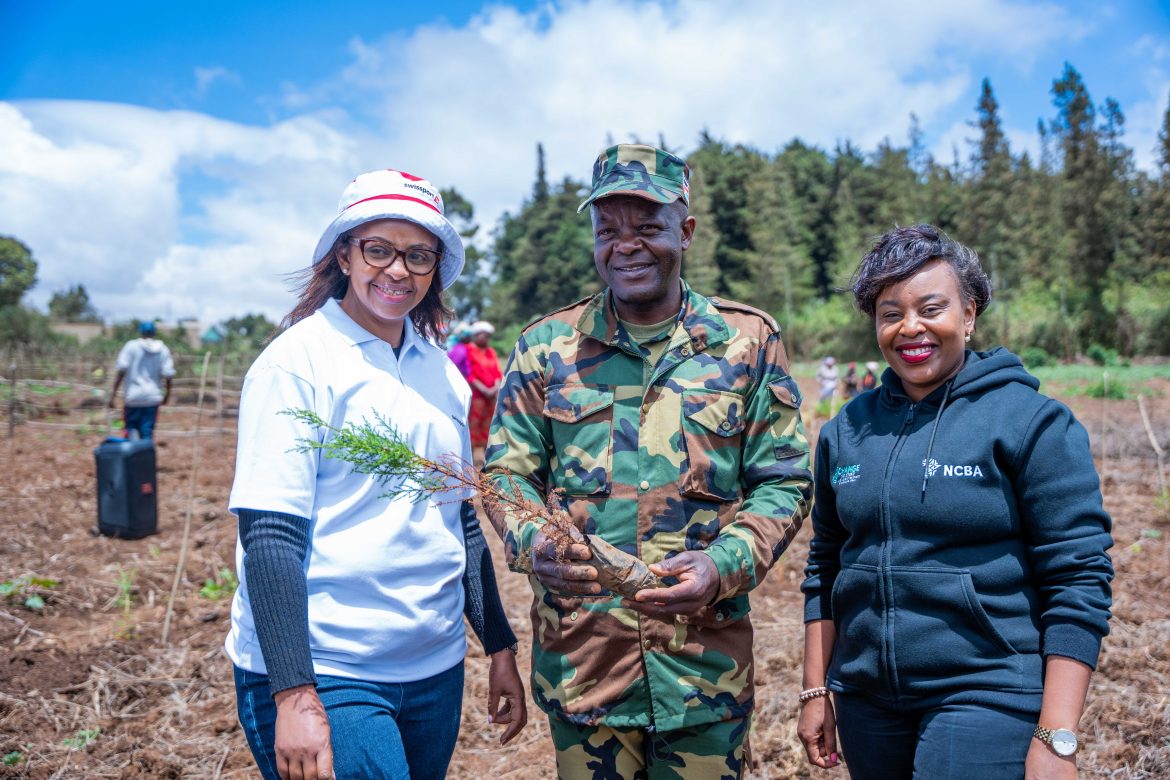
Swissport Kenya and NCBA Group have partnered to support forest restoration in Kiambu County through an initiative to grow 10,000 trees, linking private-sector environmental commitments with Kenya’s wider climate and reforestation agenda. The programme, launched at Uplands Forest Station on 9 October 2026, combines NCBA’s donation of seedlings with Swissport’s Green Skies Kenya programme and the participation of the Kenya Forest Service, employees, airline partners and local communities.
The initiative comes as Kenya continues to rely on forest conservation and restoration as part of its response to climate change, water insecurity and land degradation. Forests support catchment protection, soil stability and biodiversity, while helping regulate water flows that underpin agriculture, urban water supplies and other economic activities. The effectiveness of tree-growing programmes, however, depends not only on the number of seedlings planted but also on their survival, the suitability of species to local ecosystems and the long-term management of restored areas.

According to the joint announcement, 5,000 seedlings were planted during the initial exercise, with the remaining 5,000 scheduled for planting progressively over the coming months. NCBA supplied the 10,000 seedlings through its Change The Story sustainability platform, while Swissport is implementing the initiative under Green Skies Kenya. The Kenya Forest Service and local communities participated in the exercise, although the organisations did not disclose the initiative’s budget, the species selected or a monitoring framework for tracking tree survival.
The partnership illustrates how companies outside the traditional environmental sector are incorporating conservation into their sustainability activities. For Swissport, which provides aviation ground-handling and related services, the programme forms part of its environmental commitments in Kenya. For NCBA, the initiative extends a tree-growing programme linked to its broader sustainability agenda. The bank says Change The Story aims to support the growth of 10 million trees by 2030 and that it has planted more than two million trees to date through partnerships with government agencies, communities and private sector organisations.
These commitments reflect a wider shift in corporate sustainability, in which companies are increasingly expected to demonstrate how environmental objectives translate into measurable outcomes. Tree planting can contribute to restoration, but the number of seedlings distributed or placed in the ground is an incomplete measure of impact. Survival rates, ecological suitability, maintenance and the condition of the surrounding landscape are central to determining whether a project delivers lasting benefits.
For Kenya, these questions have practical economic implications. Forest degradation can affect water availability, agricultural productivity and the resilience of communities exposed to droughts, floods and changing rainfall patterns. Restoring suitable forest landscapes can help protect watersheds and reduce erosion, although outcomes vary according to location, species and management practices. Tree growing programmes therefore work best when they are aligned with catchment priorities, local land-use plans and the needs of communities responsible for maintaining restored areas.
The participation of the Kenya Forest Service is relevant in this regard because public institutions provide the technical and regulatory context for forest management. Collaboration between businesses, government agencies and communities can help mobilise resources and broaden participation in conservation. The longer-term value of such partnerships will depend on clear responsibilities for aftercare, transparent reporting and evidence that planted trees survive beyond the initial activity.
Corporate-led restoration also raises questions about how environmental initiatives are assessed within broader environmental, social and governance frameworks. For financial institutions such as NCBA, sustainability commitments increasingly sit alongside expectations for credible reporting and risk management. For service providers such as Swissport, environmental programmes can form part of a wider effort to manage operational impacts and engage employees and business partners. In both cases, reporting on outcomes rather than activities would provide a clearer basis for assessing environmental performance.
The announcement did not quantify the expected carbon sequestration, area to be restored or anticipated effects on biodiversity and water systems. Such outcomes cannot be reliably inferred from the number of seedlings alone. They depend on the species planted, site conditions, tree survival and the period over which results are measured. Publishing this information over time would allow stakeholders to distinguish between participation in tree-growing exercises and verified progress in forest restoration.
The timing also coincides with Kenya’s Mazingira Day period, when environmental conservation receives renewed public attention. The challenge for businesses and public institutions is to sustain action beyond commemorative events through funding, monitoring and long-term stewardship. This is particularly important where restoration depends on consistent care and where communities bear much of the responsibility for protecting young trees.

The Swissport–NCBA partnership adds to the range of private sector initiatives supporting Kenya’s environmental agenda. Its eventual contribution will be determined less by the initial planting figure than by the survival of the trees, the quality of the restoration work and the transparency of subsequent reporting. As companies across Africa expand their sustainability commitments, the initiative highlights a broader accountability question: whether environmental pledges can be translated into durable improvements in ecosystems and the economic systems that depend on them.


