


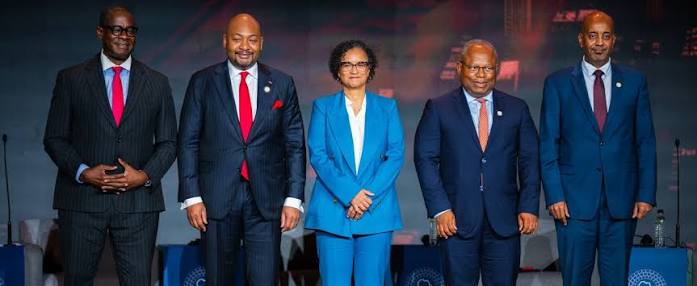
The African Development Bank Group used the 81st United Nations General Assembly in New York in September to advance partnerships aimed at mobilising capital for Africa’s development, strengthening climate and crisis resilience, and expanding investment in infrastructure, energy and industrialisation. In an update published on 9 October, the Bank said its engagements included a $125 million equity investment in the African Trade and Investment Development Insurance (ATIDI), work on a Pan-African guarantee platform and new cooperation agreements focused on peacebuilding and resilience.
The discussions come as African governments face tighter financing conditions, rising debt-servicing costs, climate-related shocks and pressure to create jobs for a growing population. The Bank’s agenda reflects a central problem in the continent’s development financing: the challenge is not only to attract more capital, but also to structure and deploy it on terms that make projects viable without placing unsustainable pressure on public finances.

According to the African Development Bank, its proposed New African Financial Architecture for Development (NAFAD) is intended to mobilise domestic resources, strengthen African financial institutions and improve the allocation of risk between public and private investors. The Bank estimates that Africa faces an annual development financing gap exceeding $400 billion, despite substantial pools of domestic savings held by banks, pension funds, insurers and other institutional investors.
The gap has implications for investment across the continent. Electricity networks, transport corridors, water systems and climate-resilient infrastructure require long-term financing, while many governments have limited fiscal room to fund these projects directly. Private investors can help close the shortfall, but often demand guarantees or risk protection where currency volatility, political uncertainty, regulatory weaknesses and project delivery delays threaten expected returns.
One of the Bank’s concrete measures is its $125 million equity investment in ATIDI, which it says has increased its stake fivefold and made it the insurer’s largest shareholder and strategic anchor. ATIDI provides political risk and credit insurance intended to support trade and investment in African markets. Such instruments can help lenders and investors manage risks that might otherwise make projects difficult to finance, although insurance cannot substitute for sound project preparation, credible regulation or effective public institutions.
The Bank is also developing a Pan-African Guarantee Platform under NAFAD to coordinate guarantees, insurance and other risk-sharing instruments. Its stated ambitions include helping ATIDI reach $2 billion in paid-in capital and $20 billion in annual guarantee capacity. These are targets, rather than financing already available to governments or businesses. Their contribution will depend on how quickly the platform is established, how much additional capital it mobilises and whether its guarantees unlock investment that would not otherwise have proceeded.
Read also: https://www.afdb.org/en/news-and-events/unga81-african-development-bank-group-builds-97384
For African economies, the distinction between announced capacity and actual investment is important. A guarantee may improve the risk profile of a project, but it does not ensure that a power line is built, a water network reaches underserved communities or a manufacturer obtains affordable credit. Projects still need bankable revenue models, transparent procurement, environmental and social safeguards, and institutions capable of overseeing implementation.
Energy access and the green transition are among the areas where these financing arrangements could have practical consequences. Renewable generation, transmission infrastructure, electricity distribution and clean cooking require different combinations of capital, regulation and consumer financing. In markets where utilities struggle with payment arrears or tariffs do not cover operating costs, risk-sharing instruments may help attract investment, but the underlying financial and governance problems must also be addressed.
The same applies to climate resilience. Flood protection, drought preparedness, resilient agriculture and disaster response systems often generate broad public benefits that are difficult to capture through conventional commercial returns. The Bank’s emphasis on strengthening resilience before crises occur reflects the fiscal costs of responding after disasters have damaged infrastructure, disrupted livelihoods or weakened food production. Pre-arranged disaster risk financing, including sovereign insurance, can help governments obtain funds more quickly after a shock, although coverage, premiums and payout conditions determine how useful these mechanisms are in practice.
The Bank’s UNGA engagements also covered cooperation with the United Nations and other partners in fragile and conflict-affected settings. Letters of Intent with the Global Community Engagement and Resilience Fund and the United Nations Peacebuilding Support Office are intended to strengthen collaboration on prevention, peacebuilding and development investment. These agreements establish a basis for cooperation, but their development impact will depend on subsequent programmes, financing and coordination at country level.
For governments, better coordination between humanitarian, peacebuilding and development institutions could help address the economic conditions that deepen fragility, including weak public services, limited employment and damaged infrastructure. However, investment in fragile settings carries risks related to security, implementation capacity and accountability. Transparent project selection and monitoring will be essential to ensure that funding reaches intended communities and supports durable services and livelihoods.
The Bank’s approach also places greater emphasis on mobilising African savings. Domestic pension and insurance funds could provide a deeper source of long-term capital for infrastructure and productive investment if suitable instruments, governance arrangements and risk protections are available. Yet redirecting these resources requires careful attention to fiduciary duties: pension funds must protect beneficiaries’ savings, while development objectives cannot justify investments whose risks or returns are inadequately assessed.
This is where the success of NAFAD will be tested. An effective financing architecture would need to reduce fragmentation among development finance institutions, improve the use of guarantees and strengthen African capital markets while maintaining clear accountability for public and private capital. It would also need to demonstrate that new instruments expand investment rather than simply transfer commercial risks to governments or create contingent liabilities that become public costs when projects fail.
The African Development Bank said it would continue working with governments, investors, the United Nations and African financial institutions to turn the partnerships discussed in New York into investable programmes. For African economies facing competing demands from debt repayment, infrastructure deficits and climate adaptation, the outcome will be measured less by the number of agreements signed than by the volume of additional financing mobilised, the projects delivered and the services made more reliable and affordable.

The Bank’s agenda therefore places implementation at the centre of the development finance debate. Mobilising capital is necessary, but its wider value will depend on whether financing reaches productive sectors, strengthens resilience and generates measurable benefits without undermining fiscal stability.


