


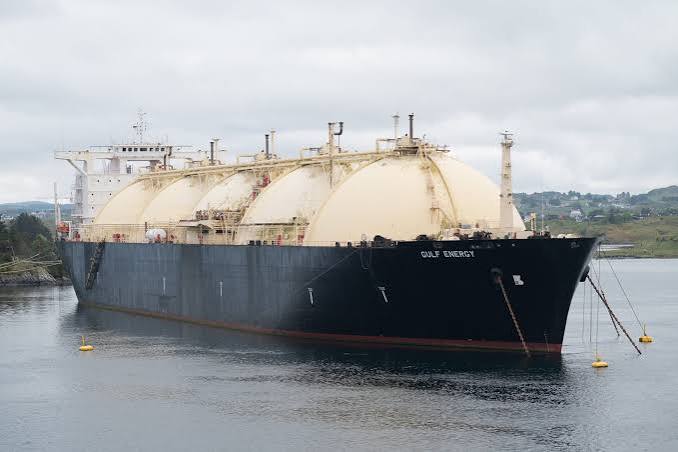
Tanzania expects to finalise agreements in the coming months for a $42 billion liquefied natural gas (LNG) project led by Equinor and Shell, a development that could expand the country’s role in global gas markets while testing how East Africa balances industrial growth, domestic energy needs and its transition to lower-carbon power. Finance Minister Khamis Mussa Omar told Reuters on 13 October that negotiations were nearing completion, after an earlier expectation that the agreement would be signed before June.
The project is expected to unlock 47.13 trillion cubic feet of natural gas reserves, according to Reuters, with ExxonMobil, Pavilion Energy, Medco Energi and state-owned Tanzania Petroleum Development Corporation also involved. Most of the gas is expected to be exported, although a portion is intended for the domestic market. The scale of the proposed investment places the project among the most consequential energy developments under consideration in East Africa, but its economic benefits will depend on the final agreements, financing arrangements, construction timetable and distribution of revenues.

For Tanzania, the LNG development forms part of a broader strategy to attract foreign capital into projects that can generate revenue and support industrialisation. The government is also seeking to expand electricity generation capacity to 8,000 megawatts by 2030, roughly double current levels, while increasing the share of energy from sources it classifies as clean, including hydropower, solar, wind and natural gas to around 75%, Omar told Reuters.
That target highlights a policy choice facing many African economies: how to expand reliable electricity supply and productive industry while reducing exposure to emissions-intensive infrastructure over time. Natural gas can provide dispatchable power and feedstock for some industrial processes, while LNG exports can generate foreign exchange. However, export-oriented gas infrastructure requires substantial upfront investment and long operating periods, leaving investors and governments exposed to shifts in global demand, prices, financing conditions and climate policy.
The project’s financial structure will be central to its implications for Tanzania’s public finances. A development of this scale can generate employment, supplier contracts, taxes and royalties, but these benefits are not automatic. Their value will depend on the fiscal terms negotiated with investors, the allocation of project risks, the pace of implementation and the government’s ability to collect revenues transparently. Large energy projects can also compete with other investment priorities if public infrastructure, guarantees or other forms of state support are required.
The government’s broader financing position adds to the significance of these decisions. Tanzania’s budget for the 2026/27 fiscal year is about 62.3 trillion Tanzanian shillings, equivalent to roughly $23.7 billion, and the government now funds about two-thirds of it through domestic revenue, according to Reuters. Official development assistance, which once accounted for a much larger share of the budget, has fallen to a negligible level, the finance minister said. The government is consequently seeking more foreign investment while exploring ways to deepen domestic capital markets.
The LNG project is not the only major investment under consideration. Omar told Reuters that agreements on two critical minerals projects were also close, although he declined to provide details. Together, the developments point to Tanzania’s effort to attract capital into energy and resource sectors that could strengthen export earnings and support industrial activity. Whether they also broaden domestic production and employment will depend on the extent of local procurement, workforce development, processing capacity and technology transfer.
The regional implications extend beyond Tanzania. Uganda plans to begin its first oil exports through the Tanzanian port of Tanga in early 2027, linking inland production to maritime trade routes. Such infrastructure can strengthen regional commercial ties, but it also raises questions about the long-term development model emerging in East Africa: whether resource exports will primarily supply global markets or support a more diversified domestic and regional industrial base.
For electricity consumers and businesses, the distinction between export capacity and domestic energy access is particularly important. An LNG project can generate export revenue without necessarily making power cheaper or more reliable for households and manufacturers. The extent to which gas supports local electricity generation will depend on domestic allocation, pipeline and processing infrastructure, power sector regulation and the cost of converting gas into electricity. Revenue from exports could help finance wider energy infrastructure, but that outcome would depend on fiscal choices rather than follow automatically from the project.
The environmental implications also require a broader assessment than the distinction between gas and coal or oil. Natural gas produces less carbon dioxide than coal when burned for electricity, but its climate impact also depends on methane leakage across production and transport, energy consumed during liquefaction and shipping, and the eventual use of the exported gas. Methane is a potent greenhouse gas, making monitoring and leak prevention important for both climate performance and the commercial credibility of the supply chain.
LNG infrastructure also creates a long-term investment question. Liquefaction facilities, pipelines and associated ports are capital-intensive assets designed to operate over many years. If global demand, regulation or the cost of competing energy technologies changes more rapidly than expected, projects may face lower returns or pressure to revise their operating assumptions. For Tanzania, the relevant consideration is whether the expected fiscal and industrial benefits justify the financial and environmental risks over the project’s full life.
The government’s target of raising electricity generation capacity to 8,000 MW by 2030 provides a wider context for assessing those trade-offs. Hydropower, solar and wind have different generation profiles and infrastructure requirements, while gas can provide a more controllable source of electricity when renewable output fluctuates. A resilient power system will require investment not only in generation, but also in transmission, distribution, storage and market arrangements that allow electricity to reach consumers reliably.
Tanzania is also weighing its future engagement with the International Monetary Fund. Its previous $1.7 billion programme, which included an Extended Credit Facility and a climate-focused Resilience and Sustainability Facility, concluded in July. The government expects to decide by June whether to seek a new lending programme, Omar said. That decision will form part of the wider financing environment in which the country manages public investment, debt sustainability and exposure to external economic shocks.

The proposed LNG agreement therefore represents more than an export project. It sits at the intersection of Tanzania’s revenue strategy, industrial ambitions, electricity plans and climate commitments. The immediate test is whether the parties can conclude an agreement that allocates risks transparently and provides a credible path to implementation. Over the longer term, the development’s value to Tanzania and the wider region will depend on whether resource wealth strengthens public finances, expands productive capacity and supports reliable energy access without creating disproportionate fiscal or environmental costs.


