


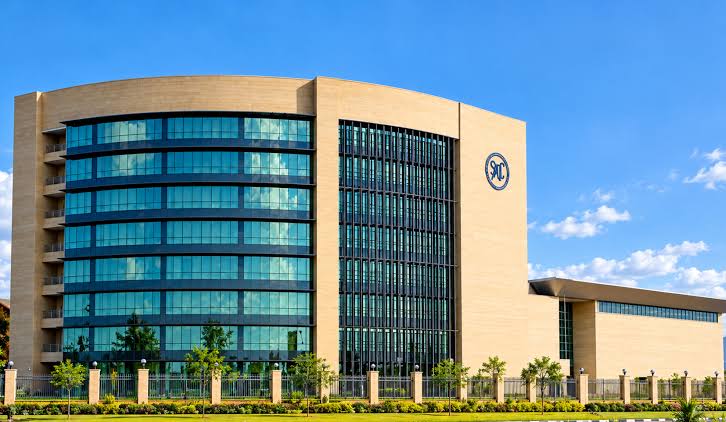
The Southern African Development Community (SADC), the United Nations Development Programme (UNDP) and the European Union (EU) are advancing a common framework to help governments, banks and investors identify sustainable investments across Southern Africa, in a move aimed at improving the consistency of green finance decisions and directing capital towards climate and development priorities. The initiative, discussed at a regional workshop in Gaborone, Botswana, on October 9, could help address differences in how sustainable economic activities are assessed across the region, although the framework remains under development and is not yet a binding regional standard.
According to SADC, the initiative is intended to establish a SADC Common Framework for Sustainable Finance Taxonomies, with financial support from the EU through its Sustainable Finance Advisory Hub and technical support from UNDP. The framework will provide voluntary guidance for assessing whether projects and economic activities meet agreed sustainability criteria, while allowing member states to account for their national circumstances and development priorities.

The initiative comes as governments across Africa seek to mobilise investment for renewable energy, climate adaptation, sustainable agriculture and infrastructure while managing fiscal constraints and competing demands for development finance. A sustainable finance taxonomy can help investors distinguish activities that contribute to environmental objectives from those that do not meet defined criteria. By providing a more consistent basis for classification, it can also reduce uncertainty for financial institutions assessing projects across different markets.
However, the value of such a framework will depend on how clearly its criteria are defined and how effectively they are applied. A taxonomy does not itself provide financing or guarantee that projects will attract investors. Instead, it establishes a common reference point that can inform lending decisions, investment products, disclosure practices and the assessment of environmental performance.
For Southern Africa, this distinction is important because projects often cross national borders or depend on regional supply chains and infrastructure. Renewable energy generation, electricity transmission, transport links and water systems can require financing from multiple institutions operating under different national rules. If investors use inconsistent definitions of sustainability, comparing projects and assessing their environmental credentials can become more difficult. A common regional approach could help make those assessments more comparable and potentially support cross-border investment.
SADC said the framework will initially focus on climate change mitigation and adaptation. A preliminary regional assessment identified energy, industry and extractives, agriculture and forestry, transport, buildings and construction, and water and waste management as sectors for consideration. These areas cover much of the region’s economic infrastructure, from electricity generation and mineral production to food systems, urban development and essential public services.
The inclusion of industry and extractives is particularly relevant for economies where mining contributes significantly to exports, employment and government revenues. A credible taxonomy could help clarify the conditions under which investment in industrial and resource-related activities may be considered sustainable or transitional. That distinction matters as mining companies face pressure to manage emissions, water use, waste and land rehabilitation while responding to demand for minerals used in energy technologies and industrial development.
The framework is also expected to consider whether projects deliver environmental benefits without causing significant harm to other environmental objectives, alongside basic social safeguards and recognition of activities transitioning towards more sustainable practices. These provisions could be important in sectors where climate benefits may come with other risks. For example, a project that reduces emissions may still require scrutiny over its effects on water resources, biodiversity, workers or nearby communities.
For lenders and institutional investors, clearer criteria could strengthen due diligence and help make sustainability claims more transparent. For companies seeking capital, the framework could eventually provide greater clarity on the environmental information needed to demonstrate that a project qualifies under particular sustainability objectives. Yet these benefits will depend on technical detail, the availability of reliable data and the capacity of regulators and financial institutions to apply the criteria consistently.
Small and medium-sized enterprises could also be affected. According to SADC, Maxwell Gomera, UNDP Resident Representative in South Africa and Director of the UNDP Africa Sustainable Finance Hub, emphasised the need to translate sustainable finance policies into practical investment opportunities and improve access to finance for smaller businesses. Such firms often face barriers in preparing projects, producing environmental data and meeting lender requirements, even where their activities could contribute to sustainable development.
A common classification system may improve clarity, but it will not by itself resolve these financing constraints. Businesses may still need technical assistance, affordable credit, guarantees and support to develop projects that lenders consider viable. For governments, the challenge will be to connect the framework to national investment plans and financing mechanisms rather than treat taxonomy development as an end in itself.
The regional approach also raises questions about implementation across countries with different economic structures and policy priorities. SADC has stated that the framework will offer voluntary guidance rather than impose a uniform set of rules on all member states. That flexibility could make regional cooperation more practical, but it will also require sufficient alignment to ensure that classifications remain comparable and meaningful across markets.
For public institutions, the process offers an opportunity to strengthen the link between sustainability objectives and capital allocation. Clearer criteria could help governments assess infrastructure proposals, structure green financing instruments and communicate investment priorities to development finance institutions and private investors. However, the framework’s contribution to public finances will depend on whether it helps unlock additional capital for viable projects, rather than simply changing how existing investments are labelled.
The initiative is now expected to move from consultations on its inception report to the development of a draft common framework, followed by further technical consultations and validation with member states. Those steps will determine how the proposed system handles sector-specific criteria, transitional activities, environmental safeguards and the evidence required to substantiate sustainability claims.
For Southern Africa, the broader test will be whether greater consistency in sustainable finance classifications can help move capital towards projects that improve energy access, strengthen climate resilience, support productive industries and protect essential natural resources. The proposed framework does not yet establish how much additional investment will follow, but it could provide a shared basis for assessing where finance is directed and what environmental and social outcomes it is expected to deliver.
As the framework develops, its effectiveness will depend on the balance between regional consistency and national flexibility, as well as the capacity of institutions and businesses to use it. For investors, governments and communities, the measure of success will be whether the system improves the quality and transparency of investment decisions and helps turn Southern Africa’s climate and development priorities into financeable projects.


