


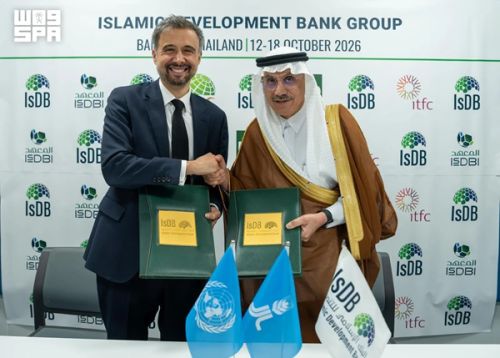
The Islamic Development Bank and the International Fund for Agricultural Development have agreed to mobilise up to US$750 million in co-financing for sustainable agriculture, rural businesses and climate adaptation, opening a potential new source of capital for agrifood value chains in Africa and other member countries.
The agreement, signed on 14 October 2026, seeks to expand investment in food systems and rural economic transformation by combining the institutions’ financing capacity, technical expertise and development networks. It also creates scope for greater private-sector participation, particularly in agribusinesses and rural small and medium-sized enterprises that often struggle to secure suitable financing.
The partnership builds on cooperation dating back to 1980. The two institutions report having co-financed 29 projects worth approximately US$1.45 billion over that period. The new target would extend this collaboration, with the wider Islamic Development Bank Group expected to contribute through development finance, trade finance, investment and risk-mitigation instruments.

For African countries that are members of both institutions, the agreement could support investment in agricultural processing, storage, irrigation, rural credit and market access. These areas remain important constraints on the ability of farmers and agribusinesses to increase productivity, reduce post-harvest losses and move into higher-value markets.
The potential economic impact extends beyond agricultural production. In many African economies, farmers sell crops with limited processing and storage infrastructure, leaving them vulnerable to seasonal price fluctuations, spoilage and weak bargaining power. Investment in aggregation centres, cold chains, logistics and processing facilities can help connect producers to larger markets while creating opportunities for rural enterprises and employment.
However, the US$750 million represents a financing mobilisation target rather than a single disbursement to farmers or a fully allocated programme of projects. Its impact will depend on how projects are selected, how financing is structured, which countries qualify and whether funding reaches commercially viable and climate-resilient activities.
The partnership also comes as African governments seek to attract more capital into agrifood systems while strengthening food security and rural employment. Climate variability, water stress, rising input costs and disrupted supply chains have increased the pressure on agricultural economies to invest in infrastructure and production systems that can withstand shocks.
In Côte d’Ivoire, an agro-industrial development project valued at US$344.5 million was launched in April 2026 to modernise agriculture and improve market access in the north-eastern Zanzan region. Co-financed by IFAD, Italy’s national promotional institution Cassa Depositi e Prestiti and the African Development Bank, the project includes an aggregation and services centre in Bouna, with processing facilities, storage, cold-chain infrastructure, logistics and access to financial services.
The project is intended to benefit more than 222,000 rural people, with a focus on women and young people. It also includes plans to improve water access and develop approximately 2,200 hectares of climate-resilient irrigated agricultural land. The initiative illustrates how financing can address several barriers to rural development simultaneously, from production and water access to processing and market connections.
Djibouti is pursuing a related approach through its AgriConnect compact, launched in September with the government, the World Bank Group and development partners. The initiative identifies approximately US$243 million in investment needs through 2030, focusing on livestock, horticulture and dates. Its indicative targets include reaching 10,000 producers and creating 5,000 jobs, alongside increasing production and improving market integration.
The two initiatives demonstrate the scale and variety of financing required to transform African food systems. In Côte d’Ivoire, the emphasis includes agro-industrial infrastructure and climate-resilient production. In Djibouti, the programme is designed to strengthen selected value chains in a country that imports much of its food. The new IsDB–IFAD agreement could provide an additional financing channel for similar priorities in eligible member countries, although specific allocations under the agreement have not been announced.
A further element of the partnership is its potential to bring private-sector financing into rural economies. Through affiliated institutions, the IsDB Group can draw on instruments that support private investment, trade and risk mitigation. These mechanisms may help address financing gaps for agricultural enterprises that need working capital, equipment, processing facilities or access to export markets.
The structure and terms of financing will matter, particularly for small businesses and producers with limited collateral and irregular seasonal cash flows. Affordable credit, appropriate repayment schedules and mechanisms to reduce investment risks can help enterprises adopt new technologies and expand operations. Conversely, financing that is poorly matched to agricultural cycles or local market conditions may leave businesses exposed to repayment pressure without improving productivity.

Climate adaptation is another priority. Investments in water management, climate-resilient farming practices, improved storage and diversified value chains can help reduce exposure to droughts, floods and other disruptions. Their effectiveness will depend on local conditions, sound project design and the ability of farmers to access the technical support and services needed to sustain new practices.
For governments, development finance institutions and private investors, the next test will be implementation. Projects will need clear targets, transparent financing arrangements and measurable outcomes for productivity, incomes, employment and resilience. Monitoring will also be important to determine whether benefits reach smallholder farmers, women-led businesses and young entrepreneurs, rather than concentrating mainly among larger firms.
The IsDB–IFAD agreement expands the potential pool of capital available for rural transformation, but the scale of the financing target alone will not determine its success. The more consequential measure will be whether the partnership converts its funding ambition into viable infrastructure, stronger agricultural businesses and more reliable routes from farm production to markets.
As African countries seek to build more productive and resilient food systems, the agreement offers an additional opportunity to connect development finance with the practical needs of rural economies. Its contribution will ultimately depend on how effectively the proposed financing is deployed and whether it generates lasting improvements in food security, livelihoods and climate resilience.


