


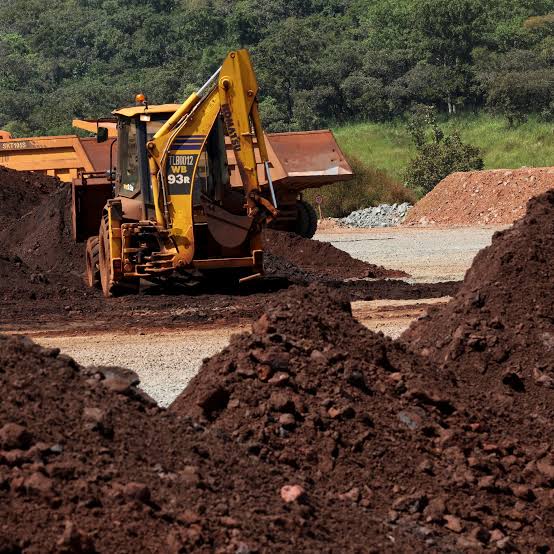
The Africa Finance Corporation (AFC) is seeking investment opportunities in iron ore and uranium as it expands its mining portfolio across the continent, a move that could strengthen financing for Africa’s mineral resources while increasing the importance of infrastructure, environmental safeguards and domestic value addition. According to Reuters, the Lagos-based development finance institution is working towards potential investments that could be announced within six to 12 months, as global competition for critical minerals reshapes investment priorities across African mining markets.
Franklin Edochie, AFC’s Deputy Director and Head of Mining and Metals, said the institution was looking to broaden its existing interests in gold, bauxite, copper and manganese to include iron ore and uranium. Speaking on the sidelines of a mining conference in Cape Town on October 16, Edochie said the corporation was working towards financing projects in both commodities. The reported plans remain at the investment-development stage, with no specific transactions or financing amounts disclosed.

The expansion comes as major economies seek to secure mineral supply chains linked to energy transition technologies, industrial production and strategic energy systems. According to Reuters, the United States and other economies are seeking to reduce dependence on China for supplies of critical minerals used in electric vehicles and renewable energy. For African producers, that competition could widen access to capital and export markets, but the economic gains will depend on the terms under which projects are financed, developed and integrated into domestic economies.
Iron ore presents a significant opportunity for several West African countries seeking to expand mineral exports and associated infrastructure. Edochie said combined iron ore output from Guinea, Liberia, Mauritania and Sierra Leone could, over the next decade, place the four countries among the world’s three largest producers by volume. That potential would depend on project development, transport capacity, market conditions and the ability to bring production to commercial scale.
Guinea’s Simandou project illustrates the scale of infrastructure required to develop major mineral deposits. Large iron ore operations depend not only on extraction but also on railways, ports, electricity, water systems and logistics networks capable of moving high volumes to international markets. Such infrastructure can support wider economic activity when it connects mines to local suppliers, businesses and other productive sectors. However, when transport and energy systems are designed primarily around individual export projects, their broader contribution to national industrial development may be more limited.
AFC’s interest is relevant in this context because financing large-scale mining infrastructure remains a challenge for many African economies. Projects can require substantial upfront capital, long development periods and coordination between governments, mining companies, lenders and infrastructure operators. A continental development finance institution can potentially help mobilise investment and structure projects that might otherwise struggle to secure financing, although the terms and developmental outcomes of any future AFC transactions will depend on their design.
The financing question extends beyond the mines themselves. If iron ore production expands across West Africa, governments will face decisions about how rail and port infrastructure is financed, who can access it and how costs and revenues are distributed. Shared-use infrastructure could support additional producers and other economic sectors, while dedicated facilities may offer fewer opportunities for wider industrial development. These choices can influence public finances, the competitiveness of local businesses and the long-term value African economies capture from mineral exports.
Uranium introduces a different set of considerations. The mineral is used in nuclear power generation, making it relevant to countries assessing options for reliable, low-carbon electricity. However, uranium extraction and processing require strong environmental oversight, radiation protection, worker safety systems and transparent management of waste and mine closure. The economic case for investment therefore depends not only on global demand and project costs but also on regulatory capacity and the institutions responsible for monitoring operations throughout their lifecycle.
For African countries considering uranium development, the balance between export earnings, domestic energy priorities and environmental liabilities will be important. Uranium production does not automatically translate into access to nuclear electricity, and the benefits to host economies will depend on the structure of mining agreements, tax arrangements, local procurement and the management of environmental risks. Where regulatory institutions lack adequate resources, the long-term costs of remediation and oversight can place pressure on public budgets and nearby communities.
The broader critical minerals market is also increasingly shaped by industrial policy and geopolitical considerations. As governments seek more secure supplies of materials used in energy systems and manufacturing, African mineral producers may have greater scope to negotiate investment partnerships. Yet competition for resources does not by itself guarantee better development outcomes. Countries still need clear licensing systems, credible geological data, predictable fiscal regimes and safeguards against the concentration of economic benefits in narrow segments of the mining value chain.
The distribution of value is particularly important as African governments pursue industrialisation and employment growth. Exporting unprocessed minerals can generate foreign exchange and public revenue, but opportunities for processing, engineering services, equipment maintenance and supplier development may be lost when domestic production systems remain disconnected from mining activity. Expanding local value addition can be difficult where electricity is costly, infrastructure is inadequate or markets are too small to support competitive processing. Investment strategies will therefore need to align mineral development with realistic plans for power supply, transport, skills and industrial capacity.
AFC’s existing role in the Lobito Corridor provides a wider illustration of the connection between minerals and infrastructure. The corporation is the lead developer of the US-backed transport corridor linking copper and cobalt mining areas in Zambia and the Democratic Republic of Congo to Angola’s Atlantic Port of Lobito through new and existing railway lines. The corridor is intended to improve transport connections between inland mineral-producing areas and export markets. Its wider development value will depend in part on how effectively it supports trade, local businesses and economic activity beyond the movement of raw materials.
Similar considerations will apply if AFC advances iron ore or uranium investments. Financing decisions could influence where supporting infrastructure is built, which producers gain market access and whether local enterprises can participate in supply chains. They could also shape the exposure of host countries to commodity-price volatility, particularly where public revenue and foreign exchange earnings are concentrated in a small number of mineral exports.
Environmental, social and governance standards will be central to the durability of these investments. Mining can place pressure on land, water resources and local infrastructure, while poorly managed operations can leave governments responsible for environmental damage and abandoned sites. Transparent contracts, effective community consultation, enforceable environmental standards and clear mine-closure obligations are therefore economic safeguards as well as regulatory requirements. They can help reduce disputes and liabilities that threaten project performance over time.
For governments, the immediate challenge is to convert renewed investor interest into projects that deliver measurable domestic benefits without creating disproportionate fiscal or environmental risks. That requires assessing not only the capital a project attracts but also its contribution to public revenue, employment, infrastructure access, local enterprise development and long-term economic resilience.

AFC has not yet disclosed the scale, locations or financing structures of the potential iron ore and uranium investments. Its stated six-to-12-month timeframe points to a period in which proposed transactions may become clearer, although announcements will not necessarily translate immediately into construction or production. For African mineral-producing countries, the significance of the expansion will ultimately depend on whether new capital supports competitive mining operations while strengthening the infrastructure, institutions and productive industries needed to retain more value within the continent.


