


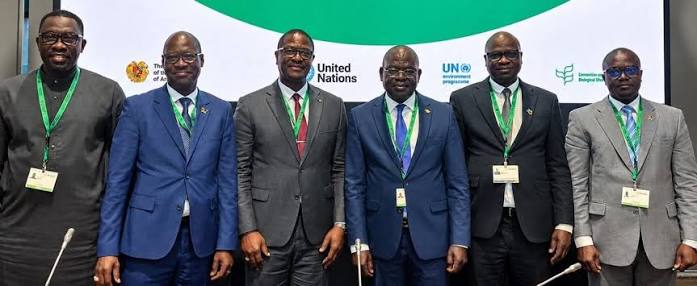
The African Development Bank Group and conservation partners have launched a protected-area-linked bond initiative targeting about €300 million to support biodiversity conservation in West Africa, as governments face pressure to find more reliable funding for national parks and wildlife reserves. The initiative, presented at the UN biodiversity summit in Yerevan, Armenia, on 20 October, seeks to attract capital market investment and other funding, including through carbon markets, but its implementation will depend on financial viability, credible environmental outcomes and strong governance.
The initiative brings together the African Development Bank Group, the Foundation for Parks and Reserves of Côte d’Ivoire (FPRCI) and several regional conservation trust funds. According to the African Development Bank, a feasibility study found that protected-area-indexed bonds, known as Park Bonds, could offer an additional financing mechanism for conservation if they are supported by a viable financial model, verifiable results and transparent management of funds.
The proposed instrument is designed to channel investment towards the long-term management of protected areas. Unlike conventional public funding, which can be affected by annual budget pressures and competing development priorities, bonds could help establish a more structured route for mobilising private and institutional capital. However, the €300 million figure is a target for mobilisation, not a confirmed amount already raised or issued.
The initiative comes as African governments seek to implement the Kunming-Montreal Global Biodiversity Framework, adopted in 2022, which calls for increased financial resources from public and private sources. Target 19 of the framework specifically addresses the mobilisation of biodiversity finance. For African countries, the challenge is not only securing new capital but also ensuring that financing reaches conservation programmes and produces measurable benefits.
Public budgets and donor contributions remain central to managing protected areas, but both can be constrained by fiscal pressures and competing demands for spending on infrastructure, health, education and energy. Nature-based assets also underpin economic activities across the continent, including agriculture, fisheries, tourism and water supply. Degradation of forests, wetlands and wildlife habitats can therefore create costs that extend beyond environmental management, affecting livelihoods, local economies and the resilience of infrastructure and food systems.
Côte d’Ivoire is central to the Park Bonds initiative. Nearly 7 per cent of the country’s territory is dedicated to protected areas, according to the African Development Bank, including habitats for threatened species such as forest elephants, West African chimpanzees and pygmy hippopotamuses. Sustaining these areas requires financing for ecosystem management, monitoring, enforcement and the institutions responsible for conservation.
The initiative also involves the Banc d’Arguin and Coastal and Marine Biodiversity Trust Fund, the Bioguinée Foundation and the West African Savannahs Foundation. Their participation points to a regional approach that could help pool conservation expertise and support protected areas across different ecological landscapes. Whether the model can be extended beyond the initial partners will depend on the strength of its financial structure and the ability of participating institutions to demonstrate results to investors.
The concept draws on the broader use of labelled and outcome-linked financial instruments to direct capital towards environmental objectives. In 2022, the World Bank issued a $150 million wildlife conservation bond designed to support rhino conservation in two South African national parks. That transaction offers a regional reference point for the use of capital market mechanisms in conservation, although its structure and objectives differ from the proposed Park Bonds initiative.
For African governments, the central question is whether such instruments can attract additional investment without creating unsustainable liabilities or shifting excessive financial risk onto public institutions. Investors will need clarity on how funds are deployed, what revenues or repayment arrangements support the bonds, who bears the risk if expected outcomes are not achieved, and how conservation performance is independently assessed. Carbon markets could provide another source of funding, but any income would depend on project design, credible measurement and the integrity of the underlying environmental claims.
Governance will also be important at the local level. Protected areas can support tourism, water security and other economic activities, but restrictions on land and resource use may affect communities that depend on surrounding ecosystems. The allocation of funding, consultation with affected populations and the distribution of economic benefits will therefore influence both the credibility and durability of conservation programmes. Transparent reporting would need to show not only where capital is spent but also how ecological outcomes and community interests are protected.
The African Development Bank has said the initiative is intended to complement public budgets and donations by drawing in long-term private and institutional capital. Al Hamndou Dorsouma, Head of the Bank Group’s Climate and Green Growth Division, said additional financing mechanisms were needed while preserving conservation integrity and community interests. Fanny N’Golo, executive director of the Foundation for Parks and Reserves of Côte d’Ivoire, said experience from the country could help inform similar efforts elsewhere on the continent.

The Park Bonds proposal adds to a wider effort to connect biodiversity commitments with investment decisions. For West African countries facing fiscal constraints and growing demands on natural resources, its significance will ultimately depend on whether the target can be translated into financing that is affordable, accountable and sustained over time. The launch establishes a framework for further development, but the next test will be the design of the instrument, the participation of investors and the evidence that capital can deliver measurable conservation outcomes without undermining public finances or local livelihoods.


