The Commission for the Conservation of Antarctic Marine Living Resources (CCAMLR) has concluded its 2026 annual meeting without reaching agreement on proposed marine protected areas (MPAs) in the Southern Ocean or additional precautionary measures for the Antarctic krill fishery, renewing concerns about the capacity of the international body to respond to mounting pressures on one of the world’s most sensitive marine ecosystems.
The two-week negotiations, which ended in Hobart, Tasmania, on 31 October 2026, saw several member countries push for stronger conservation measures, including progress on the proposed Domain 1 Marine Protected Area around the Antarctic Peninsula. However, the Commission’s consensus-based decision-making process again prevented the adoption of new protections, leaving proposals under discussion for another year as climate change and fishing activity continue to affect the region.
The outcome highlights a persistent gap between international commitments to protect marine biodiversity and the ability of multilateral institutions to translate those commitments into action. Although several CCAMLR members demonstrated willingness to negotiate and explore compromises, the meeting produced no agreement on the proposed protected areas or new management measures for krill fishing.

“While progress was made, it is still regrettable that there are no meaningful outcomes that would increase protections for ecosystems and species increasingly under pressure from fishing and climate change,” said Claire Christian, Executive Director of the Antarctic and Southern Ocean Coalition (ASOC).
The discussions around the Domain 1 MPA, which covers waters around the Antarctic Peninsula, emerged as a central focus of the negotiations. Argentina and Chile continued to advance the proposal, receiving support from Brazil and Uruguay. Although the countries were unable to secure consensus, an agreement by several members to participate in an intersessional process offers an opportunity to maintain negotiations between annual Commission meetings.
Rodolfo Werner, Co-founder and Senior Advisor at Agenda Antártica, said Argentina and Chile had demonstrated strong leadership in advancing the proposal, with Brazil and Uruguay providing firm support. He described the outcome as an important step towards securing agreement on the protected area, despite the absence of a final decision.
The continued delay carries particular significance because CCAMLR has been pursuing a representative system of marine protected areas across the Southern Ocean for nearly two decades. In 2009, its members committed to establishing such a network to safeguard marine ecosystems and biodiversity across the region. Seventeen years later, only two MPAs have been established, while five additional proposals remain under consideration. These include a new East Antarctica MPA proposal submitted by China in 2026.
The last MPA was adopted a decade ago, pointing to the difficulty of securing consensus on new conservation measures despite growing international attention to ocean protection. The absence of progress on the Antarctic Peninsula proposal is especially notable given the ecological importance of the region and the increasing pressures associated with changing ocean conditions and fishing activity.
Nicholas Kirkham, who leads Pew Bertarelli Ocean Legacy’s work to safeguard the Southern Ocean, said the Commission had failed for the tenth consecutive year to agree on protections for the western Antarctic Peninsula. He noted that Argentina and Chile had made substantial efforts to find common ground, but the negotiations had again ended without a decision on the proposed protected area.
The disagreement also raises broader questions about the effectiveness of CCAMLR’s institutional mandate. Established to conserve Antarctic marine living resources, the Commission is responsible for managing fishing activities while maintaining the ecological relationships within the Southern Ocean. Its approach is based on conservation principles that require decisions to account for the wider marine ecosystem rather than focusing solely on individual commercial species.
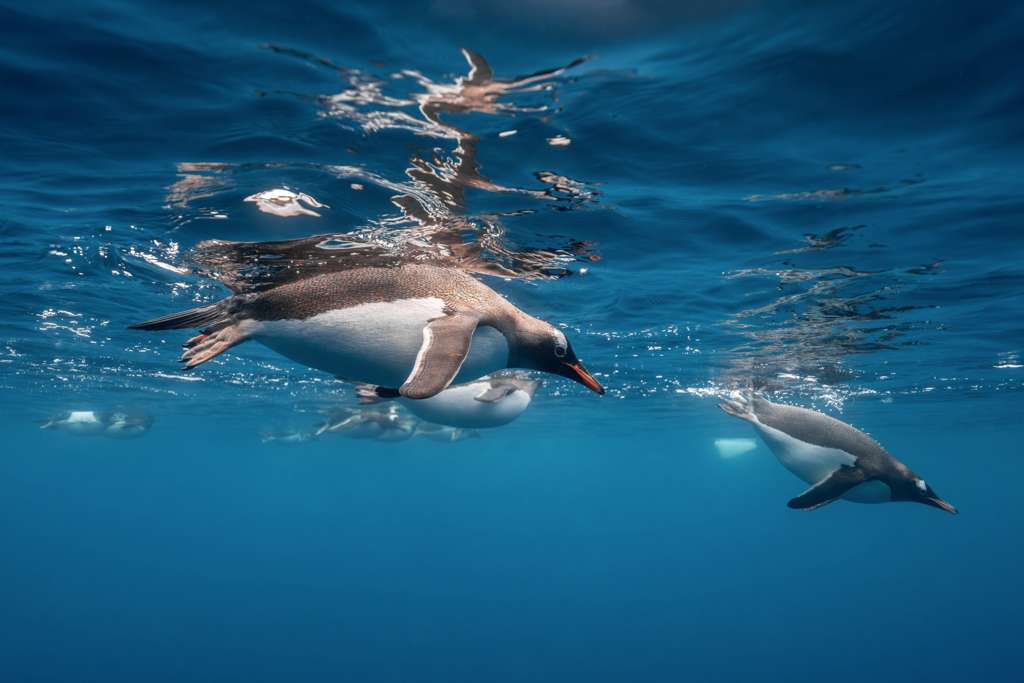
The failure to agree on additional precautionary measures for the Antarctic krill fishery adds another dimension to the outcome. Krill are a foundational component of the Antarctic food web, supporting species including whales, seals, penguins and fish. Their distribution and availability are closely connected to environmental conditions, making changes in sea ice, ocean temperatures and other climate-related factors important considerations for fisheries management.
As fishing pressure becomes more concentrated in particular areas, the absence of additional safeguards could complicate efforts to manage interactions between commercial harvesting and the needs of dependent marine wildlife. Without stronger precautionary measures, the challenge for CCAMLR will be to ensure that fishing activity remains consistent with its wider responsibility to protect the ecosystem.
The outcome comes at a time when international efforts to strengthen ocean governance are gaining momentum. The approaching first Conference of the Parties to the High Seas Treaty, formally known as the Biodiversity Beyond National Jurisdiction (BBNJ) Agreement, is expected to create further opportunities for countries to advance marine biodiversity protection in areas beyond national jurisdiction.
Emily Grilly, Ocean Conservation Manager at WWF-Australia, said CCAMLR would need to accelerate its decision-making as global momentum for ocean protection grows. She argued that the Commission’s ability to respond to the urgency of marine biodiversity loss would be tested by whether it could move beyond longstanding commitments and agree on practical conservation measures.
The relationship between CCAMLR and the wider international ocean governance framework is increasingly important. While the Commission has a specific mandate over Antarctic marine living resources, the High Seas Treaty represents a broader international effort to strengthen the protection and sustainable use of biodiversity in areas beyond national jurisdiction. Coordination between these processes could influence how marine protected areas, scientific assessments and fisheries management measures are developed and implemented.

For the Southern Ocean, the immediate challenge remains translating scientific advice and conservation commitments into decisions that can withstand the pressures of changing environmental conditions and commercial activity. The intersessional discussions on the Domain 1 proposal may provide a route towards renewed agreement, but their effectiveness will depend on whether member countries can resolve outstanding differences before the next annual meeting.
The 2026 negotiations have therefore exposed the limits of international conservation commitments when consensus remains difficult to achieve. With only two protected areas established against the ambition of a representative Southern Ocean network, and no new precautionary measures agreed for krill fishing, the Commission faces growing pressure to demonstrate that its conservation mandate can deliver measurable action.
The consequences extend beyond Antarctica. The Southern Ocean plays an important role in global marine ecosystems and ocean processes, while its biodiversity supports ecological relationships that reach across national boundaries. Whether CCAMLR can advance protection measures will be an important test of the effectiveness of multilateral ocean governance as countries confront the combined pressures of climate change, biodiversity loss and growing demand for marine resources.