


Nigeria’s school feeding initiatives are increasingly being used to address challenges beyond child hunger, connecting public education programmes with local agricultural production, household nutrition and women’s economic participation as the country seeks to expand access to school meals over the next decade.
Experiences from Kebbi, Enugu and Osun states, alongside nutrition education initiatives in Ibadan, demonstrate how school food programmes can create wider benefits when schools are connected to local suppliers, farming communities and households. The approaches include purchasing fortified rice from local millers, supporting women school cooks to establish agricultural activities and using school gardens to influence food choices beyond the classroom.
These examples were presented during the first Nigeria Community of Policy and Practice (CoPP) webinar, titled Pathways Towards Transforming School Food Systems. The event brought together government representatives, researchers and practitioners to examine how evidence from ongoing initiatives could inform national policy and improve programme implementation.

The discussions come as Nigeria seeks to increase school feeding coverage from 33 per cent in 2022–2023 to 60 per cent by 2035, under its revised National Policy on Food and Nutrition 2026–2035. Achieving this expansion will require more than increasing the number of children receiving meals. It will also depend on the reliability of food procurement, financing arrangements, nutritional quality and the ability of programmes to support domestic food production.
In Kebbi State, the Global Alliance for Improved Nutrition (GAIN), working with the state government and the World Food Programme, has sought to address gaps between local food availability and the ability of schools to purchase nutritious products. Although local millers could supply fortified rice, schools faced difficulties accessing it because reliable purchasing and collection arrangements were not in place.
The initiative established collection points where school heads could purchase fortified rice directly from local suppliers. Advocacy through a state advisory committee also helped secure timely funding for bulk purchases, addressing a procurement challenge that had limited the connection between local production and school meal delivery.
David Atamewalen, Senior Programme Manager at GAIN, said the availability of nutritious food did not necessarily guarantee access for poor and vulnerable households. The project illustrates how procurement systems and financing arrangements can determine whether locally available food reaches children who need it.
According to the programme figures presented at the webinar, 69,700 students across 207 schools are now consuming fortified rice enriched with B vitamins and zinc, exceeding the initial target of 60,000 children. More than 9,600 kilogrammes of rice has been procured from local suppliers.
The experience provides an example of how public food purchasing can support both nutrition objectives and local markets. By creating a more predictable route to institutional buyers, school feeding programmes can offer local millers opportunities to supply larger quantities while improving access to fortified foods among schoolchildren. The longer-term value of this approach will depend on whether procurement arrangements and funding remain consistent as coverage expands.
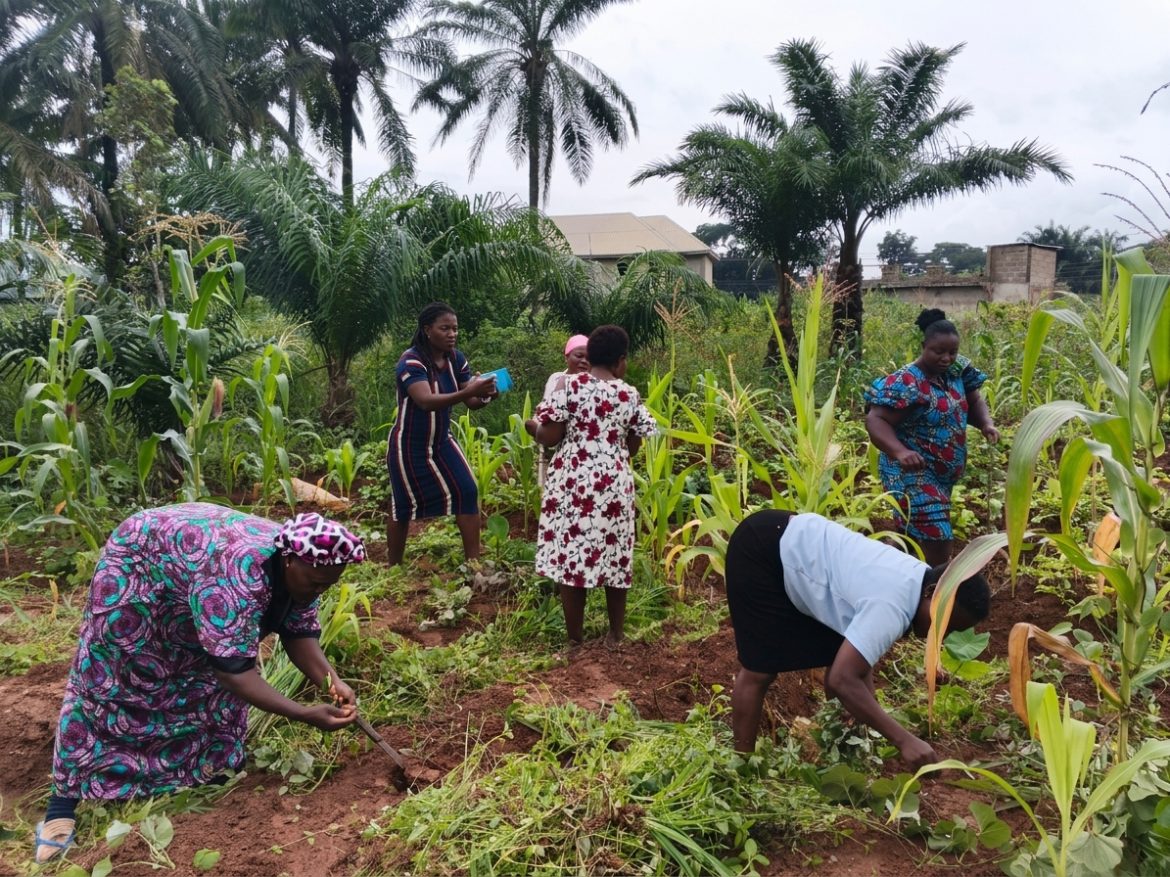
Beyond food procurement, initiatives in Niger, Osun and Enugu states are exploring how school feeding can create additional income opportunities for women involved in meal preparation. Action Health Incorporated and the Partnership for Child Development are implementing the Catalysing Change for Healthy Food Systems (CCHeFS) project, which supports women school cooks through training in agriculture, nutrition and financial literacy.
Adesanmi Abimbola, Project Investigator, said school feeding could strengthen local economies and women’s livelihoods by connecting food producers, schools and households. Under the initiative, approximately 450 women have received training in crop and livestock production, nutrition and financial literacy, equipping them with skills to grow food and pursue additional income-generating activities.
In Enugu State, the programme has supported school-feeding cooperatives involving around 150 cooks. The cooperatives have access to community land, biofortified crops, poultry and agricultural training, creating opportunities for women to participate in food production alongside their roles in preparing school meals.
Ifeanyi Onah, Enugu State’s School Feeding Programme Manager, said some participants had little or no previous farming experience. Through the initiative, women have begun using their harvests to feed their families and sell surplus produce, helping reduce household food expenses and generate additional income. Cooperative participation has also strengthened their confidence and involvement in family decisions.
However, the experience in Enugu illustrates the limitations of livelihood initiatives when the wider school feeding system faces implementation difficulties. Financing and programme delivery challenges have disrupted school feeding activities, restricting opportunities for women to apply their newly acquired skills in meal preparation. This highlights the relationship between reliable public programme funding and the economic benefits expected from complementary agricultural activities.
Where school feeding is interrupted, the consequences can extend beyond children missing meals. Local suppliers may lose institutional buyers, while women and other participants may struggle to sustain activities that depend on the programme. For initiatives seeking to link nutrition with livelihoods, continuity is therefore an important condition for achieving lasting results.
In Ibadan, researchers at the University of Ibadan have taken a different approach by examining how school-based nutrition education can influence children’s food preferences and household practices. Through the Nutri-Garden initiative, children grow, harvest, prepare and consume traditional leafy vegetables, including ewedu (jute mallow) and tete (amaranth), before sharing recipes and learning activities with their families.
Shirley Isi Ejoh, Senior Lecturer in Human Nutrition and Dietetics at the University of Ibadan, described the school gardens as practical learning spaces where children can understand the journey of food from production to consumption. The approach combines agricultural activities with nutrition education, giving pupils direct experience of growing and preparing vegetables rather than relying exclusively on classroom instruction.
Feedback from parents suggests that the programme has influenced household engagement. More than 70 per cent of parents who provided feedback reported starting a garden following their children’s participation, while over 90 per cent said they had prepared a recipe introduced through the programme.
However, the evidence also points to a distinction between increased nutrition knowledge and measurable changes in dietary behaviour. Although children’s nutrition knowledge improved, measured changes in vegetable consumption were not statistically significant. The findings suggest that exposure to nutrition education alone may not be sufficient to change eating habits, particularly where household practices, food availability and repeated engagement also influence dietary choices.
The initiative has since developed into Nutri-Garden clubs that operate throughout the academic year. More than 150 student volunteers have received training, while schools with limited land have adapted the approach by growing vegetables in containers and sacks. These adaptations offer a way for schools with different infrastructure conditions to participate without requiring extensive garden space.
Ejoh cautioned that establishing a garden was easier than sustaining one, pointing to the importance of integrating gardening into regular school activities and securing long-term support. The observation reflects a broader implementation challenge across school food initiatives: interventions may demonstrate encouraging results during their initial phases, but their contribution to nutrition and livelihoods depends on whether institutions can maintain them over time.
The experiences from Kebbi, Enugu and Ibadan point to different but connected dimensions of school food systems transformation. Local procurement can create markets for domestic producers, agricultural training can expand income opportunities for women, and school gardens can help connect nutrition education with household food practices.

Clementina Ebere Okoro, Director of Food and Nutrition at Nigeria’s Federal Ministry of Budget and Economic Planning, emphasised that school feeding could serve as a catalyst for wider food systems transformation. Through the Nigeria Community of Policy and Practice, researchers, policymakers and programme implementers are seeking to bring evidence from these initiatives into discussions on national policy and delivery.
The scale-up ambition under Nigeria’s 2026–2035 National Policy on Food and Nutrition will place greater demands on the institutions responsible for financing, coordinating and monitoring school feeding. Expanding coverage from 33 per cent to 60 per cent will require attention to the quality of meals, the capacity of local suppliers, the continuity of funding and the participation of communities that support food production and preparation.
The initiatives presented at the webinar suggest that school feeding can generate benefits across several parts of the food system, but they also demonstrate that these outcomes are not automatic. Reliable financing, effective procurement, sustained institutional support and evidence-based implementation will determine whether programmes can move beyond the provision of meals to deliver wider improvements in nutrition and livelihoods.
For Nigeria, the policy challenge is increasingly about how to build school food systems that connect education, agriculture, nutrition and local economic development. The experiences emerging from its states offer practical lessons, but translating them into national impact will depend on the ability to maintain successful approaches at scale and address the implementation gaps that continue to disrupt delivery.


