


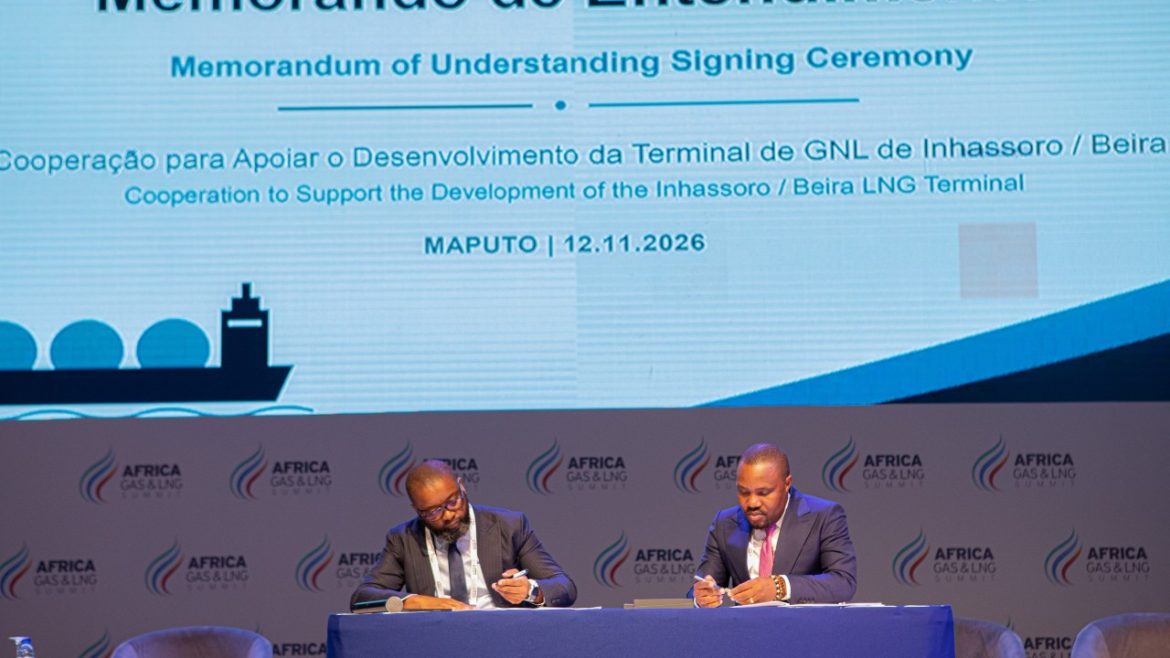
South African energy group Sasol and Mozambique’s state-owned Empresa Nacional de Hidrocarbonetos (ENH) have agreed to assess the feasibility of a liquefied natural gas (LNG) terminal in the Inhassoro-Beira area, as declining production from the country’s Pande and Temane gas fields raises concerns over future supplies to industrial customers in Mozambique and South Africa.
The companies signed a memorandum of understanding on November 11, 2026, on the sidelines of the Africa Gas & LNG Summit in Maputo. The agreement provides for studies into potential gas infrastructure projects, with Sasol expected to contribute technical expertise and specialist personnel, drawing on its experience operating natural gas fields in Mozambique.
The proposed infrastructure would include a floating storage and regasification unit (FSRU) near Inhassoro, in Inhambane province. LNG would be transported by sea towards Beira, while a pipeline of approximately 135 kilometres would connect Inhassoro to major gas-consuming areas in southern Mozambique.
ENH Chief Executive Officer Rudêncio Morais outlined the proposal in October, estimating its cost at about $250 million and indicating that operations could begin between 2030 and 2031. The development remains at the feasibility stage, with the companies yet to establish a final project design, financing arrangements or construction commitments.
The proposal is part of Mozambique’s efforts to address an anticipated decline in output from the Pande and Temane fields, which Sasol operates onshore. The fields supply industrial customers in South Africa through the Republic of Mozambique Pipeline Company (ROMPCO) pipeline network, making their future production levels significant for gas-dependent industries on both sides of the border.
As output from the two fields is expected to fall in the coming years, Mozambique faces the challenge of identifying alternative sources and establishing the infrastructure needed to move gas to existing markets. The proposed terminal could provide a route for receiving LNG and distributing it through domestic and regional networks, although its eventual contribution will depend on the availability and cost of supply, as well as the outcome of the feasibility work.
ENH is considering offshore gas resources from the Rovuma Basin in northern Mozambique as part of its response. Projects including TotalEnergies’ Mozambique LNG, ExxonMobil’s Rovuma LNG and Eni’s Coral North are expected to increase the country’s available gas volumes. However, connecting those resources to customers in central and southern Mozambique, as well as markets elsewhere in the region, will require additional transportation infrastructure and receiving facilities.
The Inhassoro-Beira proposal would therefore address a separate part of the gas development chain: moving available or imported gas from coastal receiving infrastructure to consumption centres. The proposed FSRU and pipeline would need to be assessed in relation to supply availability, infrastructure connections and the requirements of prospective customers.

Mozambique is also pursuing other LNG infrastructure developments. At the port of Matola, Beluluane Gas Company is developing an LNG import terminal, with financial close planned for the end of 2027. The project forms part of wider efforts to diversify supply options and strengthen the infrastructure available to serve domestic demand.
For Sasol, the proposed terminal is relevant to the future of its gas supply arrangements and the industrial customers served by the existing pipeline system. For ENH, it represents an opportunity to assess how offshore resources and LNG imports could be connected to domestic and regional markets as production from established onshore fields declines.
The next steps will depend on the feasibility findings and whether the proposed infrastructure can secure commercially viable gas supplies and delivery arrangements. Until those questions are resolved, the estimated $250 million cost and 2030–2031 operating window remain preliminary projections rather than confirmed project commitments.


