


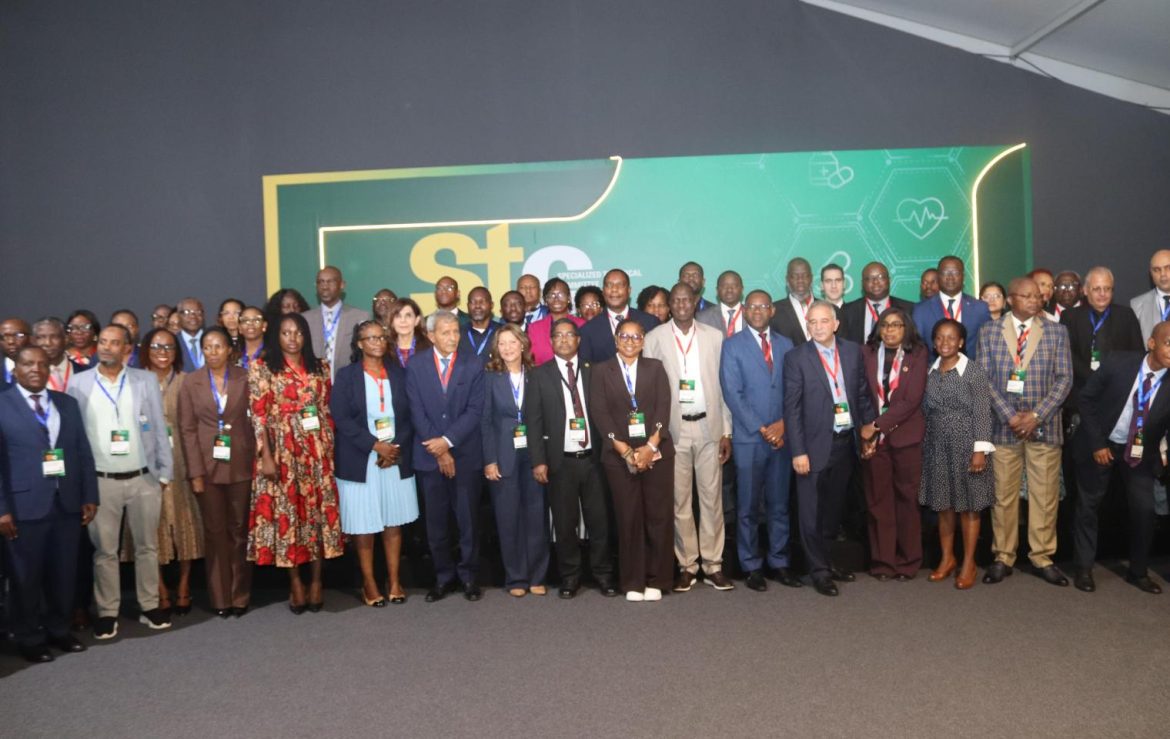
The African Union has urged governments to integrate health, nutrition, population policy and drug control more closely as epidemics, malnutrition, climate-related risks and financing constraints expose weaknesses in Africa’s public health systems and place additional pressure on national budgets and economic development. The call was made at the sixth ordinary session of the AU Specialised Technical Committee on Health, Nutrition, Population and Drug Control, which is meeting in Luanda from November 16 to 20.
The five-day meeting brings together policymakers, technical experts, representatives of AU member states and continental institutions to consider how African countries can move beyond public services that are often planned, funded and administered separately. Its agenda covers health financing, disease prevention, maternal and child health, nutrition security, drug control and the growing health consequences of climate change.
For African governments, the debate is not solely about healthcare delivery. Weak coordination between hospitals, primary care facilities, nutrition programmes, water and sanitation agencies, medicines regulators and emergency-response institutions can raise the cost of public services while delaying interventions. Those inefficiencies have wider consequences for labour productivity, household income, education outcomes and the capacity of governments to respond to disease outbreaks without diverting money from infrastructure and other development priorities.

Professor Julio Rakotonirina, the African Union Commission’s director of health and humanitarian affairs, said the continent needed integrated and multisectoral approaches to persistent health and development challenges. While Africa has made progress in health security, nutrition programmes and continental drug-control instruments, epidemics, humanitarian pressures, malnutrition and financing shortages continue to strain national systems.
“The milestones achieved in the operationalization of the Africa CDC and the renewed focus on health financing underscore our collective commitment to improving the health and well-being of the African people and accelerate the implementation of Agenda 2063,” Rakotonirina said
The emphasis on integration reflects the interconnected nature of Africa’s health risks. A disease outbreak can intensify malnutrition, disrupt schooling and reduce economic activity, while limited access to clean water and sanitation can increase pressure on clinics already operating with constrained budgets, staff shortages and unreliable supply systems. Climate-related shocks can add another layer of risk by affecting water availability, food security, disease patterns and the movement of displaced populations.
Angola’s national director of public health, Helga Freitas, called for water, sanitation and hygiene to be incorporated more consistently into health policy. She also emphasized stronger primary healthcare, sustainable financing and increased cooperation between African countries. According to Freitas, integration requires governments and institutions to share data, align priorities and plan jointly rather than organize services around separate administrative structures.
That approach has direct fiscal implications. Preventive health services, reliable sanitation, vaccination programmes and early disease surveillance can reduce the need for more expensive emergency interventions. However, achieving those gains requires governments to coordinate budgets and information systems across ministries and agencies, an institutional challenge in countries where responsibilities are fragmented and public finances are under pressure.
The Luanda meeting is also considering the operationalization of the African Medicines Agency, the strengthening of the Africa Centres for Disease Control and Prevention, and the expansion of pharmaceutical manufacturing within the continent. Access to essential medicines remains closely tied to Africa’s exposure to international supply disruptions, foreign-exchange constraints and the cost of imported health products.
More local production could improve supply security, but its economic value will depend on credible regulation, reliable energy and transport infrastructure, access to investment capital and sufficiently large markets. The African Medicines Agency could support that process by improving regulatory coordination and reducing duplication between national approval systems. The practical test will be whether continental frameworks translate into faster, more predictable oversight without weakening safety requirements.
Cyprian John Luhemeja, the outgoing chair of the committee’s fifth-session bureau, pointed to progress on a new AU strategy and action plan for drug prevention and control. He also cited Tanzania’s reported reduction in maternal mortality by 80% and under-five mortality by 36% over seven years.
Such improvements, where sustained and independently tracked, illustrate the economic significance of maternal and child health. High mortality and preventable illness impose costs on families, weaken workforce participation and increase demands on public health systems. Better outcomes depend not only on clinical services but also on nutrition, clean water, transport access, reliable medicines and functioning referral networks.

The committee is expected to consider AU policy documents, reports and strategic frameworks intended to improve coordination and accountability across the continent. A ministerial session scheduled for November 19 and 20 will review the technical recommendations and provide political guidance on the development of more integrated and resilient health systems.
The outcome will matter less as a statement of ambition than as a test of implementation. African countries already face competing demands on limited fiscal resources, including debt servicing, energy investment, food security, climate adaptation and social protection. Aligning health, nutrition, sanitation, medicines regulation and emergency preparedness could make those resources more effective, but only if governments establish measurable responsibilities, finance agreed priorities and publish evidence of progress.
For communities, the consequences are immediate. Integration can determine whether a child treated for illness is also screened for malnutrition, whether a maternal health programme is supported by clean water and reliable transport, and whether an outbreak is detected before it becomes a national emergency.
For African economies, those outcomes shape human capital, productivity and resilience, making health-system reform a central development and public-finance issue rather than a concern confined to the health sector.


