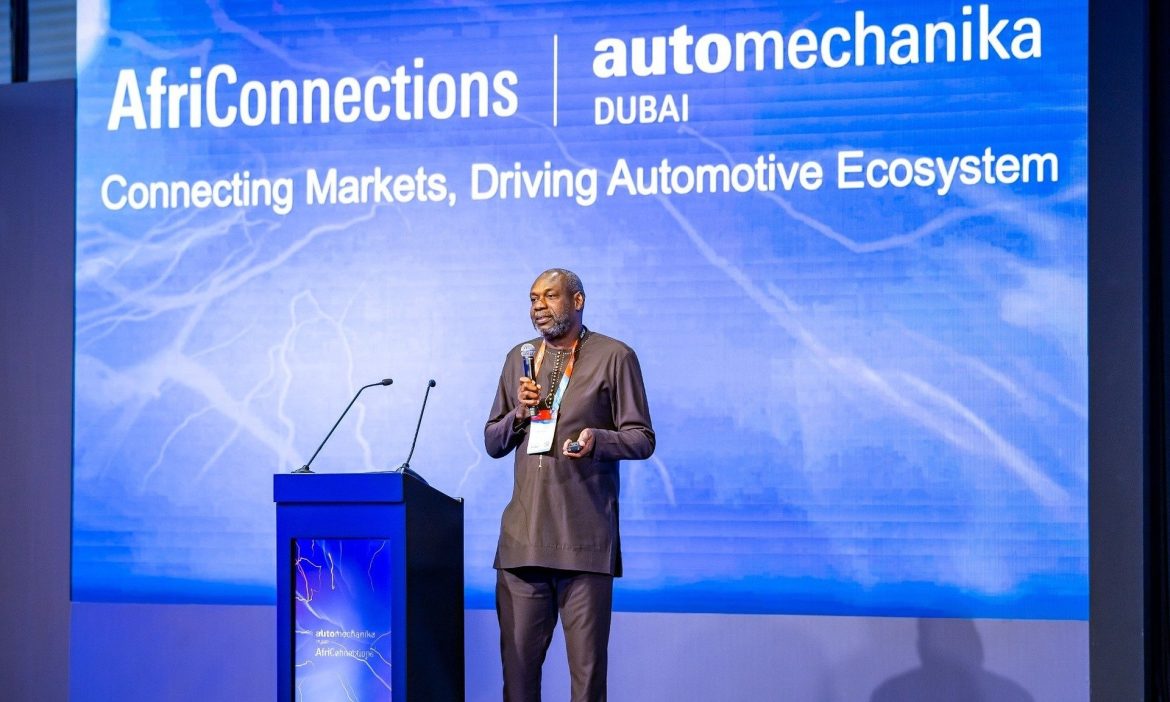
Africa’s automotive aftermarket is facing new opportunities for regional manufacturing, sourcing and distribution as the African Continental Free Trade Area (AfCFTA) introduces rules requiring vehicles and components to contain at least 40% African-originating content to qualify for preferential trade treatment. The changes will form part of discussions at AfriConnections, a half-day business programme scheduled for 12 November 2026 during Automechanika Dubai, as African and international automotive businesses explore how to respond to the continent’s evolving trade environment.
The programme will bring together businesses from Africa and international markets to examine the implications of the new rules for automotive supply chains, component sourcing and cross-border trade. Its timing reflects growing interest in strengthening Africa’s automotive value chains as governments and industry players seek to increase local manufacturing and reduce dependence on imported vehicles and components.
African Union heads of state approved the automotive rules of origin in February 2026, according to the African Association of Automotive Manufacturers (AAAM). The 40% local-content threshold introduces a framework for determining which vehicles and components qualify for preferential treatment under AfCFTA arrangements. For manufacturers and suppliers, the rules could influence decisions about where components are sourced, where production takes place and how automotive products move between African markets.

The potential benefits, however, are unevenly distributed across the continent. South Africa and Morocco account for the majority of Africa’s vehicle production, according to the International Organization of Motor Vehicle Manufacturers (OICA), while many other countries remain heavily dependent on imported vehicles and automotive components. This disparity creates both an opportunity and a challenge for regional integration: established manufacturing markets could provide components and production capacity, while other economies could expand their roles in distribution, servicing and supporting industries.
Claire Dawai, Chief Executive Officer of the Sub-Sahara Chamber of Trade, said Africa’s automotive aftermarket was moving towards a more structured and integrated ecosystem, creating demand for clearer regulatory frameworks and stronger links between regional markets and international centres of innovation. She noted that aligning market requirements with international standards would be important in attracting investment, strengthening local value chains and improving the competitiveness of the industry.
The aftermarket sector represents a significant part of this opportunity. According to the Kenya Motor Repairers Association (KEMRA), Africa’s market for replacement parts, repair services, diagnostics and tools is valued at more than $30 billion, supported by a vehicle population exceeding 50 million. The scale of the market creates demand for reliable distribution networks, technical services, workshop equipment and access to quality automotive components.
However, fragmented supply chains, high logistics costs and skills shortages continue to constrain the sector. These challenges affect the ability of businesses to source parts efficiently, maintain consistent service standards and expand operations across national borders. As regional trade arrangements develop, businesses will need to navigate different market requirements while building stronger commercial relationships with suppliers and distributors.
Mercy Mwaura, Chief Executive Officer of KEMRA, said international partnerships would be important in addressing these constraints. She pointed to the need for global suppliers, technology and expertise to help businesses overcome supply-chain fragmentation, logistics costs and skills gaps. AfriConnections, she said, offers a practical platform for developing such partnerships.
Dubai’s position as a commercial and logistics hub provides an additional link between African automotive businesses and international suppliers. Dubai Chambers reported that the emirate’s non-oil trade with Africa exceeded $145.9 billion in 2025, reflecting the scale of its commercial relationship with the continent. For automotive businesses, the emirate offers access to international suppliers, equipment manufacturers and technology providers serving multiple markets.
AfriConnections will examine several areas shaping the sector’s development, including Africa’s automotive growth outlook, AfCFTA and intra-African trade, UAE–Africa commercial corridors, sourcing and supply-chain strategies, as well as electrification and alternative-energy infrastructure. These discussions reflect a market that is expanding beyond the traditional trade in replacement parts towards broader questions of manufacturing, technology adoption and the future of vehicle mobility.
The programme will take place during the 23rd edition of Automechanika Dubai, running from 10 to 12 November 2026 at Dubai Exhibition Centre in Expo City Dubai. More than 1,200 exhibitors from over 50 countries are expected to participate, providing African buyers and distributors with access to international suppliers of automotive parts, workshop equipment and emerging technologies.
Chris Lee, Portfolio Director for Mobility and Logistics at Messe Frankfurt Middle East, said Automechanika Dubai connects African buyers with international suppliers across parts, workshop equipment and automotive technologies. He described Dubai’s position as a global trade and logistics hub as an important advantage for businesses seeking to explore new markets and develop commercial partnerships.
The focus on electrification and alternative-energy infrastructure also reflects changes taking place across the automotive industry. As electric mobility develops, aftermarket businesses will face new requirements involving diagnostics, maintenance equipment, battery systems and specialised technical skills. The transition could create opportunities for suppliers and service providers, although the pace of adoption will depend on infrastructure availability, affordability and the development of relevant technical capacity across African markets.

For African manufacturers, distributors and repair businesses, the new rules of origin introduce a commercial consideration alongside the wider ambition of regional integration. Companies seeking preferential access to AfCFTA markets will need to understand the applicable origin requirements and assess how their sourcing and production arrangements meet the threshold. The ability to develop regional supplier networks could become increasingly important as businesses seek to benefit from expanded trade opportunities.
The challenge will be translating the regulatory framework into stronger industrial participation across the continent. Rules of origin can create incentives for local sourcing and production, but their impact will depend on the availability of competitive suppliers, reliable logistics, skilled labour and consistent standards. Without these supporting conditions, businesses may struggle to establish the regional production networks required to take advantage of preferential market access.
AfriConnections provides a platform for African and international businesses to examine these commercial and operational questions as the continent’s automotive market evolves. The discussions in Dubai will take place against a backdrop of changing trade rules, established manufacturing centres and a large aftermarket sector seeking more reliable access to products, technology and expertise. How effectively businesses respond to these changes will help determine whether AfCFTA’s automotive framework can support deeper regional supply chains and a more competitive African automotive industry.